

Costa Rica Study Trip
May 1–13, 2027
An Experiential Learning Course with a focus on Sustainability and AI Projects.
Sustainability + AI Projects
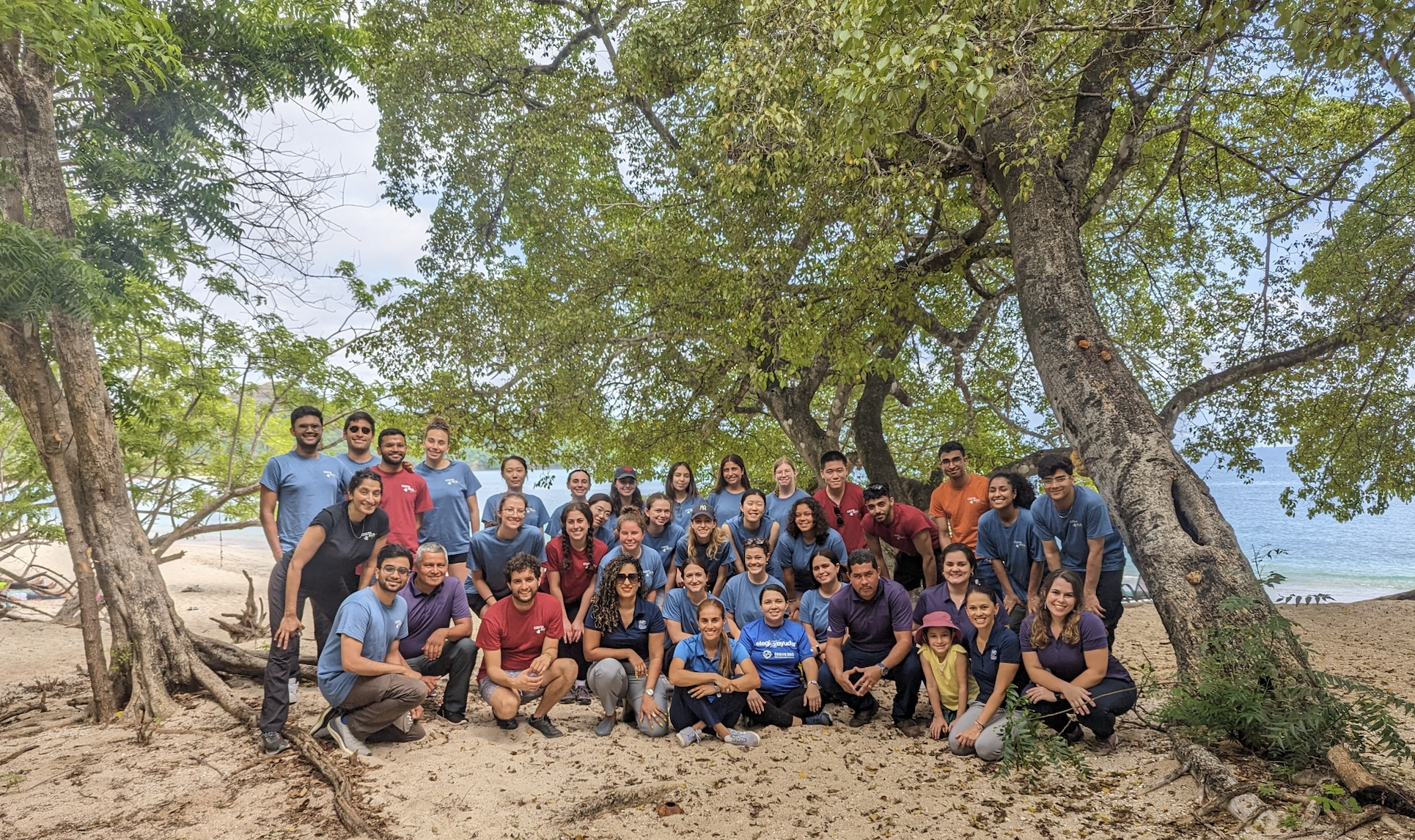
Are you passionate about sustainability, AI, or both? From May 1–13, 2027, the Costa Rica Experiential Learning Course offers an immersive, hands-on experience: students from all disciplines work directly with NGOs and natural reserves on one of twelve AI-driven conservation and sustainability projects.
Earn six credits toward your major by building AI solutions for real NGOs — all while living on a natural reserve steps away from Playa Conchal.
Apply here Learn why you should earn credits in Costa Rica Download the brochure
Overview
Running May 1–13, 2027, this interdisciplinary course partners each student team with an NGO on the ground in Costa Rica. Teams apply AI tools — machine learning, computer vision, and predictive analytics — to, for example, monitor the health of bee colonies, track microplastics in the ocean, support micro-farming initiatives, or optimize composting.

Depending on skill sets and interests, students may elect to specialize in one of the following four areas:
- AI & Analytics: Develop AI- and code-driven tools. At least one course in analytics is required as prior coding knowledge.
- Sustainability: Develop managerial solutions for an NGO’s sustainability project.
- Sustainability AI: Requires a blend of knowledge in sustainability and AI.
- General: An interdisciplinary group of students with backgrounds in finance, marketing, accounting, computer science, biology, environmental science, etc., will be accepted for projects that draw on their fields.
How to apply
Admission is by application, reviewed in three rounds — apply early, as spaces fill quickly.
Round 1 deadline: October 31, 2026 (interviews take place in November).
Round 2 deadline: December 5, 2026 (interviews take place in December).
Round 3 deadline (if spaces remain): January 5, 2027.
Information Sessions
There are currently no information sessions scheduled.
Bursaries and Financial Aid
Don’t let cost stop you from participating. McGill has funding available specifically for study trips, often granting students partial or full financial aid. The McGill Abroad website lists all funding opportunities available to McGill students, along with the Enriched Educational Opportunities (EEO) awards.
The Sustainability Analytics Data Hub
Our one-of-a-kind data hub centralizes the data, AI models, and studies from every past project, so each cohort builds on earlier work — and everything students contribute remains available to future researchers, managers, and NGO partners.
Sample Projects

Wildlife information systems
Animal rehabilitation management
Improving Bee Health

Machine learning for wildlife road safety
Reforestation analytics

Tracing ocean microplastics

Composting and Management

Organic farming management
Course
- Earn six credits toward your major: this course counts toward the major and concentration in Business Analytics, and the major and concentration in Managing for Sustainability.
- Students from other programs and faculties are welcome to apply — the course is interdisciplinary by design and may be used as elective credit.
- Open to U1, U2, and U3 students; registration is through the application process (see How to Apply above).
Meet the Instructor
 This course was designed and will be taught by Prof. Juan Camilo Serpa. Prof. Serpa has received numerous accolades for his teaching including the 2021 Principal's Teaching Award, the highest teaching honor at McGill. In addition, he was granted the 2021 Desautels Distinguished Teaching Award for graduate programs and the 2017 Desautels Distinguished Teaching Award for undergraduate programs—the two top teaching awards at Desautels. In 2017, he was also recognized as one of the World's Top 40 Professors by Poets&Quants.
FAQs
Do I need to know how to code to take this course?
This is an interdisciplinary course in which students work together on sustainability projects. Prior to applying, students select between the areas of Sustainability, AI & Analytics, Sustainability AI, or General.
Those who opt for AI & Analytics need some coding knowledge — one course in analytics suffices. No coding is expected for the other areas, where projects are assigned based on each applicant’s skill set.
Can I be guaranteed a spot in a particular project?
Applicants rank their project choices, and we try to assign students to their preferred project. This cannot be guaranteed, however, and assignments are only confirmed days before the trip — applications should not be conditional on a specific project. Apply with an open mind.
What happens if I am accepted?
Accepted students pay 25% of the trip cost ($825) as a deposit to secure their place in the program; unsecured spots go to students on the waiting list.
Students will be asked to complete the necessary paperwork for participation.
Students must agree to fully participate in activities during the Costa Rica trip.
Partners







Contact
For further information, please contact:
Prof. Juan Camilo Serpa
juan.serpa [at] mcgill.ca