

An Overview
There is broad scientific consensus that animals play an essential role in neurological disease research.
- Animal research is necessary to develop treatments for neurological disorders
- It is only conducted when there are no suitable alternatives
- Research involving animals is strictly regulated at both the national and university levels and is peer reviewed for scientific merit
- All animals used in research receive the highest standard of care
Animal research has contributed to life-saving treatments, disease management, and scientific discoveries that offer hope to people around the world.
The Importance of animal research
Millions of people are alive today—and millions more live healthier lives—thanks to medical research involving animals.
Many treatments we now consider routine—such as insulin, penicillin, medications for hypertension and pain—were developed with the help of animal research. For example, the polio vaccine, developed in the 1950s, relied in part on animal studies and has since saved millions of lives.
Deep brain stimulation, a treatment that helps manage symptoms of Parkinson's disease, was also developed through research involving animals.
Animal research has also led to advances in veterinary medicine, providing effective treatments for conditions affecting pets, farm animals, and wildlife.
Why animal research is conducted at The Neuro
Neurological diseases are among the most complex human health conditions. For many of these diseases, effective treatments are still lacking.
At The Neuro, animal research helps us better understand how the nervous system functions—both under normal conditions and during disease. This knowledge is critical for developing therapies that can improve and save lives.
The Neuro views the use of animals in research and education as a key part of progress in medicine, neuroscience, and training the next generation of researchers.
Oversight and regulation
Animal research at The Neuro follows strict ethical and regulatory standards.
Oversight is provided through McGill University's Office of Ethics and Compliance, under the Vice Principal Research and Innovation. The The Animal Compliance Office ensures that all research and teaching projects involving animals at The Neuro, meet these standards.

Laboratory mice and rats require proper sensory and motor stimulation to exhibit species-specific behaviors such as foraging, exploring, hiding, and building. The mouse hut, seen in the photo above, enables all of these behaviours including the ability for the animal to be the architect of their environment.
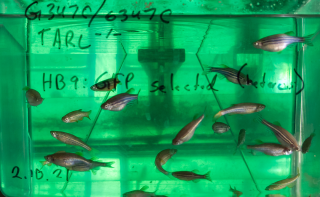
Zebrafish models are used to look for new ways to treat ALS
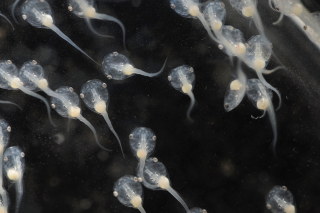
Albino Xenopus laevis tadpoles, less than two weeks after fertilization, are an ideal experimental model for studying early brain development due to the translucency of their bodies, making it possible to capture time-lapse microscopic images of growing brain cells in the intact living organism. (photo credit: David Freiheit)

The simple nervous system of sea slug Aplysia is used to study behavioural memory which is encoded by changes in the synaptic strength of identified neurons
Ethical guidelines for researchers
The Neuro follows the guidelines of the Canadian Council on Animal Care (CCAC), the national body responsible for regulating all animal research activities in Canada
All research protocols involving animals must be reviewed and approved by both The Neuro's Animal Care Committee and the McGill Animal Compliance Office. These protocols are assessed to ensure the research is ethical, necessary, and minimizes discomfort. Researchers must also follow the "Three Rs" principles mandated by the CCAC:
- Replacement – use alternatives to animals whenever possible
- Reduction – use the minimum number of animals needed for reliable results
- Refinement – improve techniques to reduce pain and enhance animal well-being
Researchers are required to complete comprehensive training before beginning any work involving animals.
Animal care at The Neuro
Researchers at The Neuro work with a range of species, including Aplysia (sea slugs), Zebrafish, Xenopus (frogs), mice, rats, and monkeys – specifically macaques and marmosets.
The Centre for Neurological Disease Models (CNDM) supports the responsible use of animals in research that benefits both humans and animals. Animal use in education and training is also supported when no suitable alternatives exist.
The CNDM is committed to maintaining the highest possible standards in animal care and well-being.
The CNDM follows the regulations of the CCAC and other federal agencies, and holds a certificate of Good Animal Practice. The centre is also committed to reducing and replacing animal use and refining research and teaching procedures wherever possible.
More information is available on McGill University’s Animal Research Policies.
Further Information:
Questions?
Contact: communications.neuro [at] mcgill.ca (Neuro Communications)