Dans une serre du campus Macdonald, Mark Lefsrud et ses étudiants sont à la recherche de la meilleure recette de lumière pour faire pousser des légumes et des fruits. « Il est en effet possible d’améliorer la production en serre en agençant les bonnes longueurs d’onde », explique le chercheur, qui rêve du jour où l’on pourra aussi produire des pêches en serre.

Category:
Published on: 30 Apr 2019

During a summer internship in California’s Lava Beds National Monument, Christopher Patterson, a second- year student in Bioresource Engineering, worked as a Research Assistant for ATiLT (Astrobiology Training in Lava Tubes).
“By studying naturally protective formations like lava tubes and other potentially habitable locations, I have become aware of the incredible opportunities that lie beyond our world not only for myself, but for humanity as a whole,” says Patterson.
Category:
Published on: 14 Feb 2019

Les changements climatiques ont une incidence sur l’agriculture, mais l’inverse est aussi vrai. "L’agriculture produit environ 10 % des émissions de gaz à effet de serre," signale Chandra Madramootoo, professeur au Département de génie des bioressources de l’Université McGill. "Cette contribution est certes moins importante que celle des secteurs de l’exploitation pétrolière et gazière et des transports, mais il est essentiel de bien comprendre d’où viennent ces gaz afin de pouvoir mieux les gérer."
Category:
Published on: 6 Dec 2018
…Speaking on the theme of the conference, titled:“Innovations in Food Science and Technology for Sustainable Economic Growth”, Director, Department of Bioresources Engineering, McGill University, Montreal, Canada, Prof. Michael Ngadi said Nigeria must be adequately prepared against any possible outbreak of food crisis through innovative and creative ideas.
Category:
Published on: 16 Nov 2018

Like a high-tech vending machine, but with lettuce!
A group of McGill Bioresource Engineering students have developed a project, funded by the Sustainability Projects Fund, that has installed the first autonomous controlled-environment growth chamber display on the Macdonald campus. Pierce Dias Carlson, Rachael Warner, Leo McGuire and Connor Miller each offer a unique skill-set in successfully creating a productive autonomous growth chamber.
Category:
Published on: 27 Aug 2018

Les fermes du Québec génèrent chaque année 75 millions de tonnes de plumes de poulets! Une partie est réduite en farine et ajoutée à la nourriture animale, mais le reste finit souvent dans les poubelles. Marie-Josée Dumont, professeure au Département de génie des bioressources à l’Université McGill, ne pouvait imaginer laisser une telle ressource gratuite et disponible en aussi grande quantité finir sa vie aux ordures.
Category:
Published on: 22 Aug 2018

Congratulations to PhD candidate Emmanuella Ellis (BRE-Supervisor Michael Ngadi) and Kajou teammates for capturing the “Audience Prize” at the recent 2018 World Vision Food Security Social Innovation challenge. Kajou is an agri-food venture that seeks to transform the cashew value chain in Côte d'Ivoire. By processing the cashew nut and fruit with local cooperatives, Kajou aims to offer a socially sourced product to key markets while providing sustainable opportunities to improve the livelihoods of smallholder farmers.
Category:
Published on: 13 Aug 2018

NutriPulse has captured 3rd place in the 2018 World Vision Food Security Social Innovation challenge! Co-Founders and PhD candidates Josephine Ampofo (FdSci), Adeyemi Adegbenjo (BRE) and Zeyan Zhong (FdSci) will spend the next year building their project.
Category:
Published on: 13 Aug 2018

Congratulations to James McGill Professor Vijaya Raghavan, Bioresource Engineering, who is the 2018 recipient of the American Society of Agricultural and Biological Engineers' (ASABE) International Food Engineering Award. This award recognizes Raghavan's dedication to promoting agricultural and biological engineering internationally.
Part of the citation reads:
Category:
Published on: 2 Aug 2018
Participants, including scientists from McGill University, Canada, Tamil Nadu Agricultural University, NGOs, representatives from processing machineries industry, small and micro level food enterprises, push cart vendors and farmers took part in the workshop.
Category:
Published on: 19 Feb 2018
Vijaya Raghavan, Professor, McGill University, which is one of the collaborators of the project, said that promoting the consumption of small millets was not only key for addressing malnutrition related issues, but also to address climate change.
Category:
Published on: 19 Feb 2018

Closest to cow’s milk in range of nutrients it offers
Category:
Published on: 9 Feb 2018
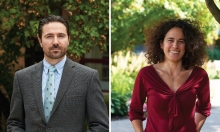
Congratulations to Jan Adamowski (Bioresource Engineering) and Elena Bennett (Natural Resource Sciences) on their induction into the Royal Society of Canada. The announcement was made in September, and the induction ceremony was held in late November.
CITATIONS:
Category:
Published on: 11 Dec 2017
McGill University researchers [Grant Clark & Chandra Madramootoo] at Macdonald campus in Ste-Anne-de-Bellevue got some welcome news Monday when the federal government announced nearly $3 million in funding for research projects that will help farmers cut greenhouse gas emissions.
Category:
Published on: 14 Jun 2017
Bioresource Engineering professors Grant Clark and Shiv Prasher, along with colleagues Dr. Maryam Kargar (Postdoctoral Fellow and Project Manager), Masters student Marcelo Frosi, Dr.
Category:
Published on: 19 Apr 2017
Pages
