How can we help societies achieve more resilient agriculture in the face of geopolitical disturbances and climate change? Why do we continue to propose agricultural systems based on globalized commodity markets as the only way to feed ourselves? Why continue to subsidize models that destroy soil fertility, ecosystems and put our health at risk?
Published on: 20 Jun 2022
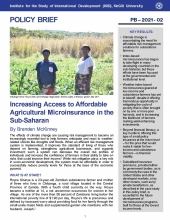
In this new policy brief by Brenden McKinney, we learn that the effects of climate change are causing risk management to become an increasingly essential tool to help farmers anticipate and react to weather- related shocks like droughts and floods.
Published on: 18 Oct 2021
McGill alumnus Marc-André Isabelle (Dip.FMT, BEng. Bioresource) is a course lecturer in the Farm Management & Technology program. The Isabelle farm in Coteau-du-Lac, Quebec, has evolved and expanded throughout the years, from dairy to strawberries to produce, and most recently launching FestiFleurs, a popular pick-your-own bouquet event.
Published on: 4 Aug 2021

Keesha Ness’s family certainly knows farming – they’ve been doing it for nearly 100 years and plan to celebrate when they reach that milestone next summer.
Ness is passionate about farming, loves her cows, and plans to follow the family’s tradition.
“I’m definitely hoping to help out with the management side,” says Ness of her family’s Ayrshire dairy farm in Howick, Quebec.
“I really love the management side of it.”
Category:
Published on: 21 Nov 2019
Ramzy Kassouf recently appeared in two videos produced by the Union des producteurs agricoles (UPA) which spoke to the importance of preserving and nurturing the 2047 hectares of remaining agricultural land on Montreal Island - the majority of which are found in Ste-Anne-de-Bellevue, Senneville and Île-Bizard.
Published on: 2 May 2018
A friend realized his life’s dream through one of the generous programs offered by the [Macdonald] campus of McGill University in Saint Anne-de-Bellevue…
Macdonald campus, therefore, is a God-send.
Published on: 12 Jul 2016
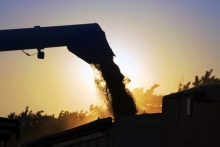
Drought and extreme heat events slashed cereal harvests in recent decades by 9% to 10% on average in affected countries – and the impact of these weather disasters was greatest in the developed nations of North America, Europe and Australasia, according to a new study led by researchers from McGill University and the University of British Columbia.
Category:
Published on: 6 Jan 2016

http://www.cbc.ca/player/News/Canada/Montreal/ID/2487230329/
CBC News - August 11, 2014
McGill's Farm to School Project (SP0100) Summer Camp Click on the link above to watch the full story!
Category:
Published on: 19 Aug 2014

In a number of cities around the world, residents have transformed previously derelict sites, ignored corners and over-grown verges into green and productive vegetable plots
Published on July 30, 2014 | Environmental Research Web
For example, in York, UK, an "edible map" reveals that there is garlic mustard and horseradish growing in abundance alongside the river, and plums will be available on a tree in a street in Osbaldwick by August.
Category:
Published on: 25 Jul 2014
Living in a city puts everything at your fingertips: From fashion and movies to social movements and political experiments, residents of urban areas experience most everything before it trickles through the suburbs and into rural communities.
Published on July 29, 2014 | Yahoo! News
by: Willy Blackmore
Category:
Published on: 25 Jul 2014

McGill Student Jakub Dzamba desigs cricket incubator to feed growing interest in insect farming
Published on July 23, 2014 | Journal Metro
by: Mathais Marchal
Category:
Published on: 25 Jul 2014

Given the need to feed an estimated 2.4 billion more people by the year 2050, the drive toward large-scale, single-crop farming around the world may seem inexorable.
Published on Feb 21, 2014 | Teatro Naturale International
Written by S.C.
Published on: 24 Feb 2014
