As tench continue to spread through the St. Lawrence River, a study from McGill University provides fisheries managers with guidance on how to detect the invasive species, an essential first step in preventing it from reaching new waters. The findings can inform efforts to contain and manage existing populations, helping agencies determine how and where to carry out removal or control activities.

Category:
Published on: 21 Jan 2026
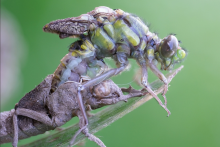
A study has found that the impact of climate change on an animal’s traits can begin much earlier than scientists previously thought – a discovery that could reshape how researchers and policymakers approach biodiversity conservation.
Category:
Published on: 12 Jun 2025
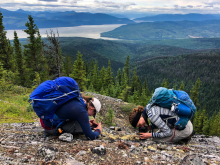
A nationwide initiative is inviting Canadians to help map the country’s biodiversity, one photo at a time. From June 1 to Oct.1, Blitz the Gap is mobilizing citizen scientists, researchers and nature enthusiasts to document species from coast to coast to coast,
Category:
Published on: 30 May 2025

A new study from McGill University researchers suggests the use of artificial intelligence (AI) to rapidly analyze vast amounts of biodiversity data could revolutionize conservation efforts by enabling scientists and policymakers to make better-informed decisions.
Category:
Published on: 12 Mar 2025
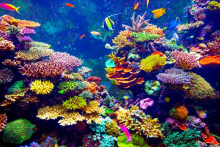
What maintains stability within an ecosystem and prevents a single best competitor from displacing other species from a community? Does ecosystem stability depend upon the presence of a wide variety of species, as early ecologists believed, or does diversity do the exact opposite, and lead to instability, as modern theory predicts?
Category:
Published on: 21 Mar 2024

Uncertainty in measuring biodiversity change could hinder progress towards global targets for nature
Category:
Published on: 16 Feb 2024

It's not every day that a university assignment transforms into a real-world conservation initiative. Yet, that's precisely what happened with the Macdonald Campus Pollination Meadow project. What began as coursework evolved into an ecological marvel, all thanks to the hard work and vision of a group of Macdonald students led by Alex Kuijper Dickson BEng’23 (Bioresource) and Heather Brown BSc(AgEnvSc)’24.
Category:
Published on: 29 Nov 2023

Dr. Murray Humphries (PhD’01), a passionate wildlife biology professor at the Macdonald Campus, spends his days immersed in the fascinating world of biodiversity—the colorful, complex tapestry of life on Earth. At the Macdonald Campus, we don't just study this diversity, we celebrate it.
Category:
Published on: 29 Nov 2023

Insect populations are widely influenced by weather anomalies, with decreasing numbers observed during unfavorable conditions and a spike in normal periods, according to a new study. The study published in Nature tries to resolve a debated topic: Are insect populations declining? Several studies have reported a decline in insect populations and diversity while others have questioned this. (Nature)
Here is an expert from McGill University who can provide comment on this issue:
Category:
Published on: 3 Oct 2023

NSERC Alliance Grant supports McGill-led Canadian team, new global climate center on AI for biodiversity change
Category:
Published on: 18 Sep 2023
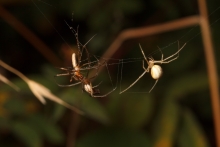
For years, pollinator declines have been a pressing issue for ecosystem health and food security in the face of climate change and human impacts on the environment. Even in their sleep, pollinating insects cannot catch a break – for fear they’ll be taken down by a small, but mighty predator: the candy-striped spider. Research published in Ecology took a closer look into this spider’s behaviour and found that the result of their stealth attacks could have substantial impacts on ecosystems.
Category:
Published on: 19 Apr 2023

When natural habitats are cleared to make way for cities, roads and agriculture, this often leaves behind “islands” of fragmented habitat that can place species at risk of extinction. Species are at risk when they find it hard to move among habitat patches to find resources and reproduce.
Category:
Published on: 22 Mar 2023

The 2022 United Nations Biodiversity Conference of the Parties (COP15) was held in Montreal on December 7-19, 2022. The conference’s outcome agreement, known as “30×30” means the protection of 30 per cent of land and oceans by 2030.
Published on: 13 Jan 2023
Tackling climate change and preserving biodiversity a key priority for McGill and Quebec
The Fonds de recherche du Québec announced its latest rounds of funding earlier this month in support of research, training, and initiatives to tackle major societal challenges—including climate change and biodiversity loss.
Category:
Published on: 30 Jun 2022
Professors Murray Humphries, Director of the McGill Centre for Indigenous Peoples’ Nutrition and Environment (CINE), and Treena Delormier and Hugo Melgar-Quinonez, both from the School of Human Nutrition, will play key roles in the NFRF-T project, Biodiversity Conservation and the Health and Well-being of Indigenous Peoples, led by the University of A
Category:
Published on: 24 Jan 2022
Pages
