
 Program Location
Currie Gymnasium
 Start Term
Fall & Winter Semesters
 Program Type
Thesis
 Schedule
Full-Time
 Credits
45 Credits
 Duration
2-3 Years
 Administered by
Kinesiology & Physical Education (KPE)
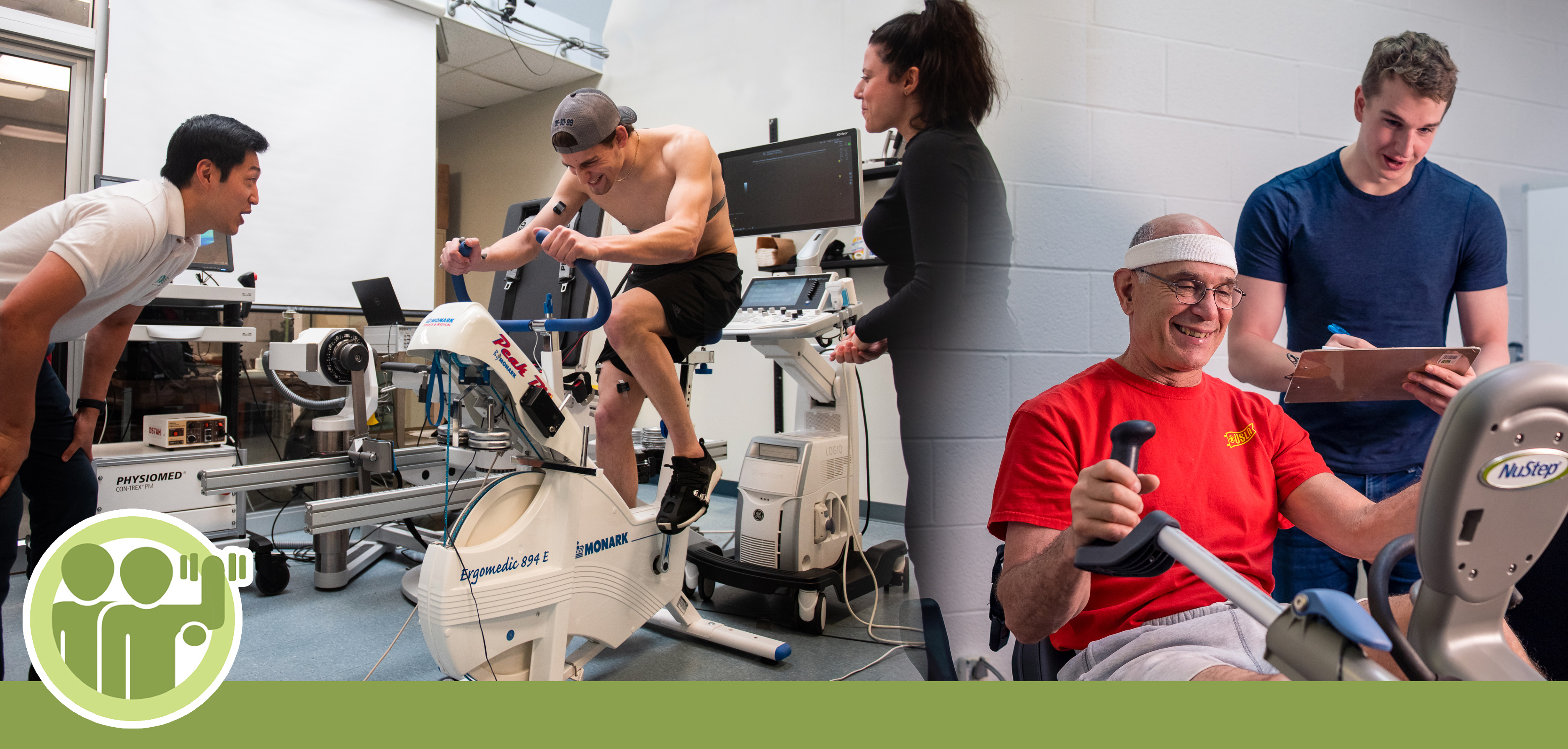
Delve into kinesiology research in a program that enables you to get hands-on experience in the field of Biomechanics and Neuroscience or Exercise Physiology, under the mentorship and guidance of renowned McGill experts. Be part of cutting-edge discovery as part of a team that aims to develop practical strategies to enhance health and well-being or athletic performance and rehabilitative exercise training across various populations and settings.
Have questions?
Program Options
- Biomechanics and Neuroscience: Engage in research to better understand human structure and function interactions between biology, mechanics, and/or the nervous system, exploring various health conditions within different population groups and in a variety of settings.
- Exercise Physiology: Explore the effects of exercise and physical activity on functional, health, and performance outcomes in healthy, clinical, and athletic populations. Areas of interest may include aging cardiovascular and respiratory (patho)physiology, nutrition and exercise metabolism, musculoskeletal health, prevention and management of chronic disease, and rehabilitative exercise training.
Full Program Details from the Course Catalogue
Kinesiology and Physical Education (Thesis) (M.Sc.) (45 credits)
Offered by: Kinesiology and Physical Ed (Faculty of Education)
Degree: Master of Science
Program credit weight: 45
Program Description
The M.Sc. in Kinesiology and Physical Education (Thesis) focusses on research in the social and pedagogical sciences related to kinesiology, physical activity, and physical education. Related areas of research include, but not limited to, biomechanics, exercise physiology and motor control and learning.
Thesis Courses (24 credits)
| Course | Title | Credits |
|---|---|---|
| EDKP 691 | Thesis Research 1. | 6 |
Thesis Research 1. Terms offered: Summer 2026, Fall 2026, Winter 2027 A comprehensive literature review in the general area of the thesis topic. Independent work under the supervision of the thesis advisor(s). | ||
| EDKP 692 | Thesis Research 2. | 6 |
Thesis Research 2. Terms offered: Fall 2026, Winter 2027 Independent work under the supervision of the thesis advisor(s) culminating with a written proposal and oral seminar explaining the direction of the thesis research. | ||
| EDKP 693 | Thesis Research 3. | 6 |
Thesis Research 3. Terms offered: Fall 2026, Winter 2027 Ongoing research pertaining to the thesis under the direction of the thesis advisor(s). | ||
| EDKP 694 | Thesis Research 4. | 6 |
Thesis Research 4. Terms offered: Fall 2026, Winter 2027 Independent work under the supervision of the thesis advisor(s). Final submission and approval of the thesis. | ||
Required Courses (12 credits)
| Course | Title | Credits |
|---|---|---|
| EDKP 605 | Research Methods 1. | 3 |
Research Methods 1. Terms offered: Fall 2026 A critical examination of philosophical issues, current paradigms, and research methodologies related to conducting research in kinesiology and physical education. | ||
| EDKP 621 | Seminar in Kinesiology and Physical Education 1A . | 1.5 |
Seminar in Kinesiology and Physical Education 1A . Terms offered: Fall 2026, Winter 2027 Seminars given by students and invited speakers covering different areas of research related to kinesiology and physical education. | ||
| EDKP 622 | Seminar in Kinesiology and Physical Education 2A . | 1.5 |
Seminar in Kinesiology and Physical Education 2A . Terms offered: Fall 2026, Winter 2027 Seminars given by students and invited speakers covering different areas of research related to kinesiology and physical education. | ||
| EDKP 623 | Seminar in Kinesiology and Physical Education 3A . | 1.5 |
Seminar in Kinesiology and Physical Education 3A . Terms offered: Fall 2026, Winter 2027 Seminars given by students and invited speakers covering different areas of research related to kinesiology and physical education. | ||
| EDKP 624 | Seminar in Kinesiology and Physical Education 4A. | 1.5 |
Seminar in Kinesiology and Physical Education 4A. Terms offered: Fall 2026, Winter 2027 Seminars given by students and invited speakers covering different areas of research related to kinesiology and physical education. | ||
| EDPE 676 | Intermediate Statistics. | 3 |
Intermediate Statistics. Terms offered: Fall 2026 Concepts and procedures of conducting basic descriptive and inferential statistics, including analysis of variance, correlation, and regression models. Provides experience with data-analysis tools. | ||
Complementary Courses (9 credits)
Students must take a minimum of 3 credits of coursework in a classroom setting in the area of concentration selected in consultation with the Graduate Student Advisor.
| Course | Title | Credits |
|---|---|---|
| EDKP 548 | Applied Exercise Psychology. | 3 |
Applied Exercise Psychology. Terms offered: this course is not currently offered. This course examines common theories and interventions used to understand and promote physical activity by (a) reviewing, discussing, and critically evaluating theories of health behaviour change, and (b) learning and applying physical activity counselling strategies. | ||
| EDKP 552 | Advanced Cardiopulmonary Exercise Physiology. | 3 |
Advanced Cardiopulmonary Exercise Physiology. Terms offered: Fall 2026 Studied through the lens of cardiorespiratory limitations to human exercise performance, focus is on integrative aspects of cardiovascular and respiratory system adjustments to exercise in ostensibly healthy adults. | ||
| EDKP 553 | Advanced Clinical Cardiopulmonary Exercise Physiology | 3 |
Advanced Clinical Cardiopulmonary Exercise Physiology Terms offered: this course is not currently offered. How pathophysiological abnormalities in the structure and function of cardiovascular and respiratory systems limit exercise tolerance and how this can be improved in people with chronic health conditions. | ||
| EDKP 566 | Advanced Biomechanics | 3 |
Advanced Biomechanics Terms offered: this course is not currently offered. Examination of biomechanical applications in various contexts such as clinical, ergonomic, sport, aging, comparative, robotics. | ||
| EDKP 603 | Individual Reading Course 1. | 6 |
Individual Reading Course 1. Terms offered: Fall 2026 Supervised readings supervised by a member of staff. Topics will be chosen to suit individual interests. | ||
| EDKP 616 | Individual Reading Course 2. | 3 |
Individual Reading Course 2. Terms offered: Fall 2026, Winter 2027 Reading Course. | ||
| EDKP 631 | Qualitative Methods. | 3 |
Qualitative Methods. Terms offered: this course is not currently offered. Examination of qualitative research methods and methodologies in sport, physical education and physical activity settings, including issues of epistemology, ontology, research paradigms, methods of data collection, analysis, and forms of representing qualitative research findings. | ||
| EDKP 662 | Musculoskeletal Responses to Exercise. | 3 |
Musculoskeletal Responses to Exercise. Terms offered: Winter 2027 Examination of acute and chronic adaptations of the musculoskeletal system to different types of exercise, and current concepts and understanding of muscle mass regulation, fatigue, motor unit recruitment, and bone strength determinants. | ||
| EDKP 664 | Motor Learning and Behaviour. | 3 |
Motor Learning and Behaviour. Terms offered: this course is not currently offered. The analysis of conditions and factors related to human learning and performance or behavioural potential using the information processing model of behaviour. Seminar format is used to discuss experimentation and theory that examine motor skill acquisition. | ||
| EDKP 671 | Experimental Problems. | 3 |
Experimental Problems. Terms offered: Winter 2027 Study in one area of: ergo-physiology or biomechanics or psychology of motor performance or motor performance for exceptional children. To provide an opportunity to conduct a research project and develop an awareness of the problems involved in the area of concentration under departmental supervision. | ||
| EDKP 672 | Advanced Experimental Problems. | 6 |
Advanced Experimental Problems. Terms offered: Fall 2026 Students conduct a research project and focus on advanced and intensive experiemental problems involved in the area of concentration under departmental supervision. | ||
Students may also take courses (500, 600, or 700 level) from outside of the department chosen in consultation with the supervisor or student advisor, up to a maximum of 6 credits.
Graduate Supervision
Select the links below to reveal lists of potential supervisors.
(Note that individual supervisors may list further details, such as when they are taking new students and application instructions in the Graduate Supervision section at the bottom of their individual profile pages.)
Eligibility (Admission Criteria)
- Minimum Cumulative Grade Point Average (CGPA) of 3.0 overall in undergraduate studies, or at least 3.2/4.0 over the last two years of full-time study
- Undergraduate degree in Physical Education, Exercise Science, Kinesiology, or equivalent. Students who seek admission without a degree in Physical Education, Exercise Science, or Kinesiology may be required to complete up to 30 credits of undergraduate work to qualify for admissions (to be determined by the candidate’s supervisor and/or Graduate Program Director).
- Applicants are advised to contact a potential supervisor in advance of the application deadline. Prospective students must secure at least one supervisor to be eligible for program acceptance.
- English English Language Proficiency: Please verify the Graduate and Postdoctoral Studies website to see if you are required to submit proof of English proficiency or if you are exempt.
- A series of required supporting documents must accompany your application and should be submitted via the Graduate Applicant Portal. Please see below for further details.
Application Process & Supporting Documents
All applications are done through McGill's Graduate Applicant Portal. The application steps and instructional video are on the University's Future Graduate Students website. The following documents must be part of your application: (Note that all uploaded documents to the portal must be in PDF format.)
- A complete application form (accompanied by your application fee payment).
- Transcripts: Submit a copy of your unofficial transcripts from all previous university-level studies. You will also be required to submit official transcripts after being admitted to the program.
- CV/Résumé: A formal overview of your experience and other qualifications, including employment, academic credentials, publications, contributions, and significant achievements.
- Personal Statement: A letter of intent (one to two pages) describing your motivations for wanting to pursue this academic program and a brief overview of your intended research topic. If you are in contact with your intended supervisor, tailoring your personal statement to a specific supervisor and their research is advisable.
- Two (2) Letters of Reference that highlight your accomplishments and potential as a graduate student:
Letters must meet the following criteria:
-
Letters must be dated and not be more than 12 months old.
-
Letters should be written by a person of authority in a field that relates to your intended program. This may include professors, instructors, employers, mentors, etc. you have studied/worked with.
-
The reference must include their position and full contact information at the institution.
-
The intended program of study must be clearly indicated
- Letter content should include relevant details that serve to advocate for the candidate’s acceptance and/or aid an admissions committee in making an informed decision.
Note that your letters of recommendation are also considered when evaluating your dossier for internal funding opportunities.
Application Deadlines
Complete applications must be received by the dates indicated below. Kindly note that no applications are accepted for Summer Semester admission.
Canadian Applicants:
Fall Admission: February 15
Winter Admission: October 1
Special/Exchange/Visiting Applicants:
Fall Admission: February 15
Winter Admission: July 15
Special/Exchange/Visiting Applicants:
Fall Admission: June 30
Winter Admission: July 15
What to Expect After Submitting your Application
Recommended candidates will receive a "Recommendation of Acceptance" email by April, confirming that their application has been reviewed and is being transmitted to McGill's Graduate and Postdoctoral Studies (GPS). Successful candidates will be contacted via email with an official offer of admission. Candidates are then required to confirm their acceptance via their Graduate Applicant Portal. Kindly note that acceptance deferrals are not typically granted except under extraordinary circumstances.