MANDATE
The overall goal of the McGill Global Health Programs Executive Council (Executive Council) is to create and help implement a new, comprehensive strategy for global health within the Faculty of Medicine and Health Sciences.
In order to achieve this goal, the Executive Council will be a mechanism for a diverse group of individuals to collaborate, debate and create a vision for the future of global health within the Faculty of Medicine and Health Sciences. The members will sit on the Executive Council for a three year, renewable term.
ROLES & RESPONSIBILITIES
The Executive Council will function as fora for exchange of ideas and issues, ensuring communication with each other and with external partners. They will be responsible for crafting the strategic vision for GHP and identifying opportunities for the future development for global health related research, teaching and service to McGill and its affiliated communities.
In addition to examining approaches and opportunities, the Executive Council will focus on strategic cross-collaborative initiatives between the Faculty of Medicine and Health Sciences as well as other disciplines within the University.
Matthew Hunt, PT, PhD
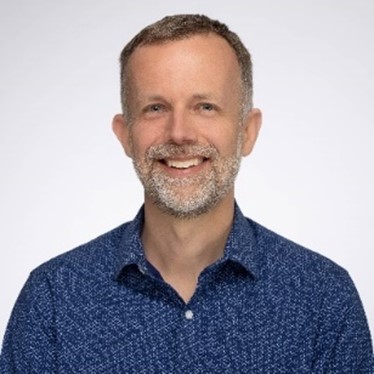 Chair, GHP Executive Council
Matthew Hunt is a Professor at McGill University’s School of Physical and Occupational Therapy, and a researcher at the Centre for Research on Ethics and the Centre for Interdisciplinary Research in Rehabilitation. He directs the ethics axis of the Quebec Population Health Research Network and is a faculty lead for the School of Physical and Occupational Therapy’s Global Health Rehabilitation Initiative. Matthew conducts research at the intersections of ethics, rehabilitation, and humanitarian action, and co-leads the Humanitarian Health Ethics Research Group (humanitarianhealthethics.net) and the Levier living laboratory in rehabilitation ethics.
Tasha Ayinde, MPPPA
 Tasha Ayinde holds the position of Director of Administration and Operations for the School of Population and Global Health (SPGH) and Administrative Excellence Centre 3 (AEC 3) within the Faculty of Medicine and Health Sciences (FMHS). A graduate of Simon Fraser University, British Columbia and McGill University, Montreal, Ms. Ayinde also holds a Master of Public Policy and Public Administration degree from Concordia University. Her research and professional interests include health policy, organizational development, issues related to governance and program evaluation.
With an extensive experience spanning two decades in higher education, Tasha has taken on various leadership roles. Prior to joining McGill University, she worked as a human resource consultant in her own firm, servicing public and private organizations and held management positions within the British Columbia provincial government, private sector and not-for-profit groups. She is has played an integral role in the start-up of a number of entities including the McGill Interdisciplinary Initiative in Infection and Immunity and the COVID-19 Immunity Task Force Secretariat.
Ms. Ayinde has actively engaged in steering committees and has made contributions to the FMHS Think Dangerously Strategic Planning Initiative, Family Medicine Task Force, and the Dean of Medicine Global Health Task Force. Beyond McGill, she holds leadership roles as the University Liaison for the Canadian Association for Global Health and Chair of the Global Health Network of the Association of Faculties of Medicine of Canada since April 2022.
Alexa Bailey, B.Eng. (candidate)
 Alexa Bailey (she/her) is a 2022 Loran Scholar in her final year of bioengineering at McGill, passionate about advancing health equity through research, innovation, and community engagement. At McGill's School of Population and Global Health, she supports research on global health education, decolonial approches to health curricula, and the translation of health technologies into practice. She is the founder and chair of the Girls to the Power of Math Foundation, a registered charity that provides free programs to girls across Canada, boosting their confidence in math through mentorship, games, and a collaborative social environment. She also speaks and contributes to STEM organizations and is committed to making STEM more inclusive for gender-diverse students. As co-president of the McGill Students' Sign Language Club, she organizes American Sign Language courses taught by Deaf instructors and workshops that promote accessibility and equity on campus. Through her academic and community work, she is interested in how we can build more equitable and accessible health systems.
Anne-Laurie Beaubrun, BScN, MEd
 Serving on the GHP Executive Council during Josée Lavallée’s leave, 2026–27
Anne-Laurie Beaubrun (she/her) is from Haiti, and her work is shaped by the strength and legacy of her ancestors. She obtained a Bachelor's degree in Nursing from the University of Sherbrooke and a Master of Education from the University of Ottawa, where she explored her exprience as a Black Nursing student. Anne-Laurie has spent most of her clinical career in community health. Her clinical experience includes pediatric, adolescent, and postpartum care, as well as school-based nursing. She is the interim Director of the Office of School Accountability in Nursing (OSAN) in the Ingram School of Nursing (ISoN). Under her direction, OSAN advanced equity-based nursing education, research, service, and leadership through an anti-racist, anti-oppressive, and decolonizing lens. It also serves as an umbrella for Global and Indigenous Health Nursing. The Office acts as a resource for various ISoN committees, working collaboratively with faculty and staff on processes and programs, including student admissions and faculty recruitment. OSAN also collaborates with community partners and students to enhance the nursing curriculum and support nursing practices and education rooted in social justice principles.
Doua Benbouzid, B.A. (candidate)
 Doua Benbouzid is an undergraduate student in the Bachelor of Arts in Population and Global Health degree program at McGill University, where she is helping establish the program's student association to strengthen student representation and build connections among peers. She also works with a youth organization that supports student engagement and educational success through hands-on learning projects. As a member of the Global Health Programs Executive Council, she hopes to help expand undergraduate student involvement in global health.
Dan Deckelbaum, MDCM, FRCSC, MPH
 Dan Deckelbaum is Professor of surgery and critical care medicine at the Divisions of Trauma and General Surgery at the McGill University Health Centre (MUHC), associate member of the Department of Epidemiology, biostatistics and occupational health at McGill University, and honorary associate professor of the National University of Rwanda. He obtained his subspecialty training in trauma surgery and critical care at Jackson Memorial Hospital in Miami. During his fellowship, he also completed a Masters of Public Health at the University of Miami.
In addition to his passion for clinical practice, he has developed an avid interest in global surgical education and development, as well as disaster preparedness and response, establishing and co-directing the MUHC Centre for Global Surgery. His interest in global health is founded upon on-site clinical experience in government hospitals in East Africa as well as disaster response activities in Somalia, Kenya, Turks and Caicos, and Haiti. This clinical experience is the basis for ongoing capacity building programs in resource limited settings across the globe. This includes education programs in resource limited setting.
Leila Larson, BASc, MPH, PhD
 Leila Larson is an Associate Professor in the School of Human Nutrition at McGill University. Her primary areas of research are maternal and child nutrition and early childhood development. Her research focuses on studying the impact of nutrition and psychosocial stimulation interventions, and investigating prenatal and postnatal exposures that influence nutrition and velopment of children, adolescents, and caregivers. She currently leads several projects to study the short- and long-term impacts of early life nutrition inputs.
Josée Lavallée, BScN, MEd

Currently on leave; Anne-Laurie Beaubrun is serving on the Executive Council during her absence.
Josée Lavallée (she/her) is Red River Michif and member of the Manitoba Métis Federation’s Bison Local. She obtained a Baccalauréat en Sciences Infirmières (BScN) from Université de Saint-Boniface. Josée has spent most of her clinical career in community health and advocating for culturally safe, anti-racist, and anti-oppressive nursing practice and education. Josée has a Master of Science in Community Health Sciences (MSc) from the University in Manitoba where she explored the interrelated nature of Red River Métis culture and health. Josée is the inaugural Director of the Office of Social Accountability in Nursing (OSAN) in the Ingram School of Nursing. Under the direction of Ms. Lavallée, the OSAN will support equity-based nursing education, leadership, service and research at the ISoN as well as serve as an umbrella for the Global and Indigenous Health Nursing and the Equity, Anti-Racism, Anti-Oppression, and Decolonization activities of the School. The Office will act as a resource to various ISoN committees, working collaboratively with faculty and staff on processes and programs, including recruitment and admission of students, and recruitment of faculty.
Chen Liang, PhD
 Chen Liang is a Professor of Medicine at McGill University, an Associate Member of the Departments of Microbiology and Immunology and Global and Public Health, Senior Investigator at the Lady Davis Institute of the Jewish General Hospital, Director of the Mark Wainberg Centre for Viral Diseases (MCVD). He leads the Pandemic Preparedness research theme at the McGill Interdisciplinary Initiative in Infection and Immunity (MI4). Prof. Liang's research uses molecular, genomic and proteomics approaches to understand the complex interactions between viruses and hosts, with focus on antiviral innate immune resposnes to pathogenic RNA viruses focus on antiviral innate immune responses to pathogenic RNA viruses including HIV-1 and SARS-CoV-2. His group has discovered the anti-HIV-1 activity of the interferon-stimulated genes IFITM and MxB which restrict the early steps of HIV-1 infection and belong to the few known HIV-1 restriction factors. He has pioneered the application of the CRISPR gene editing technology in curing HIV-1-infected cells by cleaving and eliminating the integrated proviral DNA. His group is dedicated to the understanding of the dysregulated interferon and inflammatory cytokine responses in SARS-CoV-2-infected individuals. Prof. Liang’s research has been continuously supported by grants from the Canadian Institutes of Health Research (CIHR), Fonds de recherche du Québec (FRQ), the Canadian Foundation for AIDS Research (CANFAR). He has over 180 publications with more than 10,000 citations and an H-index of 57.
Silvana Matassini Eyzaguirre, PhD
 Silvana Matassini Eyzaguirre is a medical anthropologist and Faculty Lecturer in the Department of Global and Public Health at McGill University. She has recently taken on the role of Co-Director of the Bachelor of Arts program in Population and Global Health. Her ethnographic research focuses on health inequalities and women's health, primarily in Latin America, with particular attention to chronic pain and endometriosis.
Sara Maria Mazilu, B.A. (candidate)
 Sara Maria Mazilu is an undergraduate student in the Bachelor of Arts in Population and Global Health at McGill University and a member of its inaugural cohort. She is one of the founders of the program's upcoming student association, where she hopes to foster student engagement and build a strong undergraduate community. Previously, Sara served as a student ambassador, peer supporter, and peer tutor at John Abbott College, where she completed a Diplôme d'Études Collégiales (DEC) in Honours Social Science in Psychology. Her interests lie in the connection between global health, public policy, governance, and international affairs, particularly in health equity, advocacy, and inclusive decision-making. She has also participated in Model United Nations conferences and the Bishop's Forum, reflecting her interest in diplomacy and civic engagement. As a recipient of McGill's Community Leadership Entrance Award, Sara is passionate about bringing student perspectives into conversations about global health and helping foster a more connected and engaged undergraduate community.
Khalid Mustafa Medani, BASc, MPH, PhD
 Dr. Khalid Mustafa Medani is an Associate Professor of Political Science and Islamic Studies at McGill University, where he is also Chair of the African Studies Program and Director of the Institute of Islamic Studies. He received a B.A. with Honors in Development Studies from Brown University, an M.A. in Development Studies from Georgetown University, and an M.A. and Ph.D. in Political Science from the University of California, Berkeley. His research focuses on globalization, the political economy of Islamist and ethnic politics, youth political radicalization, the informal economy, migration and remittances, civil war, and humanitarian and refugee crises in Africa and the Middle East. He is the author of Black Markets and Militants: Informal Networks in the Middle East and Africa (Cambridge University Press, 2021), which received a 2022 American Political Science Association award for Best Book in the Field of Middle East and North Africa Politics by a Senior Scholar. Dr. Medani has also worked as a researcher at the Brookings Institution and Stanford University’s Center for International Security and Cooperation. He has served as a lead consultant with international humanitarian, human rights, and development organizations, including UNDP, the UN Commission on Human Rights, OCHA, and USAID, on issues including poverty, displacement, refugees, and political mobilization.
Isabel Muñoz Beaulieu, B.A. (Hons)
 Isabel Muñoz Beaulieu is an MSc student at McGill’s Department of Family Medicine. At McGill, she has also completed a joint honors BA in International Development Studies and Philosophy. Isabel’s research interests focus on issues in humanitarian aid, global health ethics, and health systems and policy. Isabel has conducted research in humanitarian health ethics under the Institute of Health and Social Policy and as a Global Health Scholar. She is a member of the Humanitarian Health Ethics Research Group and has collaborated with organizations like the Center for Disaster Preparedness and the Canadian Red Cross. In addition, Isabel has gained practical experience working in the humanitarian and development field with the United Nations High Commissioner of Refugees in Guatemala and The Hunger Project. Isabel is a member of the health equity committee at Women’s College Hospital Institute for Health System Solutions and Virtual Care, where she works as a casual research assistant. She is one of the program coordinators for McGill’s chapter of the Canadian Association for Global Health and an executive member of the Family Medicine Graduate Student Society. Isabel’s research is supported by a Master’s Canada Graduate Scholarship with the Social Sciences and Humanities Research Council.
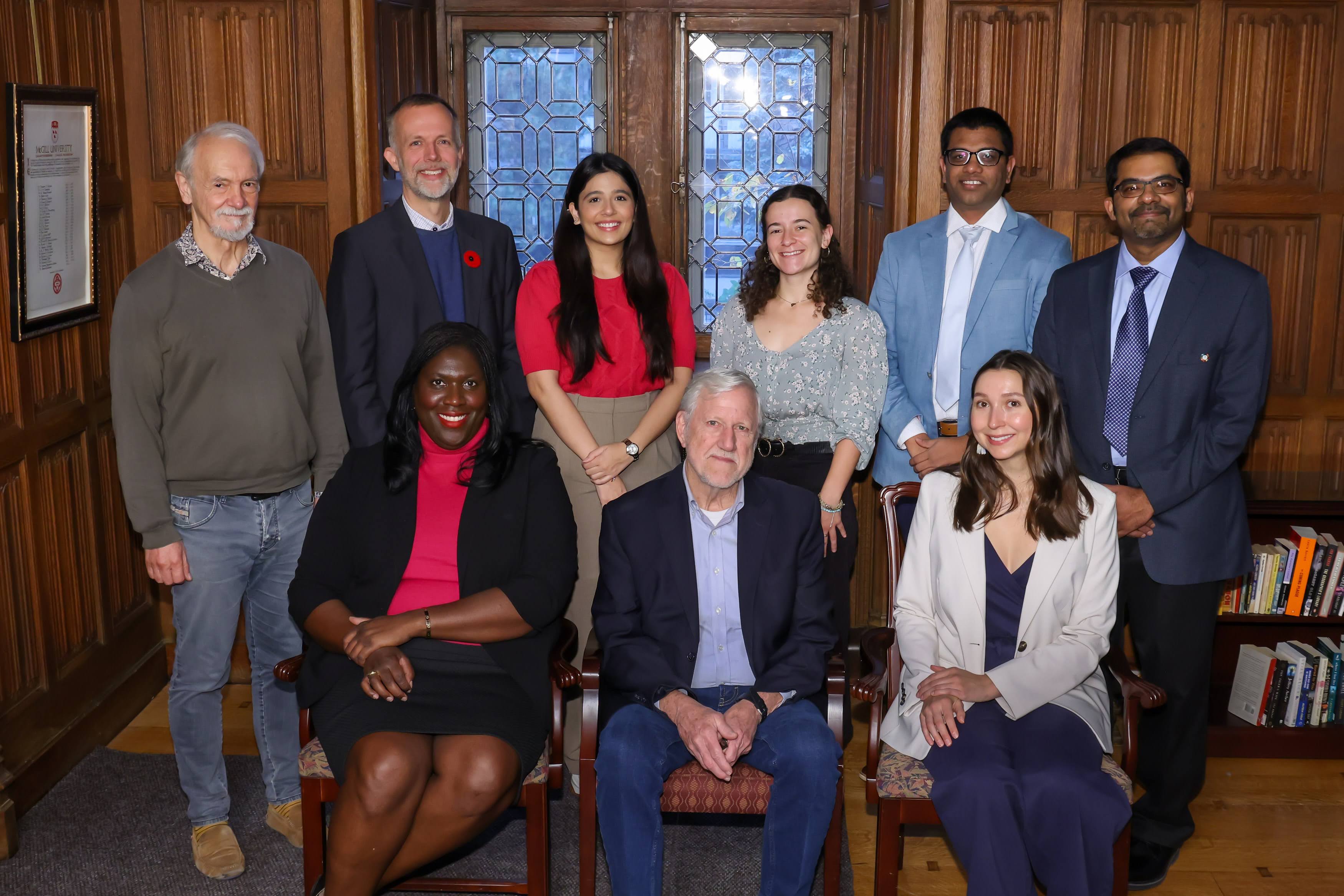
The McGill GHP Executive Council in 2023. Not pictured: Dr. Dan Deckelbaum. Photo Credit: Owen Egan and Joni Dufour for McGill University.

