
Description
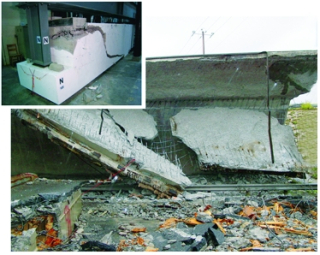
Research in the structures, construction materials and solid mechanics areas is pursued over a wide range of topics. Analytical, computational and experimental investigations are undertaken. Long-term fundamental studies as well as shorter-term design-oriented projects are continually in progress. However, prospective applicants should be informed that Faculty members are not actively involved in Construction Engineering and Project Management research. Examples of recent and current research projects under active investigation relate to seismic analysis of telecommunication towers; cable dynamics; seismic functionality of buildings; behaviour of structural members made of very high strength concrete; seismic response of steel and concrete framing systems; analysis of the drift characteristics of high-rise buildings with walls, frames and cores; infrastructure engineering, deterioration, causes, repair, service life prediction and extension; behaviour of rehabilitated concrete elements; finite element applications in biomechanics; modelling of natural phenomena and their effects on structures; condition assessment of infrastructure and prediction of residual life; optimal maintenance of constructed facilities, and large deformation analysis of thin membranes.
The facilities for structural engineering research include the Jamieson Structures Laboratory, which has the capability for the full-scale testing of structural components. A 15 by 9 metre strong floor, with a half-metre square grid of 450 kN loading points, is used for setting up special loading rigs. An MTS testing machine, with a loading capacity of 11,400 kN, is used for testing relatively large specimens with controlled load or displacement. Another MTS system with separate loading jacks having capacities up to 1000 kN and a Baldwin universal test frame with 2000 kN loading capacity are also available. An MTS Sintech machine of 150 kN capacity is used for testing smaller specimens requiring precise control of load, strain, or displacement. Computer-assisted data collection systems automatically monitor and record up to 60 channels of strain gauges and 60 channels of displacement transducers.
An example of research in the Structures group, courtesy of International Innovation – a leading scientific dissemination service:
Professor Ghyslaine McClure - "Preventing a Shock to the System"
Researchers


