Microbes across Earth’s coldest regions are becoming more active as glaciers, permafrost and sea ice thaw, accelerating carbon release and potentially amplifying climate change, according to a new international review from McGill University.

Category:
Published on: 26 Jan 2026

Freshwater browning is stunting fish growth of some species, shrinking populations of others and changing the composition of fish communities, McGill-led research suggests. “Browning” refers to freshwater bodies turning tea-coloured, a phenomenon driven by higher levels of dissolved organic matter and/or higher levels of iron in the water. Causes include changes in land use and climate, and reduced acid precipitation.
The findings indicate that changes in land use and climate are affecting biodiversity and how ecosystems function, with implications for fisheries management.
Category:
Published on: 19 Jan 2026

Thanks to their use of a unique methodology, a McGill-led research team has obtained new insights into how boulders affect snow melt in mountainous northern environments, with implications for local water resources.
The team found that snow near boulders melts faster, not only because rocks radiate heat, but also due to subtle processes that reshape the snow’s surface. This information will help researchers understand how small-scale processes affect downstream water resources.
Category:
Published on: 11 Nov 2025

Researchers at McGill University have identified bacteria that can indicate whether a blue-green algae (cyanobacteria) bloom is likely to be toxic, offering a potential water-safety early warning system. Blooms are becoming more frequent due to climate change, according to previous McGill research. They can produce various contaminants, known as cyanotoxins, that pose serious health risks to humans, pets and wildlife.
Category:
Published on: 3 Nov 2025

Hurricane Melissa, now a Category Five tropical cyclone, has made landfall in Jamaica. It is the strongest storm to hit the island country in at least 150 years and the most powerful recorded anywhere in 2025. It has caused severe flooding and mass evacuations across Jamaica and along the storm’s projected path, which includes Cuba and the Bahamas.
McGill experts are available to comment on this topic:
Category:
Published on: 28 Oct 2025
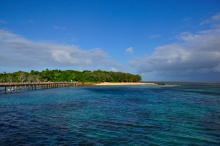
ISID welcomes the publication of a new policy brief by Professor of Practice Jamal Saghir and his colleague Ede Jorge Ijjasz-Vasquez. In this brief, Saghir and Ijjasz-Vasquez examine how Small Island Developing States (SIDS) are increasingly affected by the growing impacts of climate hazards, including tropical cyclones, storm surges, increases in temperature, heatwaves, droughts, coastal and riverine flooding, changing precipitation patterns, and sea level rise, among others.
Published on: 16 Oct 2025

May 12, 2025 | In an op-ed for Policy Magazine, MPP '25 Gabriel Blanc critiques Prime Minister Mark Carney’s energy policy, arguing that increasing oil and gas production is a misguided approach to Canada’s abundance agenda. Blanc highlights how the growth of renewable energy technology offers a more sustainable path to economic prosperity, urging Carney to prioritize climate action as an opportunity for leadership in the green economy.
Category:
Published on: 12 May 2025
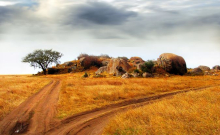
An international team led by McGill University researchers has devised a way to improve the accuracy of climate change models for the Global South by integrating historical records kept by missionaries and other visitors.
Category:
Published on: 7 Jan 2025

The Greater Montreal area is under a heat warning Monday as a warm and humid air mass could lead to a humidex value of 40. Environment and Climate Change Canada recently released the first results from its rapid extreme weather event attribution system, showing that human-caused climate change significantly increased the likelihood of recent heat waves in Quebec, Eastern Ontario, and Atlantic Canada.
Category:
Published on: 15 Jul 2024

Can hopeful moments lead to hopeful futures?
By Daphne Chalmers (McGill, Education), Julia Freeman (McGill, Bieler School of Environment), Diane Dechief (McGill, Office of Science Education), Natalya Gomez (McGill, Earth and Planetary Sciences), Blane Harvey (McGill, Education), Amy Janzwood (McGill, Bieler School of Environment/Political Science) and Nik Luka (McGill, Architecture and Urban Planning)
Category:
Published on: 8 Jul 2024

As the climate warms, many species are on the move, raising new challenges for policy-makers around the world. Shifts in the ranges of mosquitoes and disease-bearing ticks and bats are introducing illnesses such as malaria and Lyme disease into regions where health-care systems are unprepared. Movements of commercially important fish from one jurisdiction to another are shifting job opportunities and causing trade disputes.
Category:
Published on: 2 Jul 2024

Our alumna, Henna Hundal, from the MPP Cohort of 2020-21, has been making significant contributions to climate change advocacy. Henna has been featured prominently in the media, addressing urgent environmental issues. As a delegate to the U.N. Climate Change Conferences, she recently discussed the influence of Big Oil on climate policy in an interview with CNN's John Vause, following the U.N.
Category:
Published on: 12 Jun 2024

Lower-than-normal rain and snow have reduced Canada’s hydropower production, raising worries in the industry about the effects of climate change. In March, U.S. electricity exports to Canada reached their highest level since at least 2010. The increasing flow of power north is part of a worrying trend for North America. (New York Times)
Category:
Published on: 5 Jun 2024

Two McGill-led climate change mitigation projects receive funding from the New Frontiers in Research Fund’s (NFRF) International Joint Initiative for Research in Climate Change Adaptation and Mitigation Competition. Thirteen researchers receive grants through the NFRF Exploration Competition.
Published on: 5 Jun 2024

The EarthCARE satellite, a groundbreaking mission set to enhance our understanding of clouds and aerosols in the climate system, is ready for launch. Scheduled to lift off from California's Vandenberg Space Force Base aboard a SpaceX Falcon 9 rocket no earlier than May 28, 2024, this mission aims to provide invaluable data on cloud-aerosol interactions. These insights will significantly contribute to our knowledge of climate change and inform future strategies for climate adaptation and mitigation.
Category:
Published on: 24 May 2024
Pages
