Over 80 participants from various different backgrounds in jurilinguistics took part in the Third Summer Institute of Jurilinguistics that was held at the Faculty of Law of McGill University on August 31, 2009. The Institute was organized by The Quebec Research Centre of Private and Comparative Law (now known as the Paul-André Crépeau Centre for Private and Comparative Law), in collaboration with the other members of the Network of Jurilinguistic Centres. Amoung our participants were representatives from the Supreme Court of Canada, the Quebec Court of Appeal, the Translation Bureau, the Department of Public Works and Government Services Canada, the Department of Justice Canada, translators, lawyers and notaries from prominent Montreal firms. At the same time, professors and researchers from McGill University, University of Montreal, University of Sherbrooke and University of Milan (Italty) were also part of the participants. The program of the day was well adapted to the diversity of the particular audience. Academics and practioners who share an interest in juriliguistics were able to take this opportunity to make various presentations to the particiants.

The day began with welcoming remarks from the Director of the Center, Professor Lionel Smith, followed by the first session chaired by Me France Allard.
Me Francie Gow shared the experiences that allowed her to develop a career in legal translation first from the point of view as a law student and then as a translator-lawyer. She emphasized the importance for translators to take into account what they are not aware of in the law and the intrinsic difficulty of this exercise. Furthermore she elaborated on the importance of having a good sense of the procedural issues in order to accurately translate a judgement.

The second part of the session was moderated by Ms. Jimena Andino Dorato a doctoral student at the University of Montreal and researcher at the QRCPCL. Presenting a more theoretical perspective Ms. Andino Dorato presented various difficulties inherent in legal translation by using the publication process of a trilingual Civil Code of Quebec (Spanish, French and English) as illustration. In addition to presenting the strengths and weakensses of the method adopted during the translation process, she also highlighted the importance of jurilinguistics as part of legal theory and underlined the importance of the translator.
After a session break where participants continued to engage in lively disccusion, a round table moderated by Me François Blais followed. Presentations from Ms. Sylvette Savoie Thomas, Ms. Isabelle Chénard and Ms. Iliana Auverana focused respectively on the process of standardizing French vocabulary in the common law, the drafting of a standardization document and on the publications promoting access to justice in the two official langauges (PAJLO). During the discussions that followed the round table, questions of the possibility of updating files and fields of law whose vocabulary should be the subject of standardization were approached. The text of Ms. Thomas', Ms. Chénard's and Ms. Auverana's presentation can be found here: Sylvette Savoie Thomas Le processus de normalisation [pdf], Isabelle Chénard Techniques employées pour normaliser le vocabulaire français de la common law [pdf], Iliana Auverana Les publications du PAJLO - acquis et défis [pdf].
In the afternoon where the sessions were presided by Professor Yaëll Emerich, Ms. Gisèle Barnabé of the Joseph-Dubuc Institute analyzed the possiblity of implementing a legal training model offered in French to Manitoban health care profesessionals by the Joseph-Dubuc Institute. Like all health care programs aimed at increasing access to the health system in French for Manitoban Francophones, the establishment of a legal training program for professionals would help access to justice in French.
Following this, Ms. Aileen Doetsch, translator for the Max Planck Institute in Hamburg presented the difficulties of jurilinguistic translation of legal doctrine especially in light of the diverse languages and legal systems in the European Union. Based on her experiences with translating articles of comparative law from German to English, Ms. Doetsch pointed out the difficulties facing the translator when they must mediate between not only different languages but also different legal cultures.

The last session was moderated by Mr. Justice Nicholas Kasirer who was just recently nominated to the Quebec Court of Appeal. After presenting a vivid illustration of the debate between supporters of the standardization theory and the exoticization of translation theory, Mr. Justice Kasirer reflected on his thoughts of the issues raised by the late author Gérard Cornu who believed that the law and its expression in the French language were inseparable. Mr. Justice Kasirer wondered what place is left for the Civilian French of Cornu in the English translation he was preparing. It was then Acting Dean Daniel Jutras who had the task of concluding the day’s discussions. Dean Jutras highlighted that the summer Institute of Jurilinguistics inaugurated two new rooms at the Law Faculty and celebrated that the area had experienced its baptism by fire as part of such an exciting event. He then invited the participants to join him for cocktails in the Faculty of Law’s Atrium.
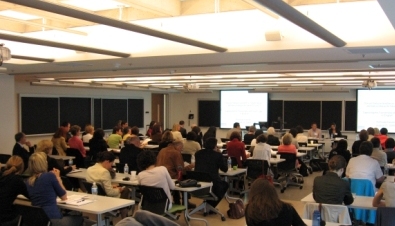
The 2009 edition of the summer Institute of Jurilinguistics was a resounding success because of the large number of important topics in the program. The organizers, officials of member jurilinguistic centres and participants expressed great satisfaction at the success of the event.