Dr. Dusica Maysinger

McIntyre Medical Sciences Building
3655 Prom. Sir-William-Osler
Room 1314
Montreal, QC, H3G 1Y6
Tel: 514-398-1264
Fax: 514-398-2045
dusica.maysinger [at] mcgill.ca (Email)
Web site
Publications
Education
Doctorate (PhD) University of Southern California, Los Angeles, USA; Postdoctoral training in neurochemistry at the Max-Planck-Institute, Munchen, Germany, University of Oxford,UK, McGill University, Canada. Other professional training: Karolinska Institut, Stockholm, Sweden (microdialysis); Cell Biology and Anatomy, Heidelberg, Germany (neuroscience).
Research
The “leitmotiv" of my research is the establishment of nanoparticles-based diagnostics and nano-delivery systems for therapeutic agents that will promote cell survival, neuronal growth and differentiation. I am particularly interested in the mechanisms that underlie the nanoparticle-cell interactions and signaling pathways involved in these processes. In the last several years our focus has been on the role of glia, particularly microglia, in the elimination OF nanostructured materials from, and their delivery to, sites of injury. We anticipate that our cell biological investigations of drug-polymer-cell interactions will have biomedical applications, especially in the fields of diagnosis and treatment. My main scientific contributions are in revealing the mechanisms of cell death by nanostructures and roles of organelles in cell adaptation and functional repair.
Professor emerita Dusica Maysinger talks about the future of neuromedicine. Read more:
Dr. Hans H. Zingg

Meritus and former Chair
LMC Montreal Glen
5325 Crowley Avenue, Suite 301
Monteal, QC H4A 2C6
Tel: 438-802-4536
Fax: 438-738-4144
Email: hans.zingg [at] mcgill.ca
No longer directing a lab
Research:
Dr. Hans H. Zingg earned his M.D. at the University of Basel, Switzerland, and his Ph.D. at McGill. Following postdoctoral training at Harvard, he joined McGill in 1984. He was Director of the Laboratory of Molecular Endocrinology at the Royal Victoria Hospital, holder of the Wyeth-Ayerst Chair in Women’s Health and Associate Director of the MUHC Research Institute before he assumed the Department Chairmanship (2002 – 2011). Although officially Professor Emeritus, he is still actively involved in medical and graduate teaching and runs his endocrine outpatient clinic at the Royal Victoria Hospital.
Work in his lab focused on the molecular mechanisms of oxytocin and oxytocin receptor gene expression and mechanisms of intracellular signaling. His current interests are on a more global and theoretical level and focus on the concepts of self-organization and complexity as basic principles underlying the emergence of life and consciousness.
Dr. Radan Capek
McIntyre Medical Building
3655 Prom. Sir-William-Osler
Room 118
Montreal, QC, H3G 1Y6
Tel: 514-398-3607
Fax: 514-398-2045
Email: radan.capek [at] mcgill.ca
No longer directing a lab
Research:
Dr. Čapek earned his M.D. and Ph.D. (Pharmacology) at Charles University in Prague. His postdoctoral training was at the University of Illinois College of Medicine in Chicago, and at the Faculty of Medicine, University of Sao Paulo in Ribeirao Preto, Brazil. Subsequently, he was the Head of the Neuropharmacology Research Unit and Deputy Director of the Institute of Pharmacology of the Czechoslovak Academy of Sciences in Prague. After joining McGill University, he progressed through the academic ranks to full Professor. Dr. Čapek’s research interest has been concerned with the electrophysiological analysis of drug action on synaptic transmission and excitability in the central nervous system, in particular, the mechanisms by which anticonvulsants control the initiation and spread of seizure activity, selective targeting of the drug action on hyperexcitable neurons involved in seizures, and plastic changes in the brain induced by an insult leading to epileptogenesis. He is a core member of the Centre for Medical Education. His research interest is in evaluation of undergraduate medical students and in faculty development. He also collaborates in pharmacoepidemiology research on new methods for population-based studies of effectiveness and safety of medications.
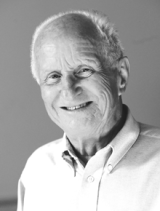
Professor Brian Collier
His pioneering discoveries played a crucial role in our understanding of how nerve cells communicate with each other. He is highly regarded as an enthusiastic teacher.
Dr. Jacquetta Trasler

McGill University Health Centre,
Research Institute, Glen site, Room EM0.2236
1001 Decarie Boulevard, Room EM0.2236
Montreal, QC, H4A 3J1
Tel: 514-934-1934 ext. 25235
Fax: 514-933-4673
jacquetta.trasler [at] mcgill.ca (Email )
Publications
Research
Dr. Jacquetta Trasler is Director for Pediatric Research at the Research Institute of the McGill University Health Centre (RI-MUHC) and a James McGill Professor in Pediatrics, Human Genetics and Pharmacology & Therapeutics at McGill University. She directs the Developmental Genetics Laboratory at the RI-MUHC at the Montreal Children’s Hospital. Dr. Trasler has mentored a number of trainees and directed the McGill University M.D./Ph.D. Program from 1999-2007. Her research interests focus on epigenetics and the molecular and developmental regulation of gene expression in the germline and early embryo. More specifically she studies DNA methylation and genomic imprinting and the molecular and cellular targets for drug effects on germ cells and embryos. Ongoing studies include effects of drugs, diet (folate) and assisted reproductive technologies on the epigenome of germ cells and embryos and the implications for trangenerational passage of epigenetic defects.