Researchers at McGill University have identified bacteria that can indicate whether a blue-green algae (cyanobacteria) bloom is likely to be toxic, offering a potential water-safety early warning system. Blooms are becoming more frequent due to climate change, according to previous McGill research. They can produce various contaminants, known as cyanotoxins, that pose serious health risks to humans, pets and wildlife.

Category:
Published on: 3 Nov 2025
Innovative food production technologies for edible crickets and microalgae launch two McGill student-led projects into the semifinals of the NASA/CSA Deep Space Food Challenge.
Published on: 11 Nov 2021
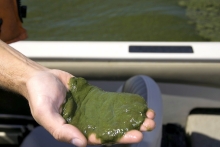
The organisms commonly known as blue-green algae have proliferated much more rapidly than other algae in lakes across North America and Europe over the past two centuries – and in many cases the rate of increase has sharply accelerated since the mid-20th century, according to an international team of researchers led by scientists at McGill University.
Category:
Published on: 26 Feb 2015
