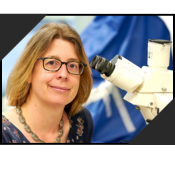
 Claudia Denkinger is a physician and infectious disease specialist with a background in immunology and epidemiology. Her research aims to accelerate the development, assessment and implementation of Global Health-relevant diagnostic solutions. She has contributed over 200 publications to the field. Between 2014 and 2019, she led the tuberculosis program and built the hepatitis program at FIND, the WHO collaborating center for Diagnostics. Since 2019, Claudia has been the medical director of the Department of Infectious Disease and Tropical Medicine, Center of Infectious Diseases, at the Heidelberg University Hospital, Germany, where next to her clinical work, she continues her research work. Claudia is a PI of the R2D2 Tuberculosis diagnostics network and Breath4Dx consortium.
Current research projects: Claudia Denkinger | Research
-
R2D2 TB Network. Rapid Research in Diagnostics Development for TB Network
This R2D2 TB Network aims to ensure faster, simpler, cheaper, and more accurate TB diagnostics by providing a transparent process for evaluating, identifying, and advancing TB diagnostic methods. This network connects highly experienced clinical study sites in over 10 countries with experts in TB care, diagnostic development, laboratory medicine, epidemiology, health economics, technology assessment and mathematical modelling.
-
ERC. Machine learning-based tuberculosis screening tool
We will use machine learning methods to develop a novel individualized predictive model for active TB disease, combining information from multiple sources, such as individual patient data and knowledge on local TB epidemiology. The resulting algorithm will be incorporated into a simple digital tool (mobile app) for use in limited-resource settings to rapidly and accurately stratify individuals by TB risk and recommend appropriate next steps (e.g., further diagnostic evaluations or TB preventative therapy).
-
IPD meta-analysis to determine the diagnostic yield of TB tests
This Individual Participant Data (IPD) meta-analysis evaluates the diagnostic yield of urine lipoarabinomannan (LAM) tests compared to molecular WHO-recommended rapid diagnostic tests for pulmonary TB detection. Diagnostic yield (DY) provides a more comprehensive measure of a test’s clinical utility by considering both accuracy and practical aspects, such as the feasibility of sample collection.
This study follows a two-step approach. The initial analysis in adults living with HIV found that nearly all participants (96%) were able to provide a urine sample, compared to 82% for sputum. Results showed that combining urine AlereLAM with sputum Xpert significantly improved DY, particularly in hospitalized patients with advanced HIV disease.
Email: Claudia.Denkinger [at] uni-heidelberg.de