
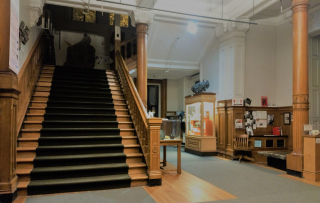
 Entrance
Our Entrance Hall is your gateway to discovering the wonders of the Redpath museum. Built over 140 years ago, inside its walls are a story of nature, culture and history to be discovered. Take a moment to appreciate the architecture and beauty of its Victorian design and let yourself be immersed in the wonders of the natural and cultural world we call home.
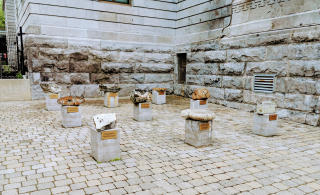 Mineralogy Garden
The geological garden contains many samples of minerals and fossils from various parts of Quebec and Canada, that emphasize the unique and diverse geological history of the region. Among the specimens, are a large fossilized ammonite (ancient cephalopod), minerals commonly mined from vein-dykes in the Montreal area, and a slab of the famous Eozoon canadensis; a pseudfossil first found in 1858, in the Grenville limestone near Côte St. Pierre, QC. See it during the spring, summer and fall seasons.
Back to the sea
Come witness the diversity of life and the powerful force of evolution, as this exhibit features prehistoric and living animals that have transitioned from water to land and back to water again, over millions of years on earth. See some of the largest, most ancient and intriguing life in our oceans, including extinct species of pliosaurs and ichthyosaurs, extant species of whales, walrus and other mammals, as well as reptiles, such as sea turtles and more!
 Curiosity Cabinet
One of the oldest forms of museum displays, Cabinets of Curiosity have been a staple of museum exhibits since the end of the 16th century. Designed to stimulate and excite the public, objects, artefacts and specimens are specifically selected to tell a story about the history of the world, while illustrating the rare, esoteric and often strange diversity in science and culture. At the Redpath Museum you will experience such an introduction to the wonders of the museum’s holdings, including such animals as the extinct Carolina Parakeet and the Australian, egg-laying mammal known as the Echidna. Cultural artefacts will catch your eye, as you learn about Amphora ceramics and other pottery of Oceania, and learn about fascinating palaeontological discoveries, made by researchers at McGill University.
Hodgson Gallery
 Located at the top of the stairs leading to the 2nd floor, the Hodgson Gallery, named after famous benefactor and former McGill graduate Duncan McIntyre Hodgson, provides an introductory handshake to the wonders of the natural world.
Learn about the diversity and unique structure of minerals, marvel over one of the most comprehensive and awarded shell collections amassed by world renowned collector Abe Levine, and discover the rich history and impact of many McGillites on the natural sciences, including John William Dawson, former principal of McGill, director of the Redpath Museum and one of Canada’s most celebrate scientific minds.

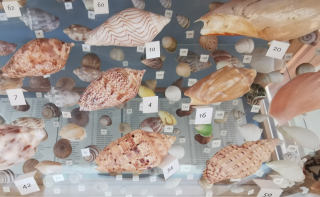
Abe Levine Shell Collection
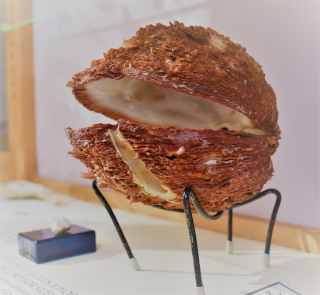 Born in Montreal, Abe Levine developed a passion for shell collecting in the 1970s, and slowly amassed one of the world’s most awarded and impressive collections ever assembled.
Displaying over 2,000 gem quality shells, this exhibit in the Hodgson gallery at the Redpath Museum, pays homage to Levine and the quality and diversity of his collection.
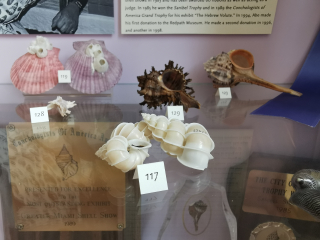 Come learn about the myriad of colors and shapes that make up the genus Cyprea, sea snails that were one of Abe Levine’s specialties. Wonder over the strange shapes of predatory sea snails, the elegance of cone shells, and the complex structure of bivalves like clams and oysters. Come experience the beauty of one of the most diverse groups of animals, ever to exist on earth.
McGill Minerals
 The history of McGill university would not be complete without the key members who made great advances in the field of mineralogy. Come learn about the many individuals that contributed to the knowledge and understanding of mineral structures, mineral species and the complex processes that are responsible for their formation.
Over more than a century of research, that continues today, this exhibit tells the story of pioneers in geological sciences, whom have been immortalized in the naming of many different mineral species, such as Dawsonite (John William Dawson), Adamsite (Frank Dawson Adams) and McGillite (McGill University). Come discover their contributions to mineralogy and learn about the history of mineralogy at McGill University and the Redpath Museum.

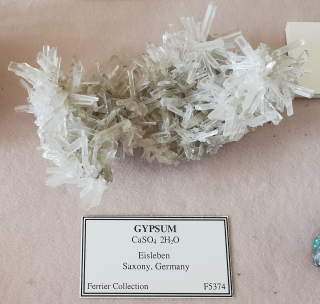
Mineralogy
 The mineral collection at Redpath Museum goes as far back as the 19th century and is one of the oldest, most historical collections in the Redpath museum.
Comprising of tens of thousands of specimens, the best and most charismatic minerals are on exhibit for all to enjoy.
Come discover how minerals form in nature, how they exist in such a diversity of colors and the many important functions they have in today’s economy. Learn about mineral classification and explore the many sites worldwide, from Canada to England to Japan, that produce some of the most interesting and unique mineral species anywhere.
Sir John William Dawson
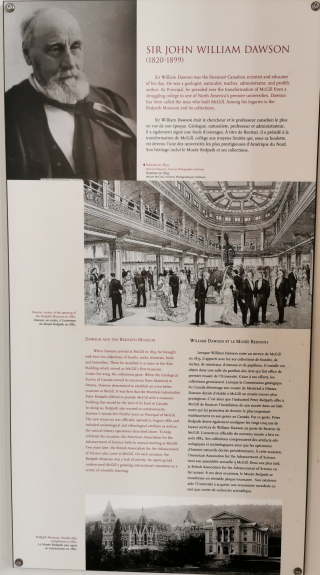 Arguably one of McGill’s most famous people, Sir John Willian Dawson is a key figure in the history of science and research in Canada. Former director of the Redpath Museum and principal of McGill College (University), Dawson contributed greatly to the understanding of the natural world and the importance of museum collections in research.
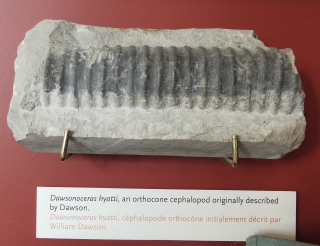
An avid collector of all things natural, some of Dawson’s most famous contributions include his discovery of Eozoön canadensis (pseudofossil), the carboniferous reptile Hylonomus (considered the earliest known reptile) and for his many publications, including Acadian Geology, an important text on the geology of eastern Canada. Come witness the history of science at McGill, through the works of one of the most influencial and respected scientific minds in Canadian history.
Japanese Sea Crab
Toting the distinguished title of world’s largest crab, with a leg span of nearly 12 feet wide, the Japanese Spider Crab (Macrocheira kaempferi) is a sight to be seen. Living in the deep waters of the north Pacific Ocean and potentially living up to 100 years, this colossal marine arthropod feeds on everything from shellfish and dead animals, to plants, algae and mollusks. They are a critical member of the food chain, acting as both ocean decomposer (eating dead animals) and secondary consumers (hunting other animals). Come experience and marvel at a true wonder of the deep ocean with this exhibit.


The third floor will certainly captivate your attention with its historical and cultural content. It is also along the mezzanine where you will find the best views to admire the impressive architecture of the Museum. Looking down on the 2nd floor, you might discover specimens that you could not see when you were exploring the Dawson gallery!
World Cultures
The World Cultures Gallery was designed to celebrate cultural diversity through the presentation of material from McGill University’s exceptional collections. During your visit, you will discover objects from Africa, Asia, the Mediterranean, the Middle East, Oceania and the Americas dating from the Paleolithic to the 20th century.

Our displays address various historical and cultural themes inspired by the collections, such as early writing systems, ancient coins, Graeco-Roman theatre, Sri Lankan eye treatment and medical practice, Chinese dentistry, betel and kava use in the South Pacific, fieldwork in Papua New Guinea and African musical instruments. The exhibits are also meant to explore important questions relating to object identification, authenticity in the museum setting, and the tourist market.


 The Ancient Egypt Collection is one of our most popular exhibitions. The displays explore the funerary rites and beliefs of the ancient Egyptians.
Join us in demystifying the practices surrounding mummification and preparation for life after death. Admire the various ceremonial and religious objects that accompanied the deceased including amulets, stone vessels, and funerary masks.

Can you find these?
When you are at the museum, try to find these artefacts! You'll discover so much more along the way!
| Image | description |
|---|---|
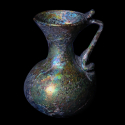 |
Jug, Syria |
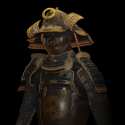 |
Samurai armor, Japan |
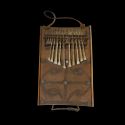 |
Thumb piano, Angora |