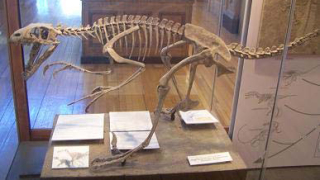
Dromaeosaurus

Dromaeosaurus
Image by Mike Chung (Redpath Museum).

The Redpath Museum Dromaeosaurus is on loan from the Royal Tyrrell Museum of Paleontology in Drumheller, Alberta. It is located in a display about the Origin of Birds. The two skeletons above the display are a chicken and an ostrich to show similarities between Dromaeosaurus and modern birds.

Species: Dromaeosaurus albertensis
Group: Theropoda
Family: Raptoridae
Name means: Running Lizard
Lived during: Late Cretaceous (74 million years ago)
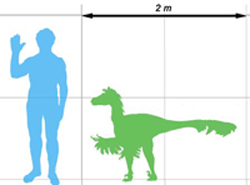
Dromaeosaurus size comparison
Source: Osado. Accessed at the Wikipedia Commons. License terms.

Adult size: 1.8 metres (6 ft)
Weight: 25 kilograms (55 lbs)

Dromaeosaurus claw
Source: Mariana Ruiz Villareal. Accessed at the Wikipedia Commons (includes licensing information).

Diet: Carnivorous. Dromaeosaurs could leap onto their prey, digging in their front claws to keep the prey at arm’s length while balancing on one leg to deliver slashing kicks with the other leg. The large sickle-claw on their feet could cut through dinosaur skin.
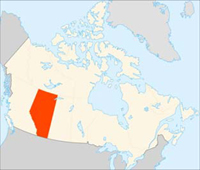
 distribution
Source: EOZyo. Accessed at the Wikipedia Commons (includes licensing information).

Discovery: in Alberta and midwestern USA.
Other info: The more familiar term for these kinds of dinosaurs is ‘raptors’. The first raptors were discovered in Canada in 1914. Raptors had bigger brains compared to other carnivorous dinosaurs. Fossils found in China show prints of feathers or down which indicate that these dinosaurs may have developed wings.

Land Acknowledgement

McGill University is on land which has long served as a site of meeting and exchange amongst Indigenous peoples, including the Haudenosaunee and Anishinabeg nations. We acknowledge and thank the diverse Indigenous peoples whose presence marks this territory on which peoples of the world now gather.


Rematriation, Repatriation and Restitution Statement

We acknowledge that the return and restitution of cultural and natural heritage to communities of origin is an essential part of reconciliation and of recognizing the fundamental rights of Indigenous Peoples. As part of wider efforts to activate the standards presented in the Canadian Museums Association Report Moved to Action: Activating UNDRIP in Canadian Museums (2022), the Redpath is working towards pro-active restitution practices. As per our Collections Management Policy (2024), repatriation requests will be received by the Redpath Museum Director and will be treated on a case-by-case basis.


Accessibility

We warmly welcome all visitors and aim to provide helpful information so you can plan your visit to the Redpath Museum with confidence.

Please note that the Redpath Museum is in a historic building that does not currently meet universal accessibility standards. At this time, there are no ramps or elevators, and access to the museum, exhibition galleries (located on 3 floors), and washrooms requires the use of a central staircase.

The building’s washrooms are gendered and located in the basement. The nearest gender inclusive washrooms are located in the McLennan Library Building (M6-37C).

Due to the architecture and open spaces, the exhibition galleries may become noisy during periods of high attendance.

Please also note that the building is not air-conditioned. During hot weather, indoor temperatures can exceed outdoor temperatures.

We recognize that these conditions may limit access for some visitors and are committed to improving accessibility over time.

If you have specific accessibility related questions, we encourage you to contact us at redpath.museum [at] mcgill.ca.


For more detailed information, please consult the Keroul 2025 accessibility report.

For more information on the status and scope of the accessibility project, please click here.

Back to top