Palaeontology

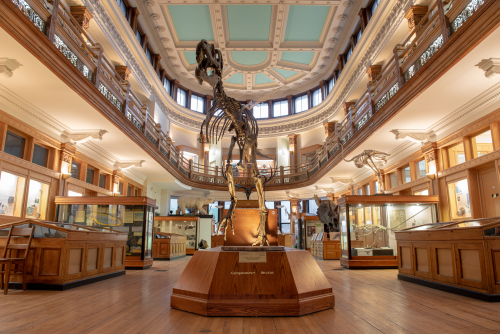
General View of the Dawson Gallery
Dawson Gallery, photo by Alex Tran

Highlights of the vertebrate collection include the oldest known terrestrial fauna from the Carboniferous of Joggins, Nova Scotia, the largest collection of invertebrate Ordovician fossils from the Saint Lawrence Lowlands (about 150 000 specimens), and a noteworthy collection of Burgess Shale fossils collected by T.H. Clark in 1924 as well as about 1000 Type and Figured specimens. The Museum also holds all the Dawson type specimens of fossil plants, including the oldest vascular plants from the Devonian of eastern Canada. Permanent exhibits in the Dawson Gallery, surrounding a skeleton of Gorgosaurus libratus, take you through billions of years in the history of life in Canada.


Invertebrate Fossils

The museum holds the largest collection of Ordovician invertebrates from the St. Lawrence Lowlands (about 30 000 specimens) as well as the Colin Stearn research collection of stromatoporoids (approximately 2000 lots of thin sections and original samples). It also possesses a small collection of Burgess Shale fossils collected by T.H. Clark in British Columbia during a 1924 expedition.

Maclurites, a sea snail from the Ordovician (about 450 million years ago)

Maclurites, a sea snail from the Ordovician (about 450 million years ago)

Vertebrate Fossils

Significant holdings in the vertebrate collection include: the oldest known fossil terrestrial vertebrates from the Carboniferous of Joggins, Nova Scotia, Pleistocene marine mammals from the Champlain Sea and R.L. Carroll's collection of early vertebrates in the form of "peels" and casts.
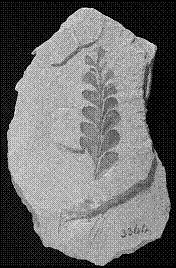

Archaeopteris gaspiensis, Upper Devonian, Gaspé, Québec

Archaeopteris gaspiensis, Upper Devonian, Gaspé, Québec


Plant Fossils

Among the fossil plants, the museum holds all the Dawson types including the oldest vascular plants from the Devonian of eastern Canada.


Land Acknowledgement

McGill University is on land which has long served as a site of meeting and exchange amongst Indigenous peoples, including the Haudenosaunee and Anishinabeg nations. We acknowledge and thank the diverse Indigenous peoples whose presence marks this territory on which peoples of the world now gather.


Rematriation, Repatriation and Restitution Statement

We acknowledge that the return and restitution of cultural and natural heritage to communities of origin is an essential part of reconciliation and of recognizing the fundamental rights of Indigenous Peoples. As part of wider efforts to activate the standards presented in the Canadian Museums Association Report Moved to Action: Activating UNDRIP in Canadian Museums (2022), the Redpath is working towards pro-active restitution practices. As per our Collections Management Policy (2024), repatriation requests will be received by the Redpath Museum Director and will be treated on a case-by-case basis.


Accessibility

We warmly welcome all visitors and aim to provide helpful information so you can plan your visit to the Redpath Museum with confidence.

Please note that the Redpath Museum is in a historic building that does not currently meet universal accessibility standards. At this time, there are no ramps or elevators, and access to the museum, exhibition galleries (located on 3 floors), and washrooms requires the use of a central staircase.

The building’s washrooms are gendered and located in the basement. The nearest gender inclusive washrooms are located in the McLennan Library Building (M6-37C).

Due to the architecture and open spaces, the exhibition galleries may become noisy during periods of high attendance.

Please also note that the building is not air-conditioned. During hot weather, indoor temperatures can exceed outdoor temperatures.

We recognize that these conditions may limit access for some visitors and are committed to improving accessibility over time.

If you have specific accessibility related questions, we encourage you to contact us at redpath.museum [at] mcgill.ca.


For more detailed information, please consult the Keroul 2025 accessibility report.

For more information on the status and scope of the accessibility project, please click here.

Back to top