

CDSI announces 2023 Convergent Research Themes awards
Five multidisciplinary teams to collaborate on computational approaches to complex problems

Students: Participate in the How to Change the World bootcamp
This reading week the Faculty of Science is partnering with How to Change the World to offer 10 undergraduate students a unique experiential learning and professional development opportunity.

Karine Auclair receives 2023 Clara Benson Award
Karine Auclair, professor in the Department of Chemistry, is the 2023 recipient for the Clara Benson Award from the Chemical Institute of Canada (CIC).
Sponsored by the Canadian Council of University Chemistry Chairs (CCUCC), the Clara Benson Award is presented to recognize a woman who has made a distinguished contribution to chemistry while working in Canada.

Christian Genest awarded the 2023 CRM-Fields-PIMS Prize
Congratulations to Professor Christian Genest on being awarded the 2023 CRM-Fields-PIMS Prize! The CRM-Fields-PIMS prize is the premier Canadian award for research achievements in the mathematical sciences.

McGill scholars respond to COP15 Biodiversity Conference
The 2022 United Nations Biodiversity Conference of the Parties (COP15) was held in Montreal on December 7-19, 2022. The conference’s outcome agreement, known as “30×30” means the protection of 30 per cent of land and oceans by 2030.

Setting Targets for Wetland Restoration to Mitigate Climate Change Effects on Watershed Hydrology
How much wetland we should protect or restore is not a simple question, such that conservation targets are often set according to political agendas, then standardized globally. However, given their key regulating hydrological functions, wetlands represent nature-based solutions to the anticipated, exacerbating effect of climate change on drought and flood events, which will vary at the regional scale.

Autobiographical event memory and aging: older adults get the gist
According to new research co-authored by McGill University's Associate Professor Signy Sheldon (Psychology), older adults’ ability to retrieve episodic autobiographical events, although often viewed through a lens of decline, reveals much about what is preserved and prioritized in cognitive aging.

SciLearn: Helping first-year science students learn better
Each year, around 1,000 new students begin an undergraduate science degree at McGill. For many of them, their first year at university represents a dramatic change from the world of high school or CEGEP.
“The workload, the amount of new content you get, and a different style of testing” are three of the challenges Marie Walker recalls from her first semester as a science undergrad.
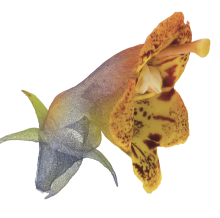
The three dimensions of a flower
To better understand the evolution of flowers, a research team in biology from Université de Montréal , the Montréal Botanical Garden, and McGill University (Daniel Schoen, Biology) have succeeded in using photogrammetry to quickly and precisely build, in three dimensions, a model of a flower from two-dimensional images.
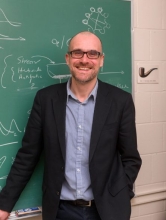
‘Cities are becoming the fulcrum for how we manage biodiversity’
As Montreal prepares to host UN Biodiversity Conference, McGill professor Andrew Gonzalez discusses how cities can help protect nature and human health.

Freshwater biodiversity loss has been out of sight, out of mind
A silent mass extinction is occurring in lakes, rivers and wetlands. Freshwater species are rapidly disappearing in North America and throughout the world. Conservation-minded people might be unaware of this, because of the media’s longstanding focus on land-based ecosystems and charismatic animals.

Pursuing an Arctic research dream
Lizz Webb, a PhD student in the Department of Atmospheric and Oceanic Sciences here at McGill University, spent a week in Svalbard, a Norwegian archipelago barely 1,000 kilometres from the North Pole, as part of her studies.

Join visiting Artist in Residence Jan van Esch for two talks on sustainability
TUESDAY November 22. GHABH - The poison in the gift, Part I: Giving and receiving - considering commercial determinants of health.

Combining Art with Science
Using real geochemical data from the archaeological site of Itzan, Guatemala, and computer-generated artwork, PhD candidate Benjamin Keenan (Department of Earth and Planetary Sciences) has produced a video that brings the ancient Mayan civilization to life. Funded by a FRQ DIALOGUE grant (the first for the Faculty of Science), his video has been shown at over 10 exhibitions and conferences, both locally and internationally.

What's it like to be a Biology student at McGill?
Join five current Biology students as they share their stories of finding their place and pursuing diverse paths within the discipline in this new video: A Glimpse Into Biology at McGill. To learn more about the inspiration for this video, read Video marks launch of Department of Biology outreach campaign.