As wildfires and heatwaves become more frequent in Canada, a McGill University researcher is investigating whether they play a role in triggering autoimmune diseases like lupus.

Category:
Published on: 15 May 2025

A first-of-its kind study conducted in Canada’s two largest cities by McGill-led researchers has linked about 1,100 premature deaths per year to an unregulated air pollutant.
Ultrafine particles (UFPs) primarily come from vehicle emissions and industrial activities. Canada’s federal and provincial governments have not set concentration limits for UFPs, as they have for larger fine particles known as PM2.5.
Category:
Published on: 5 Aug 2024

Wildfires have led Environment Canada to issue air quality advisories for parts of British Columbia, Alberta, Manitoba, Saskatchewan and the Northwest Territories, as forecasters warn the smoke could drift farther east. Wildfire-related haze could also move east into Ontario and Quebec, affecting areas from Georgian Bay to Quebec City (CTV News)
Category:
Published on: 14 May 2024

Wildfires have burned through more than one million hectares in Alberta this spring and have forced thousands from their homes. Quebec, Saskatchewan, Manitoba, British Columbia, and the Northwest Territories are also battling active fires (Globe and Mail).
Here are some experts from McGill University who can provide comment on this issue:
Category:
Published on: 26 Jul 2023

While officials have repeatedly sought to assure residents that the water and air in East Palestine, Ohio, are safe after the derailment of a train carrying hazardous materials earlier this month, anxiety has permeated the community amid reports of rashes, nausea and headaches. While it was deemed safe for evacuated residents to return home on February 8, community members have questioned how safe their village is and the validity of the air and water tests. (CNN)
Category:
Published on: 20 Feb 2023

The World Health Organization’s most recent estimates (2016) are that over 4.2 million people die prematurely each year due to long-term exposure to fine particulate outdoor air pollution (often referred to as PM2.5,). A recent study involving McGill researchers now suggests that the annual global death toll from outdoor PM2.5 may be significantly higher than previously thought.
Category:
Published on: 8 Nov 2022
Study challenges attitudes about young people and pandemic preventative measures, plus other stories
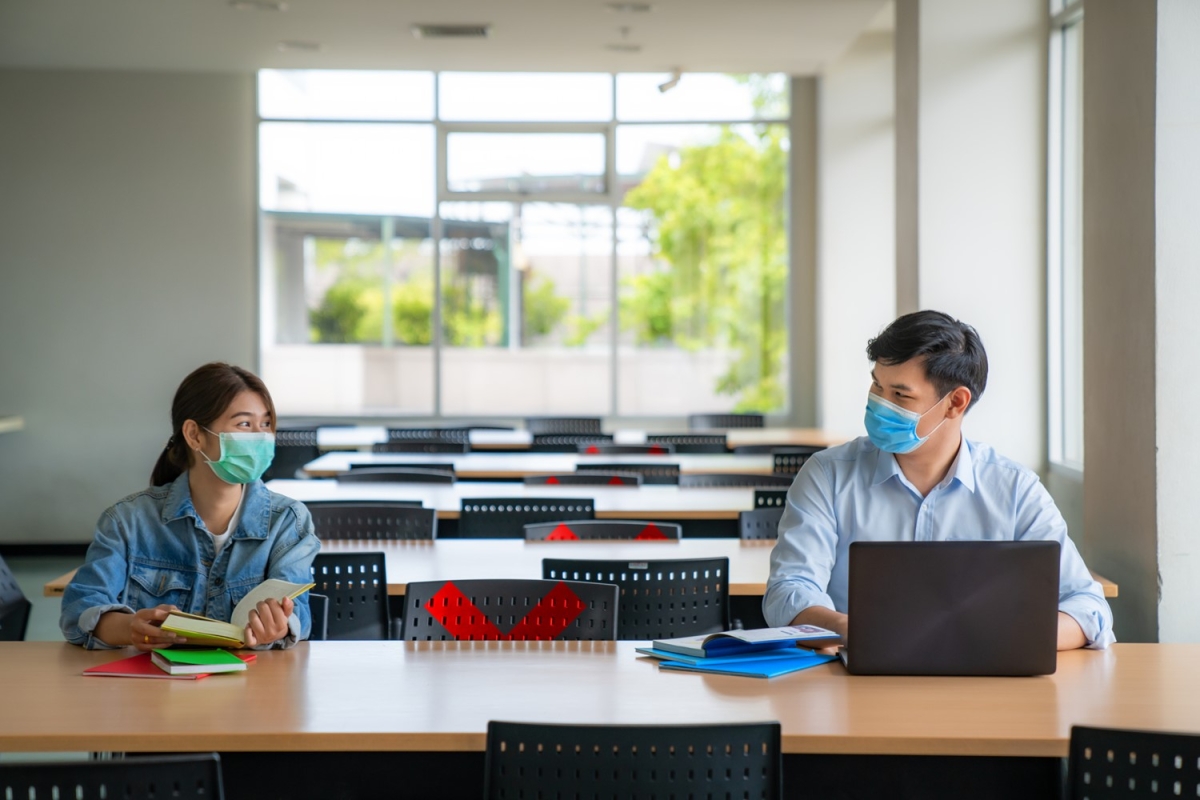
Published on: 9 Aug 2022
Lack of environmental awareness and preference for variety leading causes of waste in fast-fashion production

Category:
Published on: 10 Jun 2022
Scott Weichenthal, Associate Professor in the Department of Epidemiology, Biostatistics and Occupational Health, is among the experts quoted by the Montreal Gazette.
"…Dr. Scott Weichenthal, an associate professor in the department of epidemiology, biostatistics and occupational health at McGill University, said that while he understands the difficult task of balancing public health with other factors, he thinks more could have been done to address the airborne transmission of COVID-19 over the course of the pandemic."
Category:
Published on: 27 Jan 2022
Jill Baumgartner, Associate Professor in the Department of Epidemiology, Biostatistics and Occupational Health and at the Institute for Health and Social Policy, spoke to CTV News about the impact that air pollution is having on the health of Canadians.
Category:
Published on: 22 Dec 2021
A multidisciplinary team of researchers, including McGill's Scott Weichenthal, an Associate Professor in the Department of Epidemiology, Biostatistics, and Occupational Health, has been awarded the Brockhouse Prize for Interdisciplinary Research in Science and Engineering from the Natural Sciences and Engineering Research Council of Canada (NSERC).
Published on: 17 Nov 2021
Dr. Jill Baumgartner, Associate Professor in the Department of Epidemiology, Biostatistics and Occupational Health and at the Institute for Health and Social Policy, was interviewed by Métro Montréal.
"Trois questions à… Jill Baumgartner, PhD, professeure associée en épidémiologie à l’Université McGill, et spécialiste en environnement et en santé"
Category:
Published on: 21 Oct 2021
Dr. Jill Baumgartner, Associate Professor in the Department of Epidemiology, Biostatistics and Occupational Health and at the Institute for Health and Social Policy, was interviewed by CTV News.
Category:
Published on: 24 Sep 2021
Dr. Scott Weichenthal, Associate Professor in the Department of Epidemiology, Biostatistics and Occupational Health, is among the experts quoted by Scientific American.
"Despite the devices’ novelty, the question of whether they will actually benefit environmental monitoring campaigns is still up in the air, says Scott Weichenthal, an environmental epidemiologist at McGill University, who was not involved in the study. “Do they measure reliably?” he asks. “Are they any better than what we can do now in terms of monitoring? That is unclear.”
Category:
Published on: 24 Sep 2021

Millions of people die prematurely every year from diseases and cancer caused by air pollution. The first line of defence against this carnage is ambient air quality standards. Yet, according to researchers from McGill University, over half of the world’s population lives without the protection of adequate air quality standards.
Category:
Published on: 11 Mar 2021
Pages
