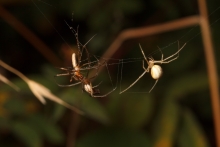
For years, pollinator declines have been a pressing issue for ecosystem health and food security in the face of climate change and human impacts on the environment. Even in their sleep, pollinating insects cannot catch a break – for fear they’ll be taken down by a small, but mighty predator: the candy-striped spider. Research published in Ecology took a closer look into this spider’s behaviour and found that the result of their stealth attacks could have substantial impacts on ecosystems.
Category:
Published on: 19 Apr 2023
It’s no secret that the internet and social media fuel rampant spread of misinformation in many areas of life. A collective of researchers, including Catherine Scott, Postdoctoral Fellow in McGill University’s Lyman Lab, have explored this phenomenon as it applies to news about spiders. The verdict? Don’t blindly trust anything you read online about these eight-legged arthropods—or anything else for that matter—and always consider the source.
Category:
Published on: 8 Sep 2022

It’s no secret that the internet and social media fuel rampant spread of misinformation in many areas of life. A collective of researchers, including Catherine Scott, Postdoctoral Fellow in McGill University’s Lyman Lab, have explored this phenomenon as it applies to news about spiders. The verdict? Don’t blindly trust anything you read online about these eight-legged arthropods—or anything else for that matter—and always consider the source.
Category:
Published on: 1 Sep 2022
