Freshwater browning is stunting fish growth of some species, shrinking populations of others and changing the composition of fish communities, McGill-led research suggests. “Browning” refers to freshwater bodies turning tea-coloured, a phenomenon driven by higher levels of dissolved organic matter and/or higher levels of iron in the water. Causes include changes in land use and climate, and reduced acid precipitation.

The findings indicate that changes in land use and climate are affecting biodiversity and how ecosystems function, with implications for fisheries management.
Classified as: Allison Roth, Irene Gregory-Eaves, freshwater browning, fish, climate change
Published on: 19 Jan 2026

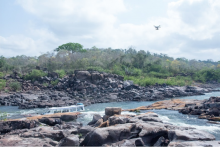
DJI is proud to present, together with Canada's McGill University and Brazil's Federal University of Pará - Altamira Campus, the Fish + Forest Project. Tune in to watch a special livestream from the Amazonian Xingu River in northern Brazil, a home to up to 600 unique species of fish, many found nowhere else, narrated by experts in the river's flora and fauna.You will also have the opportunity to ask questions live on Twitter.

Classified as: Geography, fish, mcgill research, Brazil, forest, margaret kalacska, pablo arroyo, xingu, drone, dji, videography, #DJILive, Facebook Live
Category:
Published on: 5 Aug 2016

By Melody Enguix

McGill Newsroom

When scientists from McGill University learned that some fish were proliferating in rivers and ponds polluted by oil extraction in Southern Trinidad, it caught their attention. They thought they had found a rare example of a species able to adapt to crude oil pollution.

Classified as: oil, water, evolution, fish, pollution, ecosystems, Andrew Hendry, evolutionary ecology, food and sustainability, adaptation, oil-pollution, Southern Trinidad, tar sands
Published on: 26 Jan 2016
Back to top