Conducting a bird census by foot can also be disruptive, David Bird, an emeritus professor of wildlife biology at McGill University, told Popular Science. “While you’re doing that, you’re disturbing the hell out of the birds,” Bird said.
Atlas Obscura

Category:
Published on: 21 Feb 2018
Conducting a bird census by foot can also be disruptive, David Bird, an emeritus professor of wildlife biology at McGill University, told Popular Science. “While you’re doing that, you’re disturbing the hell out of the birds,” Bird said.
Category:
Published on: 21 Feb 2018

They found that the drones combined with the computer algorithm wasn't just a decent substitute for ecologists' eyes, it actually got closer to the real number of birds on the ground. It's a compelling argument for using drones in research, said David Bird, an ornithologist at McGill University in Canada who edits a scientific journal dedicated to drone studies. Population tallies are a crucial piece of ecological information. "Biologists love to count wildlife," he said.
Category:
Published on: 13 Feb 2018
Drone technology has been applied in support of bird science for more than a decade now. With the cost of this technology continuing to drop, the use of it is broadening across North America.
In the same way that retail, military, and hobby sectors have embraced drones, bird scientists have realized drones can be deployed to do some bird census work and gather data in remote or otherwise inaccessible locations.
Category:
Published on: 26 Jan 2017
McGill Newsroom
Flying robots could someday help artists create outdoor murals
You may have heard of plans to use drones for delivering packages, monitoring wildlife, or tracking storms. But painting murals?
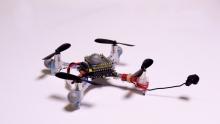
That’s the idea behind a project in Paul Kry’s laboratory at McGill University’s School of Computer Science. Prof. Kry and a few of his students have teamed up to program tiny drones to create dot drawings – an artistic technique known as stippling.
Category:
Published on: 4 Aug 2016
