Nik Luka
Ph.D. (Toronto)
M.Arch. (Laval)
B.A.A. (Toronto Met.)
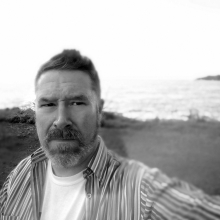
I am a specialist in ethnography, landscape studies, and critical studies of design and planning. Much of my research and teaching activities explore what I call REURBANISM : the processes of transformation, contestation, and negotiation that occur in (re)urban(ising) landscapes. These are operationalised through action-research collaborations with public agencies and civil-society organisations as well as conventional investigative research and practical work on urban design and participatory governance. In a nutshell, I’m fascinated by how architects, planners, and other future-minded specialists engage with one another (or not…) and with non-specialists who offer other important forms of knowledge and expertise to develop techniques, possibilities, and capacities for transforming (sub)urban landscapes to make better use of scarce resources while maintaining the qualities of place that people value about the settings that they know and inhabit on an everyday basis.
My interests in both research and professional practice encompass major themes that are familiar to most architects, landscape architects, planners, and geographers : housing, infrastructure, public space, cultural landscapes, urban design, and deliberative democracy. I typically do work that is inductive in a ‘constructivist’ orientation, and I am especially intrigued by narratives, representations, text, and discourse as they apply to the futuring work of architecture, urban design, and urban planning. What sorts of stories do we tell about the complexities of human settlements and the processes by which places become ‘(sub)urban’ ? How do specialists and non-specialists engage with the transformations, continuities, and ruptures that come with the passage of time, notably the liminal or transitional phases ‘from’ some condition ‘to’ some other condition ? How can design can act as a hinge between natural process and human culture to guide change ? More strategically, my activities focus on the deliberate policy-led remaking of everyday space through what is known in German as Stadtumbau (literally the reworking of cities and suburbs). I also have enduring interests in the dynamics of the rural-urban fringe (often described as ‘periurban’ or ‘exurban’ settings), including second homes and the ways in which landscape amenities affect patterns of growth and development over time.
My current work falls into three overlapping domains :
- Comparative critical studies of densification and transformation of postwar landscapes (including equitable, high-quality transit-oriented development) in Canada, Sweden, and parts of continental Europe
- Developing strategic community-based policy and design responses to the current housing crisis through continuing work on innovative land practices (as part of research on the 'Balanced Supply of Housing' cosponsored by SSHRC and the Canada Mortgage and Housing Corporation) and emerging work on New Housing Alternatives, also sponsored by SSHRC
- Applying methods for the meaningful coproduction of viable and equitable futures by combining the expertise of local nonspecialists with futuring professionals, including a strategic Québec-based partnership on scaling up deep-energy retrofits of the built environment, transdisciplinary strategies for landscape connectivity and ‘walkability’ in various contexts, and a Montréal-centred partnership focusing on commoning in the Champ des Possibles
Professors need to engage in local communities of practice beyond the university campus, which I have done in various capacities over the last 20 years. I have been a member of the Conseil d’administration (Board of Directors) for several organisations including Montréal's Urban Ecology Centre / Centre d’écologie urbaine (striving for the development of vibrant civic life, including participatory urban design, planning, and governance), the Fondation Schmeelk Canada Foundation (which promotes intercultural awareness and interprovincial mobility for young Canadians pursuing post-secondary studies), and Convercité, a non-profit Montréal consultancy that helped civil-society actors, project entrepreneurs, and policymakers to ensure that progressive human(ist) values are at the core of city-building and landscape planning. I also have worked with Suspicious Fish (a non-profit group based in Verdun which strengthens community through creative writing), Literacy Québec (linking community-based literacy organisations across Québec to empower people, impact lives, and build a stronger society), Before moving to Montréal, I was also a member of the Tafelmusik early music ensemble in Toronto for 10 years, with which I recorded several compact discs and one film production (with the Mark Morris Dance Group).
Montréal is home, but I have also lived in Basel (Switzerland), Sheffield (England), Malmö (Sweden), Helsinki (Finland), Québec City, Toronto, and in Ontario’s ‘Near North’ (Manitoulin Island, Georgian Bay, and the Haliburton Highlands). My paternal grandparents were Magyars who came to Canada from the tattered remains of the Austro-Hungarian Empire in the interwar years, but my maternal family roots in this country can be traced to Scottish merchants who settled in Québec City in the 1760s, at least one of whom joined a small group of civic leaders who successfully lobbied the British Crown for the establishment of a parliament for Lower Canada (today's Assemblée nationale du Québec).
[2025] Commoning, heterotopia, and transformation : An analytical framework for and from contested spaces. Environment & Planning D : Society & Space. Cowritten with A.R. Poteete (lead) & P. Kunysz. https://doi.org/10.1177/02637758251361706
[2025] Landscape ethnography as an ‘undisciplined’ methodology for design and planning. In M. Qviström (Ed.), A research agenda for landscape studies of planning (pp. 143–156). Cheltenham (England) : Edward Elgar. https://doi.org/10.4337/9781803929705.00016
[2025] On moving ahead, staying put, and engaging fully with landscape studies of planning. In M. Qviström (Ed.), A research agenda for landscape studies of planning (pp. 179–186). Cheltenham (England) : Edward Elgar. Cowritten with M. Qviström (lead), A. Butler, V. Castán Broto, K. Doughty, B. Garlick, A. Hine, M. Kirby, H. Palang, A. Scott, & M. Thompson-Fawcett. https://doi.org/10.4337/9781803929705.00019
[2024] Can hopeful moments lead to hopeful futures ? Invited contribution to Teaching for Learning. Cowritten with D. Chalmers (lead), J. Freeman, D. Dechief, N. Gomez, B. Harvey, & A. Janzwood.
[2023] Walking beyond the city ? On the importance of recreational mobilities for landscape planning, urban design, and public policy. Mobilities, 18 (5), 789–804. doi : 10.1080/17450101.2023.2242001
[2023] Recreational mobilities in (and beyond) the compact city. Mobilities, 18 (5), 691– 699. Cowritten with M. Qviström (lead) and D. Normark. doi : 10.1080/17450101.2023.2235088
[2022] Complementing citizen engagement with innovative forms of professional co-production : a renewed case for transdisciplinary charrettes. In H. L. Kong & T. Monforte (eds.), Sustainability, citizen participation, and city governance : multidisciplinary perspectives (pp. 163–193). Toronto : University of Toronto Press. Cowritten with B. Aird and N.-M. Lister.
[2021] It’s not how dense we make it, but how we make it dense : on porosity as a corequisite of densification. Aménager : Expérience et innovation d’un quartier, 4 (2 : Habiter), 12–21. Online : https://tinyurl.com/nikporosity.
[2019] Beyond circular thinking : Geographies of Transit-Oriented Development. International Journal of Urban & Regional Research, 43(4), 786-793. Cowritten with M. Qviström (lead) and G. De Block. doi : 10.1111/1468-2427.12798
[2018] Civic coproduction = Counterinstitutions + people. Make participation work by focusing on the possible. Invited contribution to The Nature of Cities. Online : https://tinyurl.com/nikcivic.
[2017] Deliberative democracy and digital urban design in a Canadian city : The case of the McGill Online Design Studio. In Digital democracy in a globalised world (C. Prins, C. Cuijpers, P. L. Lindseth, and M. Rosina, eds.). London : Edward Elgar, pp. 180-200. Cowritten with H. L. Kong (lead), J. Cudmore, & A. Dumas.
[2017] Montréal : Blue collars, green corridors, post-industrial waterways. In Third Coast Atlas : Prelude to a plan (D. Ibañez, C. Lyster, C. Waldheim, and M. White, eds.). New York : Actar, pp. 276–281. Cowritten with H. Braiden.
[2017] Contested periurban amenity landscapes : changing waterfront ‘countryside ideals’ in central Canada. Landscape Research, 42 (3), 256-276. doi: 10.1080/01426397.2016.1267335
[2016] « Midtown » florissant : La Petite-Patrie aux abords du chemin de fer. In Montréal : la cité des cités (J.-L. Klein and R. G. Shearmur, eds.) Montréal : Presses de l’Université du Québec, pp. 169-190.
[2016] Emerging challenges of vector-borne diseases for Canadian cities. Canada Communicable Disease Report, 42 (10), 217-218. doi : 10.14745/ccdr.v42i10a12
[2016] Nesting boxes : An elegant arts centre is the nucleus of a new civic hub for an off-island suburb of Montreal. Canadian Architect, 61 (11), 48-51.
[2015] Pour un urbanisme des possibles dans le Quartier des spectacles. In Le Quartier des spectacles et le chantier de l'imaginaire montréalais (S. Harel, L. Lussier, and J. Thibert, eds.). Québec City : Presses de l’Université Laval, pp. 185-201. Cowritten with P.-É. Gendron, J. Cudmore, & V. Mikadze.
[2014] Democratic deliberation in the wild : The McGill Online Design Studio and the RegulationRoom Project. Fordham Urban Law Journal, 41 (5), 1527-1580. Cowritten with C. Farina (lead), H. L. Kong, C. Blake, and M. Newhart.
[2013] Sojourning in nature : the second-home exurban landscapes of Ontario’s Near North. In Landscape and the ideology of nature in exurbia : Green sprawl (K.V. Cadieux and L. Taylor, eds.). New York : Routledge, pp. 121-158.
[2013] Urban spectacular : a bold series of downtown plazas reintroduces vibrant urban life into spaces left over from postwar megaprojects. Canadian Architect, 58 (2), 18-22.