I have a longstanding fascination with Victorian arts and sciences. It was the era when Darwin published the “Origin of the Species,” Perkin synthesized dyes, Lister introduced antiseptic surgery,...
Our collective vision of Christmas landscapes is so immersed in snow that the very phrase “It’s beginning to look a lot like Christmas” conjures up imagery that is nearly all frosted, sparkling and...
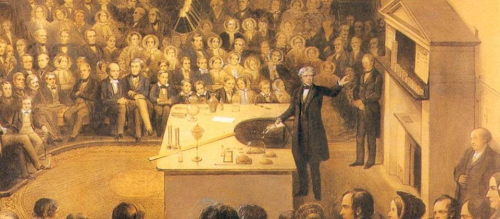
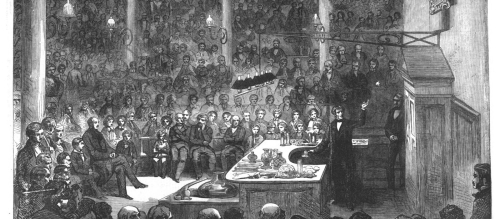
The Royal Institution was founded in 1800 by leading British scientists under the guidance of Benjamin Thompson “for diffusing the knowledge and facilitating the general introduction of useful...
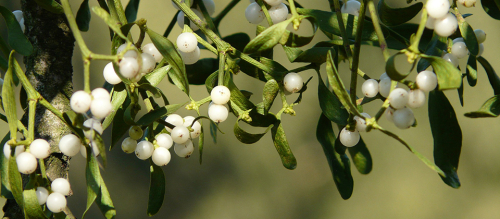
There's been a mystique around mistletoe since ancient times, probably on account of the curious way it grows. The plant is a “hemiparasite,” meaning that it can either grow in soil, or, more...
Reindeer, it seems, just loved Amanita muscaria, or Fly Agaric, as it is better known. They could be led around by the nose, as it were, just by sprinkling pieces of the mushroom in front of them....
A new study in the British Medical Journal might be enough to ruin your Christmas mood because it suggests that the risk of having a heart attack is higher during the holidays and on Christmas Eve...
Both frankincense and myrrh are natural exudates of certain trees found in the Middle East. When the bark is injured, a sap containing a variety of natural fungicides and bactericides oozes out and...
If you have avoided having poinsettias in your home because of small children or animals, you’re not alone. But despite the commonly held belief that poinsettias are toxic, they aren’t. This myth...




 RSS
RSS