
Table of Contents
Keywords: Volatile Organic Compounds (VOC), mutualism, root exudation, nitrogen uptake, chelation, latex, secondary metabolites, defensive enzymes, cuticle latex, flavonoids, phenolic compounds
Abstract
The Ficus genus demonstrates remarkable chemical strategies that support its survival and ecological success. Volatile organic compounds in fruits and flowers including terpenoids and benzenoids, create scent blends that attract specific pollinators through molecular structure. Root exudates, such as organic acids and phenolics modify soil pH, enhance nutrient uptake, and facilitate symbiosis. Within the plant, chelation and nitrogen assimilation regulate essential minerals, while the Ficus latex rich in secondary metabolites and enzymes provide antibacterial, antifungal and antioxidant properties while defending the plant from insects. Ficus leaves are chemically complex structures that serve as the main link between the tree and its environment. They perform critical functions such as photosynthesis, gas exchange, and defense through a diverse spread of metabolites and surface compounds. The coordination of these chemical pathways allows Ficus species to thrive across a wide range of environmental conditions. Together, these interconnected chemical processes reveal how the Ficus interacts, adapts, and thrives within its environment.
Introduction
The Ficus is a diverse species, ranging from massive banyan trees to short shrubs. The keystone species is approximately 75 million years old and primarily occupies rainforest and savanna regions. In several cultures, the Ficus aurea, the strangler fig, is revered for its pseudo trunk, a structure created when the Ficus chokes a host trees’ trunk with its roots. Several insects rely on the Ficus’ fruit: the Ficus has a nursery mutualistic relationship with the wasp. The wasp lays its eggs in the fig fruit which acts as a breeding site for the larvae that later emerge from the fig and carry pollen from the fruit with them, assisting in pollination (Aumeeruddy-Thomas & Hossaert-McKey, 2024). Archaeobotanical evidence suggests that figs may have been the first domesticated crop, cultivated in the Near East around 11,400 years ago. Early domesticated figs were likely parthenocarpic (seedless) mutants, capable of ripening without pollination, and propagated vegetatively from cuttings (Kislev et al., 2006). Today, figs remain an important global crop. Although most figs sold in grocery stores ripen without pollinators, some varieties do require their obligate wasp mutualists. However, the figs we buy are not caprifigs (male figs) – they come from female trees that can be pollinated but do not provide a brood site for wasps. In such cases, the fig’s developmental chemistry ensures that by the time the fruit is harvested, any wasp inside the syconium is fully broken down by enzymes (Cook, 2005). This ancient plant–insect partnership, exemplifies a finely tuned chemical dialogue: volatile organic compounds (VOCs), hormones, and enzymatic signals orchestrate interactions that have been shaped over millions of years of coevolution. The roots of the Ficus form a dynamic chemical interface with the soil, where exudates shape nutrient availability. Through the release of organic and signaling compounds, these roots regulate nitrogen assimilation and foster symbiotic relationships essential for growth. The chemical properties of Ficus latex, a fluid released from laticifer cells in the Ficus roots and trunk, serve a defensive purpose. The latex is filled with secondary metabolites such as alkaloids, flavonoids, coumarins and terpenoids and defensive enzymes such as chitinases, glycosidases and protease inhibitors which together create an antibacterial, antifungal, antioxidant and insect-deterrent chemical defensive system, allowing the tree to thrive. The Ficus leaves integrate photosynthesis, stomatal regulation, antioxidant protection and cuticle waxes to protect and ensure efficient leave metabolism. The Ficus survives in its environment through various complex adaptations involving chemical reactions within the tree.
See Ficus Physics for more information
Coevolution in Fig-Wasp Mutualism Chemistry
The obligate interspecific mutualism between the roughly 850 species of fig (Ficus sp.) and corresponding greater than 300 species of Ficus subgenus restricted pollinating chalcid wasp species (Family Agaonidae) represent one of the most complex examples of coevolution in the natural world (Machado et al., 2005, Cruaud et al., 2012). The relationship has spanned an estimated 80-90 million years since a likely singular evolutionary event. It is not only a matter of behavioral and morphological adaptation, but also a fundamental chemical dialogue for host-recognition intimately involved in speciation. This dialogue hinges on a series of precisely timed biochemical syntheses and reactions within the fig syconium – the enclosed, fleshy multiple-flowering inflorescence that develops into a multiple fruit, or infructescence, characteristic of figs. From volatile attractants to hormonal regulation, the fig functions as a sophisticated biochemical reactor, orchestrating a cycle that ensures both its own reproduction and that of its wasp mutualist.
The first act in this chemical play is one of long-distance communication. A receptive fig must broadcast to attract a pollinator. This can be achieved either through a specific VOC, or a particular bouquet of multiple VOCs emitted as a complex blend synthesized through several biochemical pathways. While inflorescences may emit up to 25 or more compounds, electroantennographic studies have demonstrated that wasps are receptive to a smaller subset of these components. For example, in Ficus carica and its wasp pollinator Blastophaga psenes, a specific mixture of benzyl alcohol and four monoterpenes was demonstrated to play a pivotal role in communication (Proffit et al. 2020).
The primary organic components for signalling are often benzenoids and terpenoids. Benzenoids, such as benzyl alcohol and benzaldehyde, are derived from the aromatic amino acid phenylalanine that is produced in the shikimic acid pathway. Figure 1 illustrates how in the cytosol, phenylalanine is converted to the key intermediary trans-cinnamic acid which then feeds into several possible multi-enzyme catalysed oxidative and non-oxidative pathways in the peroxisome and cytosol respectively (Chen and Liao, 2025).

Fig. 1. Proposed biosynthetic pathway for benzaldehyde and related aromatic compounds in plants (Chen and Liao, 2025).
Terpenoids, like linalool and pinene, are synthesized in plastids via the methylerythritol phosphate (MEP) pathway. As seen in Figure 2, this pathway begins with pyruvate and glyceraldehyde-3-phosphate, which combine to form the key intermediate of isopentyl diphosphate (IPP) and its isomer dimethylallyl diphosphate (DMAPP), which serve as the basis for a diverse set of terpenoid compounds. Alternatively, terpenoids can also be synthesized from acetyl-CoA, through mevalonate to the IPP and DMAPP terpenoid precursors in the mevalonate (MVA) pathway, which occurs primarily in the cytosol (Chen and Liao, 2025).

Fig. 2. Proposed biosynthetic pathway for producing volatile terpenes. The important pathways to follow (on the left hand side) are the MEP pathway in the plastid and the MVA pathways in the cytosol. DMAPP and IPP are the important precursors for a wide variety of terpenoids as seen in the examples (Chen and Liao, 2025).
The specific ratio and combination of these compounds create a unique olfactory fingerprint for each Ficus species that guides only the correct wasp species, ensuring the fidelity of this mutualism.
Once attracted to the fig, a female wasp enters the syconium through a small pore known as the ostiole. The passage is traumatic, and ultimately terminal for the wasp. The female wasp navigates the inner cavity, pollinating the flowers and laying her eggs in the fig's female flowers, but for the about half of all Ficus sp. that are dioecious, those female flowers must be on functionally male trees (caprifigs) that are anatomically gynodioecious. If the wasp enters a female fig, she is destined for reproductive failure, unable to oviposit in the morphologically distinct female flower of the female fig. The quid pro quo for pollination services is the provision of a brood site in the syconium of the caprifigs, which will ultimately produce both pollen and wasp offspring (Hossaert-McKey et al., 2016). To create a suitable nursery, the wasp must subvert the flower’s potential seed-producing function to an abnormal plant growth known as a gall. This is achieved through a targeted biochemical intervention.
During oviposition, the female wasp injects not only an egg but also a cocktail of bioactive compounds from her poison sac and ovipositor. Research has shown that these secretions contain phytohormones, cell-wall degrading and remodeling enzymes, in addition to insect-produced effector proteins (Markel et al., 2024). Exogenous plant hormones or analogs thereof, such as auxin and cytokinin, stimulate cell elongation and division, and promote cell proliferation. The simultaneous application of these hormones disrupts the normal development of the ovule, triggering uncontrolled cell growth and the formation of a nutrient-rich gall on which the wasp larva feed. Furthermore, the secretions contain pectinases and cellulases, which soften the cell walls, facilitating egg placement and potentially aiding in the diffusion of the growth-inducing compounds.
The most dramatic and synchronized chemical transformation within the syconium is coordinated with the maturation of the wasp larvae. For weeks, the fig has served primarily as a nursery. However, as the wingless male wasps mature, mate with the still-sessile females inside their natal galls and begin to chew exit tunnels through the fig wall, the process of fruit maturation initiated at pollination progresses into its final stages (Fig. 3).

Fig. 3. Example visual guide of the lifecycle of Ficus hispida and it’s pollinating wasp (Guan, et.al, 2025).
The physical act of wasp entry and pollination is the catalyst for a hormonal cascade that sees an initial rise in indole-3-acetic acid (IAA) which triggers a transition into an inter-floral phase and culminates in a maturation and ripening phase primarily mediated by the gaseous plant hormone ethylene (C₂H₄) (Guan et al., 2025).
The synthesis of ethylene in plants follows a well-defined pathway:
methionine → S-adenosyl-L-methionine (SAM) → 1-aminocyclopropane-1-carboxylic acid (ACC) → ethylene (1)
The enzyme ACC synthase is the key rate-limiting step, and its production is mediated at the transcriptional level by hormones and stress, and at the post-translational level affecting protein activity and stability (Wang et al., 2002). Ethylene is involved in several crucial processes within the syconium including pollen maturation and fruit ripening. The male flowers are responsible for the synthesis of viable pollen grains, a process requiring the mobilization of starches, lipids, and proteins, and the final development of the anthers. This process must complete prior to the emergence of the female wasps, that then actively and passively harvest the pollen, ensuring the next generation of female wasps will be effective vectors. For the flowers that were pollinated but not galled (those destined to become seeds), a different fate awaits. An ethylene signal induces a ripening process of the entire syconium. It upregulates the production of enzymes like pectinase and amylase, which break down cell walls and starches to produce the sweet, soft pulp that attracts seed-dispersing vertebrates like bats and birds (Xu et al. 2021). This change also makes the fig wall softer, facilitating the exit of the female wasps through the exit tunnels previously made by the flightless males.
In a final chemical epilogue, the fig emits a “push” VOC profile from the syconium. The initial receptive-phase blend is replaced by a new profile of compounds, an "exit scent" that stimulates the female wasps to use the tunnels chewed by the males and depart (Gu et al., 2012). Once in the open air, they are again guided by the long-distance VOC beacon of a receptive fig, carrying the pollen of their natal tree to a new individual, thus closing the loop of this ancient, chemically mediated mutualistic relationship.
Ficus-wasp mutualism relies on finely tuned chemical communication. Inside the fig’s syconium, complex biochemical pathways producing volatile organic compounds and leveraging hormone signaling networks have been shaped by coevolutionary pressures. From the first release of attractant scents to the ethylene-driven exit of developing wasps, each phase is directed by the production and detection of specific molecules. This interdependence shows that coevolution extends beyond physical traits; it is also a dialogue of signals and receptors, hormonal cues and developmental shifts, where two species have become so chemically integrated that each depends entirely on the other.
Soil and Root Chemistry
Root Exudation and Soil Interaction
Ficus roots play an active chemical role in shaping the soil environment. They continuously release a mixture of compounds known as root exudates, which include organic acids, sugars, amino acids, phenolics, flavonoids, and alkaloids (Walker et al., 2003). These molecules help the plant access nutrients, control soil microbes, and even influence nearby plants. The type and number of exudates vary depending on conditions such as soil nutrients, moisture, and the presence of microorganisms (Robert et al., 2025).
Organic acids such as citric (C6H8O7) and malic acid (C4H6O5) are essential; their skeletal formulas are shown in Figure 4 and Figure 5. They can lower soil pH and dissolve minerals by binding to metal ions such as Fe³⁺ and Al³⁺:
Fe3+ + H3Cit → Fe (Cit) + 3H+ (2)
This reaction forms soluble iron–citrate complexes that prevent metals from becoming trapped in insoluble compounds, keeping nutrients like iron and phosphorus available for plant uptake. Phenolic and flavonoid compounds also affect soil chemistry by reducing Fe³⁺ to Fe²⁺, which is easier for roots to absorb, while at the same time protecting the plant from harmful microbes (Walker et al., 2003).
Some exudates also act as allelopathic chemicals, which means they can slow or stop the growth of nearby plants. These exudates, often chemical compounds like phenolics or alkaloids, can interfere with seed germination and root development of competing species, allowing the Ficus to maintain access to space and nutrients (Robert et al., 2025). Interestingly, while some compounds inhibit competition, others attract beneficial soil microbes that enhance nutrient cycling. This balance between inhibition and cooperation helps create a favorable rhizosphere, which is a special root zone that supports the plant's growth and stability in its environment.

Fig. 4. Skeletal structure of citric acid (C6H8O7), which is an important metabolite in the pathway of aerobic organisms (PubChem, 2025).

Fig. 5. Skeletal structure of malic acid (C4H6O5), which is a fundamental metabolite and acts as an acidity regulator for food (PubChem, 2025).
Nitrogen Uptake and Assimilation
The relationship between Ficus roots and mycorrhizal fungi is a fascinating example of the chemistry that occurs in the soil. The roots of the Ficus trees release tiny organic compounds that send out signals to the fungi, encouraging them to grow toward the roots and establish a connection. In return, these fungi expand the plant’s underground root system, helping to break down organic material and release essential nutrients like phosphorus and nitrogen (Robert et al., 2025). Nitrogen plays a crucial role in plant health; it is significant for creating important components like amino acids, nucleotides, and chlorophyll (Fig. 6). Ficus roots take in nitrogen primarily in the form of nitrate (NO3-) and ammonium (NH4+), which travel through specialized proteins in their membranes (Robert et al., 2025).
When nitrate is absorbed, it transforms into nitrite (NO2-) with the help of nitrate reductase. This nitrite is then converted into ammonium via nitrite reductase. When ammonium is available, plants incorporate it into amino acids using a process called the glutamine synthetase/glutamate synthase (GS/GOGAT) cycle (Fig. 6). This process effectively allows plants to store and utilize nitrogen in a safe manner. It occurs through two main steps:
Glutamine Synthetase (GS)
NH4+ + Glutamate + ATP → Glutamine + ADP + Pi (3)
Glutamate Synthase (GOGAT)
Glutamine + 2-oxoglutarate + NADPH → 2Glutamate + NADP+ (4)
These biochemical reactions convert inorganic nitrogen into glutamate, which serves as the building block for most amino acids and proteins necessary for the plant’s growth (Fortunato et al., 2023).
To absorb ammonium effectively while avoiding toxicity, Ficus employs ammonium transporters (AMTs) that lie within root membranes. The activity of these transporters is tightly regulated to prevent an overload of ammonium, which can be harmful in large amounts (von Wirén et al., 2001). When nitrogen levels drop, the plant increases the rate of activity of these transporters and releases more root exudates to enhance nitrogen absorption from surrounding soil microbes.
The GS/GOGAT cycle relies on 2-oxoglutarate, a molecule derived from the citric acid (TCA) cycle. This connection signifies how the cycles of nitrogen and carbon are chemically linked (Beatty et al., 2016). Such coordination enables Ficus to manage its energy use and nutrient requirements, adapting to varying light conditions or soil quality. In natural forest environments, the interactions of roots with neighboring plants and microbes further influence the dynamics of nitrogen flow and recycling. This is quite like the nitrogen sharing observed in intercropping systems (Liu et al., 2020).
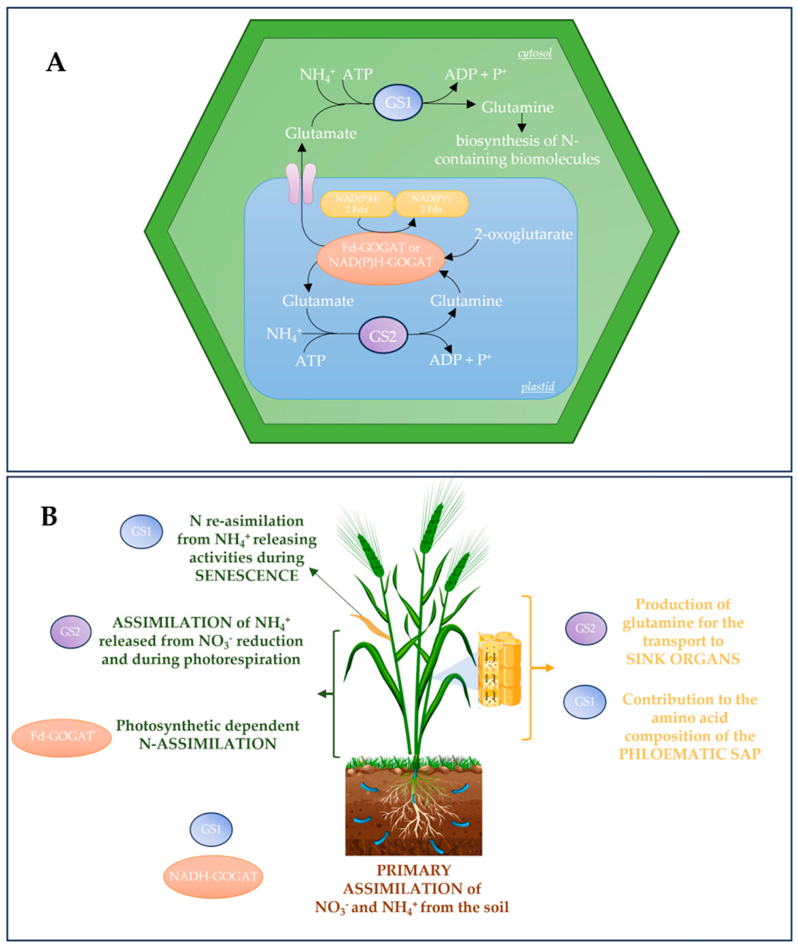
Fig. 6. GS—glutamine synthetase; GOGAT—glutamine:2-oxoglutarate aminotransferase or glutamate synthase. Cellular location of the GS-GOGAT cycle and the main roles of GS and GOGAT (A). The GS–GOGAT cycle converts ammonium (NH₄⁺) into amino acids. Glutamine synthetase (GS) forms glutamine from ammonium and glutamate, and glutamate synthase (GOGAT) regenerates glutamate from glutamine and 2-oxoglutarate. The GS and GOGAT play different roles depending on their location, which is shown in (B). GS1 in the cytosol aids nitrogen uptake and transport, GS2 in plastids processes ammonium from photorespiration, NADPH-GOGAT acts mainly in roots, and Fd-GOGAT supports nitrogen use in leaves.
Mineral Transportation and Chelation
Ficus also uses chemistry to obtain and transport metals such as iron (Fe) and zinc (Zn), which are essential for enzyme activity and photosynthesis (Fig. 7). In tropical soils, these metals often exist as insoluble compounds that roots cannot directly absorb. To overcome this, Ficus releases organic acids and phenolics that form chelates, which are soluble metal–organic complexes. For example:
Fe(OH)3 + 3H+ + Citrate3− → Fe(Citrate) + 3H2O (5)
This process converts insoluble iron hydroxide into soluble iron citrate, which can be taken up by the roots (Walker et al., 2003).
Inside the plant, metals remain bound to molecules such as nicotianamine or histidine, which help transport them safely through the xylem and into leaves. Iron is especially important for chlorophyll formation and for redox enzymes like ferredoxin and nitrate reductase, directly linking iron chemistry to nitrogen metabolism (Fortunato et al., 2023). Zinc plays a role in enzyme structure and gene regulation, helping stabilize proteins and support photosynthetic efficiency.
Because free metal ions can produce reactive oxygen species (ROS), the Ficus keeps them bound to ligands or stores them in the vacuole as non-reactive complexes. Mycorrhizal fungi further assist by releasing siderophores, which are small organic molecules that bind Fe3+ tightly and deliver it to plant roots through receptor-mediated exchange (Robert et al., 2025). This process expands the effective range of metal collection and prevents oxidation or loss.
Together, these reactions demonstrate how Ficus maintains metal balance using fundamental chemical principles. Chelation keeps metals soluble and non-toxic; redox control ensures stability, and transport coordination allows delivery to where the metals are needed for metabolism.

Fig. 7. Illustration of the various metals that are absorbed through the plant's root systems, facilitating essential processes such as photosynthesis and water oxidation. The chelation process plays a crucial role in detoxifying these metals, thereby preventing their accumulation to toxic levels. As a result, this mechanism enhances the plants' tolerance to heavy metal stress (Jogawat et al., 2021).
Ficus Latex Chemistry
The roots and trunks of the Ficus trees are lined with laticifers, a plant cell with sticky cytoplasmatic, milk-like fluid known as latex, which form long tubular structures underneath the bark. When the tree is cut, latex pours out of the cut site (Fig. 8). The metabolites and proteins in the liquid attack bacteria, fungus or pathogens near the cut area, protecting the tree (Kitajima et al., 2018). The latex contains various proteins, including peptidase, peptidase inhibitor, chitinase and antioxidant enzymes, including ascorbate peroxidase, ascorbate oxidase catalase, peroxidase and non-enzymatic components such as alkaloids, flavonoids, coumarins, terpenoids and phenolic acids. The chemical constituents of the Ficus latex, which are involved in stimulus response processes, serve as defense against herbivorous insects and pathogens attacking the tree (Varu et al., 2025).

Fig. 8. Three organs of the Ficus carica (the fruit, the petiole and the trunk) exude latex when cut. The arrows indicate where the latex is pouring out of the plant (Kitajima et al., 2018).
The Ficus tree latex is antioxidant, antibacterial and antifungal due to its chemical composition, making it a crucial part of wound healing and protection, ensuring the survival of the Ficus species (Mostafa et al., 2023).
Antibacterial, Antifungal and Defensive Latex Properties
A variety of secondary metabolites and enzymes in the Ficus latex help it protect the tree from pathogens and insects.
Rubber is a terpenoid secondary metabolite which seals wounds through clotting.
Ficus latex is made of the 15%-30% rubber and is often accompanied by defensive proteins such as chitinases and peroxidases enzymes. Chitinases are mainly isolated from the Ficus carica trunk latex and catalyse the destruction of the chitin polysaccharide found in fungal cell walls and in insect exoskeletons, preventing such organisms from attacking the tree (Mohammad & Alzweiri, 2022).
Coumarins are another type of secondary metabolite which is essential in antibacterial activity in the Ficus latex, they include furanocoumarins (Mohammad & Alzweiri, 2022). Furanocoumarins contain a tricyclic aromatic ring that is formed from a benzopyrone ring (a coumarin core) fused with a furan ring. They exert a strong cytotoxic effect in response to light: furanocoumarins absorb photons and enter a high-energy reactive state when exposed to UV-A light. This state allows them to covalently bond with the pyrimidine bases in DNA, inducing a DNA cross link. A DNA crosslink occurs when two covalent bonds form between adjacent DNA strands (Fig. 9). The crosslink prevents the DNA from unwinding and separating during the DNA replication process, which eventually causes cell death in the cells of the organisms interacting with the Ficus latex as the affected cells cannot replicate their DNA. The chemical defence mechanism in the Ficus prevents herbivores and pathogens from attacking a wounded area as the furanocoumarin in the latex exuded from the cut area damages the cells of herbivores or pathogens (Del Río et al., 2014).

Fig. 9. An example of an interstrand DNA cross-link which prevents proper strand unwinding and separation during DNA replication, inevitably killing the cells containing the cross-linked DNA (Noll et al., 2004).
Psoralen and bergapten (Fig. 10) are the most common furanocoumarins in the Ficus carica leaf and shoot latex as these parts are most exposed to sunlight: the furanocoumarins require UV light to react, making the defensive activity strongest in the latex exposed to the sun (Mohammad & Alzweiri, 2022).
Benzopyrone, psoralen and bergapten ring structures are common furanocoumarins in latex.

Fig. 10. (1) and (2) are two types of benzopyrone ring structures (Chaudhary et al., 2021) and the structures titled psoralen and bergapten are the common furanocoumarins in Ficus latex: they are composed of a benzopyrene ring fused with a furan ring (Mohammad & Alzweiri, 2022).
Protease Inhibition
In addition to breaking down cell walls and the DNA replication process in cells, the Ficus latex inhibits the enzyme protease in insects, allowing the Ficus to better defend itself against insects trying to eat it. The protease enzyme acts to break bound proteins into amino acid by hydrolyzing peptide bonds between amino acids, which is necessary when obtaining nutrients from food sources. When insects feed off the Ficus, they ingest the latex filled with protease inhibitors. The protease inhibitors target the insect’s digestive proteases found in the gut of the insect, such as their serine or cysteine proteases, and reduce their activity. This reduces the amount of nutrients that an insect can gain from eating parts of the Ficus, slowing growth of the insect. Such inhibition of enzymes makes feeding off the Ficus a disadvantageous process, overall discouraging the eating of Ficus trees (Mohammad & Alzweiri, 2022).
Glycosidase enzymes
Glycosidase enzymes are another defensive enzyme found in Ficus latex. Glycosidase enzymes catalyze the breakdown of carbohydrates in pathogens through hydrolysis reactions. Common glycosidase enzymes found in the Ficus are β-N-acetylhexosaminidase (β-NAHA), α-mannosidase, β-glucosidase, β-xylosidase, and β-galactosidase. The enzyme β-NAHA cleaves N-acetylglucosamine (GlcNAc) and N-acetylgalactosamine (GalNAc), which are common sugars found in insect exoskeletons (chitin) and in fungal cell walls. The hydrolyzation of the bonds between the sugar units weakens the structure of insects, allowing chitinases and proteases to more easily attack the invader (Mohammad & Alzweiri, 2022). The enzyme β-NAHA cleaves GlcNAc and GalNAc in the following reactions:
GlcNAc + H₂O → Glc + AcNH2 (6)
GalNAc + H₂O → Gal + AcNH2 (7)
In the reactions, β-NAHA catalyzes a hydrolysis reaction which breaks the bond between the sugar (glucose/ galactose) and the acetyl group.
Antioxidant Properties
The Ficus latex in species such as the Ficus carica, contain antioxidant properties which protect the plant cells from damage from reactive oxygen species, such as peroxide (Varu et al., 2025).
Reactive oxygen species (ROS) such as peroxide and hydroxyl radicals are common byproducts of metabolic processes in an aerobic species such as the Ficus. Under stress, when the tree is cut infected or damaged, ROS act as signalling molecules that stimulate defense-related pathways: they are secondary messengers which control the expression of stress-responsive genes by activating transcription factors. ROS regulate cytosolic calcium levels and can intensify the defensive response by activating calcium-dependent protein kinases. They can also activate nitrogen-activated protein kinase cascades (downstream phosphorylation required for cellular defense).
However, excess amounts of ROS can harm plant cells by inducing structural changes or degrade biomolecules; this is known as oxidative stress. As a method of survival, the Ficus latex has antioxidant enzymes which protect the cells from oxidative damage (Sood, 2025).
Antioxidant enzymes include catalase, ascorbate peroxidases, guaiacol peroxidases, superoxide dismutase and polyphenol oxidase. Catalase and peroxidase enzymes (present in peroxisomes, the mitochondria, and cytosol) neutralize the ROS to prevent oxidative stress by splitting peroxide, for example, to water and oxygen as seen in the following equation:
2H2O2 → 2H2O + O2 (8)
Where H2O2 is peroxide which is split into H2O, water and O2, oxygen gas. Superoxide dismutase converts superoxide radicals into less harmful, less reactive ones. Guaiacol peroxidase uses co-substrates such as ascorbate and phenolic compounds as oxidants to efficiently reduce peroxide towards electron donor substrates (water and oxygen). The antioxidant system found in the Ficus latex is essential in maintaining cellular integrity against excess ROS, which contributes to better wound healing and stress adaptation in drought, high temperature situation or in pathogen attack (Varu et al., 2025).
Leaf Chemistry
The leaves of Ficus trees represent one of the most chemically dynamic areas of the plant that intertwines multiple protective, metabolic, and signaling functions. They serve as the connections between the tree and the atmosphere, enabling photosynthesis, gas exchange, and defense. Through many biochemical pathways and special compounds, the Ficus leaf undergoes light absorption, water regulation, redox balance, and microbe-interactions, all of which keep it healthy and thriving.
Photosynthesis, Gas Exchange, and Carbon Fixation
Photosynthesis within Ficus leaves involves the conversion of light energy into chemical energy through a series of redox and carboxylation reactions. The process occurs in chloroplasts, where chlorophyll pigments capture photons and initiate the transformation of carbon dioxide (CO₂) and water (H₂O) into carbohydrates and oxygen (O₂). The general reaction can be shown as:
6CO2 + 6H2O + Light → C6H12O6 + 6O2 (9)
This reaction is held by two interconnected stages: the light-dependent reactions that generate ATP and NADPH, and the Calvin cycle, where CO₂ is fixed into glucose (Taiz et al., 2018). The Calvin cycle begins with the carboxylation of RuBP by RuBisCO, producing two molecules of 3-PGA. These are then reduced into specialized phosphates, which serve as the initial steps to glucose and other organic molecules.
In Ficus, gas exchange and carbon fixation are highly responsive to environmental stress such as drought and high temperatures. Stomatal openings regulate the passage of CO₂ into the leaf and O₂ and H₂O vapor out of it. This equilibrium shifting indicates a balance between photosynthetic needs and transpiration control (Robert et al., 2025). Under water stress or intense heat, Ficus species often partially close stomata, hence reducing CO₂ intake. These manipulations of CO₂ concentrations contribute to ‘isotopic fractionation’, which tells us that Ficus leaves are very efficient when it comes to photosynthesis, and when referencing their chemical patterns, we see high water-use efficiency in Ficus leaves (Farquhar et al., 1989).
Flavonoids and Phenolic Compounds

Fig. 11. Basic flavonoid structure where two benzene rings (A and B) are linked by heterocyclic pyrane ring (C) with an oxygen atom at position 1. This scheme is used to identify substitution patterns on A (positions 5–8), C (positions 2–4), and B (positions 2′–6′). (Kumar & Pandey, 2013).
Flavonoids (Fig. 11) and phenolic acids are some of the most versatile chemicals that help the organism interact with its environment and are found in Ficus leaves. These compounds play essential roles in photoprotection, antioxidant defense, and signaling. Flavonoids are synthesized in the phenylpropanoid pathway, starting from phenylalanine and leading to compounds like quercetin, kaempferol, and rutin (Kumar & Pandey, 2013). These molecules absorb ultraviolet radiation, mostly in the 280–320 nm range, so they protect chloroplasts that lie beneath them from UV damage. Phenolics function as antioxidants, as they scavenge ROS produced during bright light stress. For example:
ROO° + ArOH → ROOH + ArO° (10)
In this reaction, the phenolic hydroxyl (ArOH) donates a hydrogen atom (1 electron) to neutralize the peroxyl radical (ROO•), which yields a more stable phenoxyl radical (ArO•). So, through redox cycling, compounds can preserve membrane stability and protect photosynthetic functions (Rice-Evans et al., 1997).
In addition, these phenolic molecules help to regulate the microbial community that inhabits leaf surfaces by acting as selective antimicrobials, meaning they target specific species of microbes to expel/deter. In Ficus, glycosides and tannins suppress fungi and bacteria while also favoring beneficial microbes that contribute to leaf health and nutrient recycling. Certain phenolics also influence leaf coloration. For example, anthocyanins are a subclass of flavonoids that impart red to purple hues in young or stressed leaves, allowing the tree to manage light and oxidative stress more efficiently (Chalker-Scott, 1999). This pigmentation serves several adaptive functions such as the protection of chloroplasts. By absorbing excess blue-green and UV light, anthocyanins protect chloroplasts from photoinhibition and oxidative damage during periods of high light intensity and low temperature. In young leaves, this coloration also acts as a visual deterrent to herbivores and insects by signaling lower nutritional value or higher toxicity. Thus, the red and purple tones produced by phenolic pigments not only provide photoprotection but also contribute to the overall resilience and defense strategy of the Ficus canopy.
Cuticular Waxes and Surface Lipids
The Ficus leaf surface is covered in a hydrophobic material composed of long-chain hydrocarbons, esters, and alcohols, forming waxes. These waxes are synthesized by elongating common fatty acid precursors into very-long-chain alkanes, aldehydes, and primary alcohols (Shepherd & Wynne Griffiths, 2006). This waxy barrier has multiple chemical and ecological functions. First, it limits non-stomatal water loss, forming a waterproof cover over the outer layer (epidermis). Second, the wax crystal’s microstructure leads to self-cleaning behavior as water droplets roll off the surface. This removes dust, particles, and microbes.
Triterpenoids like ursolic acid and β-amyrin are very important surface lipids in Ficus leaves, as they enhance hydrophobicity and provide antimicrobial defense. They have a pentacyclic skeleton, which is often dotted with hydroxyl or carboxyl groups and can embed into microbial membranes and cause structural disruption (Leite Dias & D’Auria, 2024). Under environmental stress, such as UV radiation or pathogen pressure, the plant may increase the use of triterpenoid synthesis to help the leaf’s protective capacity. This shift of leaf surface chemistry shows Ficus’ ability to chemically adapt its barriers in response to many external threats.
Redox Signaling and Chemical Defense
Ficus leaves have highly regulated redox chemistry during stress or biotic attack. Pathogen recognition triggers a rapid burst of ROS (usually hydrogen peroxide (H₂O₂) or superoxide anion (O₂⁻) (Fig. 12) by NADPH oxidase (Sood, 2025). These ROS function as molecular signals that initiate defense controlled by phytohormones like salicylic acid (SA) and jasmonic acid (JA). SA is primarily responsible for defenses against biotrophic pathogens which feed on living cells. This includes the transcription of genes and the accumulation of antimicrobial metabolites (Kitajima et al., 2018). JA, on the other hand, controls responses to necrotrophic pathogens and herbivores by stimulating the production of terpenoids, alkaloids, and proteinase inhibitors, which are all deterrents. The combination of SA and JA gives Ficus leaves the ability to have a balance of chemical defenses, based on the nature of the stress.

Fig. 12. Presents the ROS scavenging and disposal through plants' enzymatic and non-enzymatic antioxidative system (Sood, 2025).
Hydrogen peroxide also plays a big role: at moderate concentrations it acts as a signaling molecule to activate defense genes, while at higher concentrations it directly begins oxidative damage on pathogens. To protect plant tissues from collateral damage from this, Ficus leaves use antioxidant enzymes like catalase, peroxidases, and superoxide dismutase (Mostafa et al., 2023).
Ficus leaves are a great example for the integration of chemical, structural, and physiological strategies that helps the Ficus tree to survive and have ecological success. Photosynthesis, through the Calvin cycle, fixes CO₂ into carbohydrates while stomatal regulation balances gas exchange and water conservation under countless environmental stresses (Farquhar et al., 1989; Robert et al., 2025). Flavonoids and phenolics protect against UV radiation, oxidative stress, and pathogens, while also shaping the leaf’s microbiome (Kumar & Pandey, 2013). Waxes and triterpenoids form hydrophobic, self-cleaning surfaces that limit water loss and deter microbes (Shepherd & Wynne Griffiths, 2006; Leite Dias & D’Auria, 2024). Redox signaling and ROS bursts activate defense pathways without compromising any form of leaf metabolism (Kitajima et al., 2018; Sood, 2025). Collectively, these mechanisms demonstrate how Ficus leaves balance photosynthetic efficiency, protection, and adaptation.
Conclusion
The mutualism between figs and wasps is a finely tuned chemical system, where volatile organic compounds, hormones, and enzymes act as interconnected components in an adaptive network. This integration demonstrates coevolution as natural engineering, with two species mutually dependent on precise molecular communication. The root exudates of the Ficus function as chemical mediators between the tree and its surrounding soil ecosystem. By releasing organic acids, amino acids, and signaling molecules, the roots enhance nitrogen uptake and foster microbial cooperation. This enables the Ficus to regulate nutrient exchange and sustain growth in diverse conditions. The latex of the Ficus, exuded when the tree is cut or wounded, has several protective benefits meant to break down the cell walls and cytoskeletons of invaders and disrupt their DNA replication, digestive system or neuron signaling pathways to allow the tree to thrive. In addition, the antioxidant properties of the tree protect its own cells from reactive oxidative species in times of stress. The latex’s use of secondary metabolites and enzymes ensures the survival of the Ficus genus in the face of pathogens. In summary, the chemistry of Ficus leaves demonstrates a practiced balance between metabolism, protection, and adaptation. From photosynthetic carbon fixation to antioxidant and wax-based defenses, each chemical system contributes to survival and resilience. Together, these traits showcase the evolutionary skills of Ficus leaves in maintaining function under environmental stress.
References
References
Beatty, P. H., Klein, M. S., Fischer, J. J., Lewis, I. A., Muench, D. G., & Good, A. G. (2016). Understanding plant nitrogen metabolism through metabolomics and computational approaches. Plants, 5(4), 39. https://doi.org/10.3390/plants5040039
Berkov, S., Atanasova, M., Georgiev, B., Bastida, J., & Doytchinova, I. (2021). The Amaryllidaceae alkaloids: An untapped source of acetylcholinesterase inhibitors. Phytochemistry Reviews, 21(5), 1415–1443. https://doi.org/10.1007/s11101-021-09790-0
Chalker-Scott, L. (1999). Environmental significance of anthocyanins in plant stress responses. Photochemistry and Photobiology, 70(1), 1–9. https://doi.org/10.1111/j.1751-1097.1999.tb01944.x
Chaudhary, D., Bedi, P., Santra, S., & Pramanik, T. (2021, Feburary). Synthesis and biological properties of coumarin analogue: A brief review. Letters in Organic Chemistry, 19(5), 362–387. https://doi.org/10.2174/1570178618666210202152452
Chen, L., & Liao, P. (2025). Current insights into plant volatile organic compound biosynthesis. Current Opinion in Plant Biology, 85, 102708.
Chowański, S., Adamski, Z., Marciniak, P., Rosiński, G., Büyükgüzel, E., Büyükgüzel, K., Falabella, P., Scrano, L., Ventrella, E., Lelario, F., & Bufo, S. (2016). A review of bioinsecticidal activity of Solanaceae alkaloids. Toxins, 8(3), 60. https://doi.org/10.3390/toxins8030060
Cruaud, A., Rønsted, N., Chantarasuwan, B., Chou, L. S., Clement, W. L., Couloux, A., ... & Savolainen, V. (2012). An extreme case of plant–insect codiversification: figs and fig-pollinating wasps. Systematic biology, 61(6), 1029-1047.
Del Río , J. A., Correal , E., Ortuño, A., Moraleda, J. M., Blanquer, M., García-Bernal , D., & Díaz , L. (2014). Furanocoumarins. Studies in Natural Products Chemistry, 43, 145–195. https://doi.org/10.1016/b978-0-444-63430-6.00005-9
Farquhar, G. D., Ehleringer, J. R., & Hubick, K. T. (1989). Carbon isotope discrimination and photosynthesis. Annual Review of Plant Physiology and Plant Molecular Biology, 40, 503–537. https://doi.org/10.1146/annurev.pp.40.060189.002443
Fortunato, S., Nigro, D., Lasorella, C., Marcotuli, I., Gadaleta, A., & de Pinto, M. C. (2023). The role of glutamine synthetase (GS) and glutamate synthase (GOGAT) in the improvement of nitrogen use efficiency in cereals. Biomolecules, 13(12), 1771. https://doi.org/10.3390/biom13121771
Gu, D., Compton, S. G., Peng, Y., & Yang, D. (2012). ‘Push’ and ‘pull’ responses by fig wasps to volatiles released by their host figs. Chemoecology, 22(4), 217-227.
Guan, Y., Zhang, Y., Li, Z., Wang, Y., Chen, C., Yang, X., Gao, J., Miao, B., Peng, Y., & Zhang, Y. (2025). The Impact of Pollinating Fig Wasps’ Entry on Fig Development and the Hormonal Regulation of Sex Differentiation in Ficus hispida. Forests, 16(2), 286. https://doi.org/10.3390/f16020286
Hossaert-Mckey, M., Proffit, M., Soler, C. C. L., Chen, C., Bessière, J. M., Schatz, B., & Borges, R. M. (2016). How to be a dioecious fig: chemical mimicry between sexes matters only when both sexes flower synchronously. Scientific reports, 6(1), 21236.
James M. Cook, S. A. W. (2005). Figs and fig wasps. Current Biology, 15(24), R978-R980. https://doi.org/https://doi.org/10.1016/j.cub.2005.11.057
Jogawat, A., Yadav, B., Chhaya, & Narayan, O. P. (2021). Metal transporters in organelles and their roles in heavy metal transportation and sequestration mechanisms in plants. Physiologia Plantarum, 172(4), e13370. https://doi.org/10.1111/ppl.13370
Kislev, M. E., Hartmann, A., & Bar-Yosef, O. (2006). Early Domesticated Fig in the Jordan Valley. Science, 312(5778), 1372-1374. https://doi.org/doi:10.1126/science.1125910
Kitajima, K., Ishida, A., & Hikosaka, K. (2018). Coordination of photosynthesis, antioxidant systems, and defense responses in tropical trees. Tree Physiology, 38(3), 331–343. https://doi.org/10.1093/treephys/tpx156
Kitajima, S., Aoki, W., Shibata, D., Nakajima, D., Sakurai, N., Yazaki, K., Munakata, R., Taira, T., Kobayashi, M., Aburaya, S., Savadogo, E. H., Hibino, S., & Yano, H. (2018). Comparative multi-omics analysis reveals diverse latex-based defense strategies against pests among latex-producing organs of the fig tree (ficus carica). Planta, 247(6), 1423–1438. https://doi.org/10.1007/s00425-018-2880-3
Kumar, S., & Pandey, A. K. (2013). Chemistry and biological activities of flavonoids: An overview. The Scientific World Journal, 2013, 1–16. https://doi.org/10.1155/2013/162750
Leite Dias, S., & D’Auria, J. C. (2024). The bitter truth: How insects cope with toxic plant alkaloids. Journal of Experimental Botany, 76(1), 5–15. https://doi.org/10.1093/jxb/erae312
Leite Dias, M., & D’Auria, M. (2024). Terpenoid and triterpenoid chemistry in leaf surface defense. Journal of Plant Biochemistry, 88(4), 455–470. https://doi.org/10.1002/jplb.1048
Liu, M., Li, H., & Song, J. (2020). Interactions between intercropped Avena sativa and Agropyron cristatum for nitrogen uptake. Plant and Soil, 447, 611–621. https://doi.org/10.1007/s11104-019-04389-z
Machado, C. A., Robbins, N., Gilbert, M. T. P., & Herre, E. A. (2005). Critical review of host specificity and its coevolutionary implications in the fig/fig-wasp mutualism. Proceedings of the National Academy of Sciences, 102(suppl_1), 6558-6565.
Markel, K., Novak, V., Bowen, B. P., Tian, Y., Chen, Y. C., Sirirungruang, S., ... & Shih, P. M. (2024). Cynipid wasps systematically reprogram host metabolism and restructure cell walls in developing galls. Plant physiology, 195(1), 698-712.
Mohammad, H., & Alzweiri, M. (2022, March). Phytochemistry and pharmacological activities of FICUS CARICA LATEX: A systematic review. Journal of Chinese Pharmaceutical Sciences, 31(2), 81–96. https://doi.org/10.5246/jcps.2022.02.007
Mostafa, M., Hassan, A., & Varu, S. (2023). Antioxidant enzyme regulation in Ficus latex and leaf tissues. Journal of Plant Physiology, 291, 153–168. https://doi.org/10.1016/j.jplph.2023.153168
National Center for Biotechnology Information (2025). PubChem Compound Summary for CID 311, Citric Acid. Retrieved October 21, 2025, from https://pubchem.ncbi.nlm.nih.gov/compound/Citric-Acid.
National Center for Biotechnology Information (2025). PubChem Compound Summary for CID 525, Malic Acid. Retrieved October 21, 2025, from https://pubchem.ncbi.nlm.nih.gov/compound/Malic-Acid.
Noll, D. M., Noronha, A. M., Wilds, C. J., & Miller, P. S. (2004, January, 1). Preparation of interstrand cross-linked DNA oligonucleotide duplexes. Frontiers in Bioscience, 9(1–3), 421–437. https://doi.org/10.2741/1246
Ospina, M. P., Powell, D. H., & Yost, R. A. (2003). Internal energy deposition in chemical ionization/tandem mass spectrometry. Journal of the American Society for Mass Spectrometry, 14(2), 102–109. https://doi.org/10.1016/s1044-0305(02)00814-0
Proffit, M., Lapeyre, B., Buatois, B., Deng, X., Arnal, P., Gouzerh, F., ... & Hossaert-McKey, M. (2020). Chemical signal is in the blend: bases of plant-pollinator encounter in a highly specialized interaction. Scientific Reports, 10(1), 10071.
Rice-Evans, C., Miller, N. J., & Paganga, G. (1997). Structure–antioxidant activity relationships of flavonoids and phenolic acids. Free Radical Biology and Medicine, 20(7), 933–956. https://www.sciencedirect.com/science/article/pii/0891584995022279?via%…
Robert, C. A. M., Himmighofen, P., McLaughlin, S., Cofer, T. M., Khan, S. A., Siffert, A., & Sasse, J. (2025). Environmental and biological drivers of root exudation. Annual Review of Plant Biology, 76, 317–339. https://doi.org/10.1146/annurev-arplant-083123-082752
Robert, C., Walker, T., & Fortunato, A. (2025). Root–leaf coordination in nutrient uptake and signaling of tropical fig trees. Plant Ecology and Biochemistry, 211, 55–73. https://doi.org/10.1016/j.plae.2025.04.004
Shepherd, T., & Wynne Griffiths, D. (2006). The effects of stress on plant cuticular waxes. New Phytologist, 171(3), 469–499. https://doi.org/10.1111/j.1469-8137.2006.01826.x
Sood, M. (2025, May 29). Reactive oxygen species (ROS): Plant perspectives on oxidative signalling and Biotic Stress Response. Discover Plants, 2(1). https://doi.org/10.1007/s44372-025-00275-4
Sood, S. (2025). Reactive oxygen species and redox homeostasis in tropical plants. Environmental Botany Letters, 32(1), 14–27. https://doi.org/10.1016/j.enbote.2025.02.001
Taiz, L., Zeiger, E., Møller, I. M., & Murphy, A. (2018). Plant Physiology and Development (6th ed.). Sinauer Associates. ISBN: 978-1605352558.
Varu, N., Parmar, R., Varsani, V., Dudhagara, D., Gamit, S., & Vyas, S. (2025, december). Biochemical interactions and enzymatic profiling of latex in four ficus species across developmental stages. Next Research, 2(4), 100806. https://doi.org/10.1016/j.nexres.2025.100806.
von Wirén, N., Gazzarrini, S., & Frommer, W. B. (2001). Mechanisms and regulation of ammonium uptake in higher plants. In Plant Nitrogen (pp. 61–77). Springer. https://doi.org/10.1007/978-3-662-04064-5_3
Walker, T. S., Bais, H. P., Grotewold, E., & Vivanco, J. M. (2003). Root exudation and rhizosphere biology. Plant Physiology, 132(1), 44–51. https://doi.org/10.1104/pp.102.019661
Wang, K. L. C., Li, H., & Ecker, J. R. (2002). Ethylene biosynthesis and signaling networks. The plant cell, 14(suppl_1), S131-S151.
Wink, M. (2000). Interference of alkaloids with neuroreceptors and ion channels. Studies in Natural Products Chemistry, 3–122. https://doi.org/10.1016/s1572-5995(00)80004-6