 |
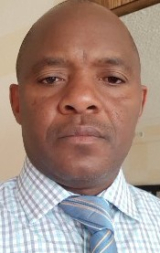
Dr Mark Keboa.Dr Keboa's PhD thesis focused on understanding oral health and dental care experiences of humanitarian migrants in Montreal, with the goal of informing policy and services for the population. Using focused ethnography, the study specifically explored pre-migration dental care and oral health knowledge, impacts of oral diseases, and oral health care experiences among humanitarian migrants in Montreal. The study also explored the experiences of dentists and social workers providing care to humanitarian migrants. Recommendations to improve access to oral health care included: a more inclusive health care policy, lower costs, public dental insurance, community dental clinics, and oral health promotion and orientation for newly arrived humanitarian migrants in Montreal. |
 |
Asma SalemAsma Salem’s Master of Science thesis, titled “Advancing Knowledge to Improve the Oral Health of Refugeed Children: Oral Healthcare Providers’ Perspectives”, explores the perceptions, knowledge, and clinical practices of oral healthcare providers (OHCPs) in Montreal regarding the oral health of refugeed children. Using a qualitative descriptive methodology grounded in the Childhood Ethics theoretical framework, Salem conducted semi-structured interviews with 12 OHCPs at a pediatric dental clinic that serves a high volume of refugeed children. The study revealed that while OHCPs expressed genuine care and compassion for refugeed children, their clinical practices were largely shaped by a biomedical model focused on disease treatment rather than holistic, child-centered care. Refugeed children were often involved in oral hygiene education but excluded from treatment planning and decision-making, which was typically directed by parents and providers. The thesis also highlights systemic barriers to equitable oral healthcare, particularly the limitations of Canada’s Interim Federal Health Program (IFHP), which lacks coverage for essential pediatric dental procedures. These gaps often led to compromised care, such as unnecessary tooth extractions due to financial constraints. Salem’s findings underscore the need for policy reform to ensure refugeed children receive the same dental coverage as non-refugeed children under Quebec’s RAMQ system. The study advocates for a shift in dental education and practice toward child-centered care, emphasizing the importance of recognizing refugeed children as active agents in their healthcare experiences. Salem’s work contributes to the broader Migrant Oral Health Project and aims to inform future strategies for improving oral health equity for vulnerable populations. |
 |
A Program Theory for Community-level Oral Health Promotion Interventions in the Humanitarian Migrant Communities: A Realist Review. Humanitarian migrants usually arrive in their host countries with poor oral health conditions. Community-level oral health promotion programs have complex and linear patterns. Literature mainly focuses on the effectiveness of these programs while the underlying causal mechanisms leading to the observed outcomes in those programs remain underexplored. Through conducting a realist review, we will try to understand how these programs work, for whom and in what contexts. |
 |
Advancing a Program Theory for Community-level Oral Health Promotion Interventions in the Humanitarian Migrants: A Realist Review. Humanitarian migrants are people who are forced to move away from their habitual residence. Experiencing difficult migration trajectories leave them in vulnerable conditions. Many experience socioeconomic problems and deficient nutrition which can result in poor oral health level. Thus, community organizations develop and implement oral health promotion programs for these populations. To date, there is little literature evaluating the effectiveness details of these interventions. In order to optimize successful development and implementation of these programs, there is a need to evaluate how these programs work in practice and which factors helped or inhibited them to achieve their desired outcomes. Therefore, McGill’s Migrant Oral Health Program (MOHP) led by Dr. Mary Ellen Macdonald and Dr. Belinda Nicolau has designed and launched a knowledge synthesis evaluation to understand how community-level oral health promotion programs for humanitarian migrants work, under which circumstances, and why. This project is using a realist review methodology. Realist review is a theory-driven program evaluation methodology used in evidence-based policy. Realist review is an approach to develop causal explanation of observed outcomes in context-mechanism-outcome (CMO) configurations. CMOs explain how an outcome is caused by the mechanisms which are activated in the specific context. These CMOs form the basis for program theory which will be evolved through the research. Begun by a current Master’s student (Negin Eslamiamirabadi), the protocol for this review has been registered in PROSPERO and submitted for peer-review publication. The initial program theory and preliminary search strategies has been advanced. Fatemeh Keshani’s Master’s study will focus on data extraction, quality assessment and developing the final program theory. In addition, working with Migrant Oral Health Project (MOHP) team, she will be involved in developing stakeholder consultations to verify the program theory. Next steps for MOHP will be to develop and implement an oral health program for humanitarian migrants in Montreal based upon the review findings. |
 |
Oral health experiences of refugee children in Montreal and their parents’ perspectives on access to care. People who migrate to evade harsh conditions in their home country, such as environmental disasters, violence, and war, are called refugees. Children represent almost half of the refugee population. Even though refugees generally resettle in Canada, they still face issues after arrival. Refugees in Canada have high oral health needs and may experience challenges in accessing oral care. Improving their oral health is a global priority, and this applies to refugee children. This study is innovative in that it is the first to directly include the voices of refugee children in oral health research. The objectives of this Master's study by Manav Preet Singh Saini are to explore and understand how refugee children experience oral health and access to oral care, and how refugee parents in Montreal experience accessing oral healthcare for their children. We have used qualitative description methodology, and our conceptual framework draws upon the public health model of the dental care process. Participants include refugee children aged 6-12 years and their parents. We have conducted face-to-face, semi-structured interviews. Data is being analyzed using a thematic approach including interview debriefing, transcript coding, data display and interpretation. Our aim is to work together with refugee families to improve their children’s access to oral care. The results will contribute to the oral health of refugees in Canada by addressing the gap in knowledge related to the experiences of refugee children in Montreal regarding access to oral healthcare and their experience of that care. |
|
|
Aya AbdelkarimAya & Fares (below) worked on a project reviewing oral health interventions for migrants, as part of the McGill Community Service Summer Research Scholarship (July-August2019). Learning comes about from doing, and from thinking about what we do. GRC is arguably one of the most famous models of reflection leading you through different stages to make sense of an experience. The purpose of this report was to use Gibbs’ reflective cycle (GRC) to reflect upon our experience as two undergraduate summer students, with no prior knowledge of research methods. This project was funded by the Fondation Marcelle & Jean Coutu. |
|
|
Fares Yaziji.The purpose of this project was to use Gibbs’ Reflective Cycle (GRC) to reflect upon the experience of two undergraduate students (Fares & Aya) collaborating on one research project. Peer-learning involves students working in small groups or pairs to discuss concepts or find solutions to problems. Students are learning from and with each other. Fares worked on the same project as Aya (above) reviewing oral health interventions for migrants, as part of the McGill Community Service Summer Research Scholarship (July-August2019) but presented from a different perspective. This project was funded by the Fondation Marcelle & Jean Coutu. |
|
|
Yen-Chau Nguyen & Gajanan Velupillai.Yen-Chau & Gajanan worked on a project to understand the role of social workers and dentists in the dental care process of refugees in Montreal, as part of the McGill Community Service Summer Research Scholarship (July-August 2018). This project was funded by the Fondation Marcelle & Jean Coutu.
|

