
Table of Contents
Keywords: locust, aerodynamics, jumping mechanics, wing deformation, tracheal system, respiratory system, carbon capture, flight control
Abstract
The physical complexities of locust anatomy result in efficiency for movement and long-term migrations during its short life span. Changes in physical muscle mass and exoskeleton amplify its ability to jump and traverse its environment. Locust wings are divided into two sections, the forewing and hindwing, allowing for increased maneuverability in the air. This structure, along with the wings’ ability to deform, enables the locust to travel hundreds of kilometers for a single migration. Its respiratory tract uses a tracheal system where simple diffusion, convection, and discontinuous gas exchange create a low-energy breathing process.
The rising carbon dioxide emissions from various sectors pose a high level of threat to our existence through global temperature rises, extreme weather conditions, and ecological effects. In this regard, the urgent need for efficient methods of capturing carbon requires membrane technology, an area of research inspired by locusts' tracheal systems that could solve the problem effectively, as locusts can remove carbon dioxide even at low concentrations.
Introduction
Locusts are large insects descended from the family Acrididae, with twenty-eight unique species (Steedman, 1988). They are extremely diverse, and body size can range from 10mm to more than 120mm. They have thread or club-like antennae containing neurons, acting like an olfactory bulb would in humans (Naskrecki, 2013; Petelski et al., 2024). They are attached to the head and then the thorax which is protected by the pronotum: a plate-like structure that covers much of the lower body. Wings are always present in adults but never in nymphs (young locusts). Hind legs are wider, containing a muscular femur and slender tibia adapted for long leaps. Locusts can perform jumps of 2.6m with minimal fatigue. This is made possible by a protein called Resilin that is extremely efficient in turning chemical energy into mechanical motion. The locust is launched by this explosive force, unachievable using only muscle strength. Stridulatory organs are also present in some species: responsible for the clicking and buzzing sounds. They are created by rubbing the hind femur against a modified vein on the tegmen, located on the back wing of the locust. These noises are used to communicate amongst locusts when defending territory or searching for mates. Females use a short ovipositor to lay eggs extending out the end of the abdomen. They are mostly laid in soil and protected by a foamy liquid (Naskrecki, 2013). This froth has also been directly linked to phenotypic plasticity (variation) within the species. A water-soluble factor in the foam secreted by the mother can influence whether a locust will be gregarious or solitary (Ben Hamouda et al., 2009; Simpson, 2005).
The Acrididae family is mostly composed of short-horned grasshopper species, the closest relative to locust species. While the grasshoppers and locusts do not differ in appearance, they have a stark contrast in behaviors (Department of Agriculture, 2019). Most grasshoppers only act as individuals, just as locusts exist in their solitary state in low-density populations (Dept. of Agri., 2019). When in the solitary state, the locust interacts well with the ecosystem. They live two to four months, act as a food source for large birds, mammals, amphibians, and reptiles, and being herbivores, they feed on local plant life (Rahmani, 2021). However, after years of good rainfall, the soil is soft enough for females to lay large numbers of eggs and the plant life is bountiful enough to sustain larger numbers of nymphs, leading to breeding frenzies and increasing the population densities.
In high-density populations, the locusts undergo behavioral and physical changes, called phase polyphenism. They enter a gregarious state and can form dense and highly mobile swarms. This state encourages breeding, feeding and may also induce physical changes (Fig. 2); some species will even migrate in swarms (Dept. of Agri., 2019). These swarms may cover one square kilometer to several hundred square kilometers, with there being anywhere from forty million to eighty million locusts per square kilometer (Steedman, 1988). Once locusts enter the gregarious state, they are considered the most dangerous migratory pests, as they prey on local farmlands and in swarms known as plagues (Gross, 2021).

Fig. 1. Desert locust (Schistocerca gregaria) in solitary state (above) and gregarious state (below) (Compton, 2002).
Each species of locust is located in various parts of the world, but all are partial to drier climates with sparse vegetation. Desert locusts (Schistocerca gregaria) are found in grasslands and deserts of Africa; Rocky Mountain locusts (Melanoplus spretus) are found in the prairies of western North America; and migratory locusts (Locusta migratoria) have the widest range, traveling all through the dry grasslands of southwest Asia and Oceania (Britanica, 2024). Locusts’ migratory patterns vary across species, but all can be simply split into recession and invasion areas. When in a solitary state, locusts exist individually in recession areas. They migrate within these areas every season to find new breeding grounds. Once the suitable environmental conditions have been met for them to enter the gregarious state, they migrate to invasion areas. For example, the desert locust follows migratory patterns shown in Fig. 2 (Food and Agriculture Organization, 2006). As can be seen, some swarms may only migrate a few hundred kilometers, while others will travel a few thousand kilometers.
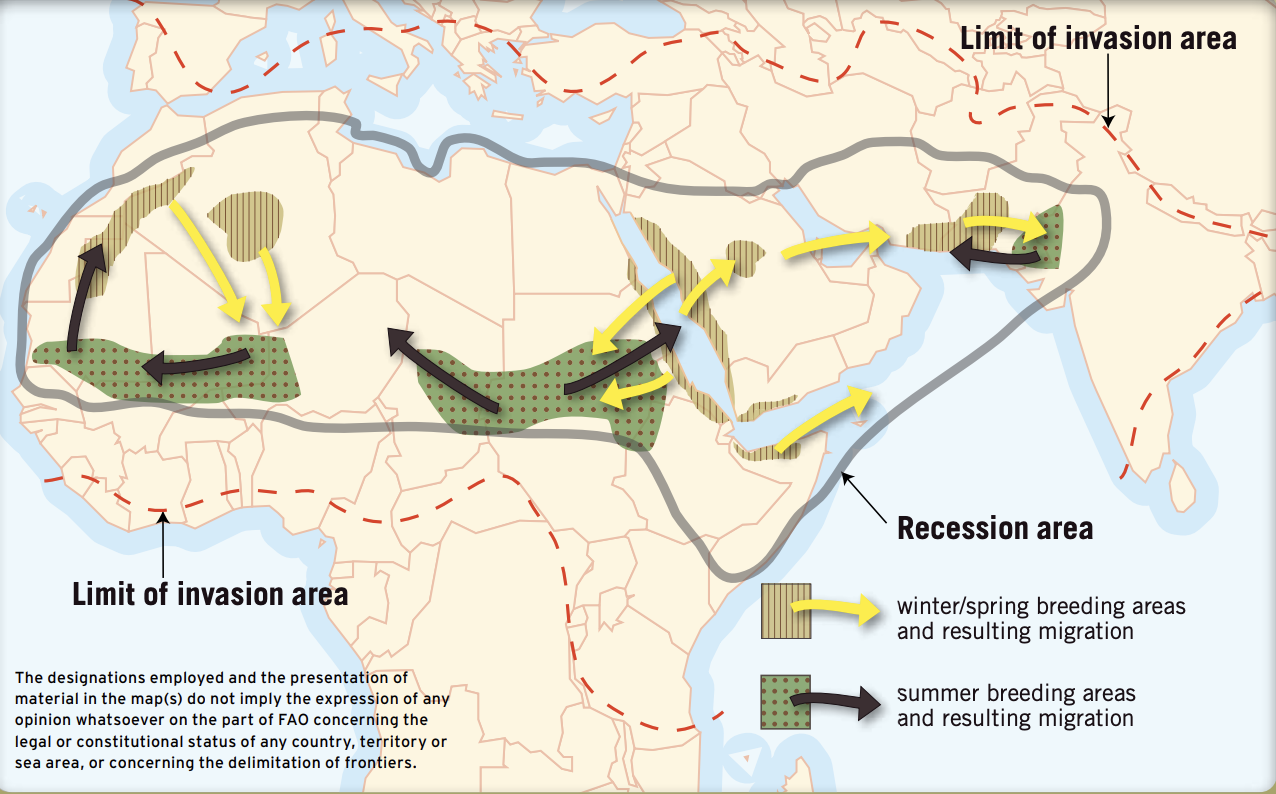
Fig. 2. map of northern Africa displaying the migratory patterns of desert locusts (FAO, 2006).
Jumping Ability in Locusts
The jumping mechanism of locusts combines biological structures optimized for function, power amplification, and extremely precise motion control to perform an impressive and essential leap. Throughout their lives, locusts will face predators or long distances to travel which they will need their jumping ability to survive. Additionally, locusts have phenotypic plasticity through phase polyphenism allowing them to adapt and thrive in different types of environments. These changes extend from behavior to physical muscle mass and exoskeleton, which results in different jumping strengths and abilities based on the environment (Clynen et al., 2005). Their ability to jump has been the focus of research on the interplay of biomechanics and physics, driven by evolution.
Force Generation and Power Amplification
A tiny locust can jump approximately one meter into the air, which is extremely impressive considering it is more than a hundred times the insect's height. They generate this jumping potential by storing and then rapidly releasing energy from complex and elastic structures in their legs, which work in coordination with the large extensor muscles in the femur. This process requires the coordination between their muscles and the elasticity of their outer exoskeleton layer, or cuticle. Large extensor muscles in the femur of the hind legs help store elastic energy in the tendons and cuticle of the tibia. This energy, when released, leads to a rapid extension of the legs, exerting incredible relative power and producing a forceful jump (Li et al., 2023). Additionally, minimal to no rolling velocity ensures stability during jumps. The combination of coxae, femur, tibia, and taurus, have the degrees of freedom to control the jump from the hind legs.
The backbone of the jumping mechanism is built on the locusts' ability to store energy and jump further than what their muscles could do alone. Their method of power amplification utilizes their leg structure as a type of biological spring. During energy storage, the cuticle undergoes significant deformation which, due to its elastic properties, efficiently stores and then releases energy. This explosive burst during takeoff allows locusts to jump higher and further than otherwise possible based on just muscle strength (Dirks et al., 2012). During the jumping mechanism, the locust’s tibia goes through a process where it hardens, called sclerotization, allowing the cuticle to withstand higher levels of strain without breaking. This enables the locust to store more energy without compromising its structural integrity. The elastic modulus of the tibiae is directly influenced by the degree of sclerotization, determining how much energy can be stored and released through the jumping mechanism (Li, Gorb, & Rajabi, 2020). The key for the locust is to optimize the relationship between structural stiffness and elasticity enhancing the locust’s jumping power.
The locust’s jump relies heavily on storing elastic potential energy, which is then rapidly converted into kinetic energy during takeoff. The total mechanical energy is calculated from the formula Energy (Etotal)= ½ mv^2, where m is the mass of the locust and v is the velocity at takeoff. Power is work per unit of time, thus the more elastic energy stored and the more efficiently it is transferred to kinetic energy, the higher the amount of power that the locust produces through takeoff (Bennet-Clark, 1975). To carry out the jumping process, the locust must precisely time the phases in its hind legs. The extensor muscles slowly contract, stretching the elastic cuticle, and storing elastic potential. Then, when it is time to trigger the jump, the locusts have a quick release of their stored energy and a push from the muscles of the hind legs for an explosive takeoff. With perfect timing, this process ensures that energy is released at the optimal moment for maximal thrust (Dirks et al., 2012).

Fig. 4. The timing process of a locust vs its force applied during the preparation and triggering phases of jumping. This reveals the importance of timing and better representation of the process of storing and releasing energy during jumps (Li et al., 2023).
Mechanical Optimization of Locust Legs
The hind legs of a locust are significantly longer than the front legs. The length difference makes the hind legs work as a closed kinematic chain, using torque – a rotational force that amplifies the power of the jump - to generate substantial force. Given the equation τ = F*r*sinθ, where r is the leg length and θ represents the angle of the legs during force application, the increased leg length, r, results in an increase in torque, τ. During the jump's preparation phase, energy is stored in the tibiae's cuticle as elastic potential (Li, Gorb, & Rajabi, 2020). That energy is used to generate torque and results in more effective energy storage and release, which maximizes the force exerted in jumps (Dirks et al., 2012). The structure and exoskeleton of the legs are made from multiple layers which together optimize strength and flexibility. Each layer is designed to resist a different type of force, like compression or tension. For the highest stress areas, the femur and tibia are designed to be strong, while the connective joints are highly flexible, allowing a wide range of motion (Dirks et al., 2012).

Fig. 5. Five types of possible structure failure. Without the stiffness of the exoskeleton, the locust might experience mechanical failure as seen in example 2. Without the flexibility provided by the connective joints, breaks such as in 1 or 3 may occur. (Dirks et al., 2012).
The properties of the locust's exoskeleton extend beyond the storing of elastic energy. Different parts of the exoskeleton, or cuticle, are specialized for different functions, which all work to produce the locusts jump. Locusts have ovipositor valves, which are used primarily in digging and resisting mechanical stress (this plays a large part in laying eggs). The legs are designed to be able to take a lot of load and still function properly, which allows them to adapt from digging to providing force in the jumping mechanism. The leg's balance of tensile stress(σ) and strain (ϵ), is characterized by Young’s modulus (E) in the equation E = σ/ ϵ. The equation describes the locusts' legs and exoskeleton's ability to resist deformation under extreme load. Since the stress is considerable and the strain (also called deformation) under this stress on the tibia, is typically small, the modulus is very high, indicating high stiffness which is an essential quality for powerful jumps (Das et al., 2022). Without the high stiffness provided by the specialized structure of the cuticle in the legs, none of their jumping ability would be possible; it is the backbone of their jumping ability. Locusts contain specialized sensory organs that provide feedback on changes in pressure, tension, and position of legs, allowing real-time adjustments. The primary sensory input comes from proprioceptors, which detect strain in muscles and the exoskeleton during jumping. Locusts use this feedback to adjust their position, power, and angle in response to mechanical stress.
Projectile Motion and Trajectory Optimization
After performing a jump, the locust’s flight becomes dependent on the forces of gravity and air resistance and the initial velocity. This makes the optimization of the jump's trajectory essential for efficient use of kinetic energy. The quality and execution of the jump can be the difference in predator evasion, mating, or traveling for food, all of which determine life or death (Gu et al., 2013). Height and distance are both dependent on the angle of projection for any projectile. Locusts typically launch at an angle between 50-60 degrees, maximizing both vertical and horizontal displacement (Zhu et al., 2019). This angle maximizes range and height, in case of obstacles or the need to travel fast and far. Locusts also adjust the angle of their jumps depending on the situation, such as environmental and situational factors.
The trajectory heavily depends on the timing and coordination of the hind leg. The force will not be evenly distributed if both legs fail to coordinate properly. A discrepancy in the timing or force can cause severe problems such as an uneven and inaccurate jump, which can be very costly in the wrong situations. Locusts' high degree of coordination ensures stability and evenness during takeoff, to achieve their predictable and target flight path. Locusts can also control their jumping mechanism situationally. During foraging, locusts may reduce the amount of force to conserve energy because of no immediate needs or threats, whereas if they are faced with a predator, the locust will implement high force jumps to get as far as possible from the predator and avoid being eaten (Gu et al., 2013). Being able to change power and jump distance and displacement is an evolutionary trait that is key to the locust's survival in different ecosystems.
Aerodynamics for Air Resistance and Stability
A locust’s body shape is essential for optimizing both jump distance and accuracy. Typically, locusts have a streamlined shape, minimizing drag and allowing locusts to cut through the air with less resistance. While their shape’s main purpose is for flight and descent (Weis-Fogh, 1956), it also helps provide structural integrity, proper avoidance of air resistance, and a relatively symmetric shape to fully function during high-speed takeoff (Dirks et al., 2012). The locust also has wings that they use during flight and descent. Their use extends further than just that as they are often used to assist in minor adjustments during takeoff. These small changes are a big deal; any tiny error would affect the jump heavily, as a few degrees in angle at such a large-scale jump make a significant difference. During takeoff or mid-jump, locusts will partially extend their wings, adjusting body orientation. This slight extension prevents uncontrolled spinning, which could compromise flight and landing accuracy. The aerodynamics of the jump due to subtle wing adjustments have been shown to dramatically improve stability, especially in windy or unpredictable conditions (Weis-Fogh, 1956).
Flight
Locusts often have to cover long migration distances with variable air flow and have consequently developed an efficient and high-endurance flight system (Wootton et al., 2000). The locust flight system has a tandem wing configuration attached to the thorax and is composed of a total of four wings, a set of forewings and a set of hindwings. Locust forewings offer more durability compared to hindwings because of a stiffer composition whereas hindwings are far thinner with a veinous and thin membrane composition. These two sets of wings are differentiable in sizes where the hindwings are around three times bigger in chord (c) and the forewings are slightly bigger in length (l) (Fig. 5) (Shkarayev & Kumar, 2016). Since hindwings cover a larger planform area, they are responsible for around 75% of lift and thrust in locust flight, thus providing most of the aerodynamic force. The efficient production of thrust and lift is thanks to the hindwings whereas the control of maneuvers and the stability of the locust is generated by the forewings (Wootton et al., 2000). The ability of the hindwings to fold and deform during flapping flight makes them a key area of interest for researchers (Wootton et al., 2000).

Fig. 5. Locust wings. Chord, c, and length, l. The wings larger in chord are called the hindwings and the wings slightly longer in length are called the forewings. [Adapted from Shkarayev & Kumar, 2016]
Flight Control
During flight displacements, locusts are subject to various external factors such as winds and natural obstacles. Their flight system, more specifically the forewings of the locust, has thus developed control in maneuvers and stability reactions to counter such external perturbations. There are six degrees of freedom that the locust can control: translation and rotation across three axes (Fig. 6). Rotation around these axes is called roll, pitch, and yaw (Taylor, 2006). Thus, locust control of movements can be categorized into two primary types: longitudinal control and lateral control.

Fig. 6. A flying insect has six degrees of freedom. The insect is free to move in translation along or rotate about three orthogonal axes, centred upon the centre of gravity. Rotations about these axes are termed pitch, roll and yaw. [Adapted from Walker et al., 2011]
In longitudinal control, the degree of freedom that is regulated is the pitch. The aerodynamic force is split into two components: lift, the vertical component, and drag, the horizontal component. Observation has shown that the lift force remains relatively constant even with body angle changes of up to 20º. This constant lift reaction theory would explain the decrease in flight speed of the locust when there is an increase in the body angle. However, more recent studies contradict this theory, as no clear correlation between body angle and constant lift was observed. Instead, the body angle was proportional to the hindwing angle of attack, whereas the forewing angle of attack remained constant. Thus, a change in balance between these wings leads to the stabilization of pitch with a nose-down moment (Taylor, 2001). These reflex changes would therefore be from pitch stabilization, and the constant lift reaction would be produced by it. Furthermore, the forewing nose-down rotation at the top of the stroke is increased with an increase in angle of attack. A bigger angle of attack can cause nose-up disturbance; thus, the twist deformation of the forewings helps reduce the aerodynamic forces causing this disturbance (Shkarayev & Kumar, 2016). During the upstroke, the forewing is found to bend downward against the wing motion leading to a reduction of the vertical component of the aerodynamic force in the upstroke. This reduction in aerodynamic force enables pitch stabilization by counteracting the negative lift of the upstroke and focusing the lift forces on the downstroke (Shkarayev & Kumar, 2016).
In lateral control, yaw and roll are the degrees of freedom tackled. During yaw turns, left and right turns, the hindlegs of the locust extend, thus increasing drag forces. Hindwing motion is also reduced due to the hindleg extension leading to decrease in overall aerodynamic force (Taylor, 2001). This decrease in forces can be compared to the reduction in speed of a car before making a sharp turn. Since this could lead to damage of the hindwing, it is believed that the mechanism is only used during urgent or voluntary maneuvers. Lateral asymmetries in forewings can be observed during turns. The inside forewing would increase its nose-down rotation, pronation, to create a brake effect as it decreases lift and thrust on the inside. The outside forewing would increase nose-up rotation, supination, to increase its lift and thrust. Consequently, this mechanism facilitates both roll and yaw turn (Taylor, 2001). This phase shift between the forewings leads to asymmetries in phase of the two sets of wings since hindwings’ phase do not change much compared to forewings.
Wing Deformations
The locust flight system has been particularly interesting to study due to its wings ability to deform during flight. Wing deformations and twisting abilities have been shown to provide aerodynamic advantages that support the locust’s long migratory flights.
Camber, the arched shape of the wing, is the main observed deformation in locust wings. The hindwings of the locust have a corrugated and collapsable structure, thus creating a change of projected area during a stroke. During the upstroke, the hindwings cover 30% less area than during the downstroke since folding occurs in the proximal part of the wings (Walker et al., 2009). Thus, the increase in projected area during the downstroke provides a larger lift component. During the upstroke of the hindwing, the wing is slightly bent upward resulting in a negative camber. In contrast, the downstroke of the hindwing is bent downward creating a positive camber (Walker et al., 2009). Through the comparison of three-dimensional kinematic models, researchers determined that camber deformation provided better aerodynamic forces in lift and thrust. In the uncambered model, less lift and thrust were observed during the downstroke, but a similar lift was observed in the upstroke. In contrast to the accurate model, the uncambered model demonstrated a leading-edge separation during the downstroke even with the same angle of attack. The accurate model exhibited not much leading-edge separation due to the varying camber allowing the well alignment of oncoming flow (Fig. 7) (Young et al., 2009). Since the upstroke was shown to have a slight camber, the result between the accurate and uncambered model were similar. Thus, camber is responsible for efficient momentum transfer and the control of a good aerodynamic force orientation to produce the best amount of lift.

Fig. 7. Computed surface pressure maps from the CFD simulations using full-fidelity kinematics (A), uncambered kinematics (B), and untwisted kinematics (C). Beginning with the start of the downstroke, there is an extensive area of low pressure over the hindwing in the untwisted model, indicative of leading-edge separation. A more limited separation is visible near the root of the hindwing in the uncambered model. There is no clear evidence of separation with the full-fidelity kinematics. The plots at the bottom of the figure show the corresponding 2D flow fields for the stage of the downstroke when the hindwing is horizontal. [Adapted from Young et al., 2009]
Another wing deformation observed is the twisting of the locust wings during flight. Hindwings possess a twisting property that enables them to easily change the angle of attack of the wing. Under typical rigid flight systems, the angle of attack linearly increases as downstroke occurs. In contrast, due to the twist distribution, the hindwings can counter this increasing effect and keep a constant angle of attack, averaging to 15º. This property of constant angle of attacks enables the maximization of lift to drag ratio (Walker et al., 2009). Comparing the accurate kinematic model with the untwisted model reveals significant leading-edge separation on the hindwing during mid-downstroke in the untwisted model, from which twisting distribution and camber property has been removed (Fig. 7). By keeping a constant angle of attack, it allows the locust to better align itself with the oncoming flow and thus decreasing the leading-edge separation (Young et al., 2009). The observation of the ratio of total force to total power of the locust stroke provided insight on power economy between the different models. The untwisted model had 15% less power economy than the accurate model because of lower efficiency due to the significant leading-edge separation and less favorable aerodynamic force direction that produced less lift and thrust (Young et al., 2009).
Fatigue Failure of Hindwings
Fatigue of materials is the weakening of material under an oscillating stress. Locusts can carry out long migratory flights that are up to 5000km long with an average flight speed of 4.48 m/s, thus resulting in 20 million wingbeats (Rajabi et al., 2017). Locust wings exhibit high stress tolerance and durability. Unlike their tibia cuticle, wing cuticle have no regeneration and healing properties. Instead, wings have developed a veinous structure for fatigue resistance. Cross-veins of the hindwing, which are of different morphology and flexibility across the wing, all have similar resistance to stretching, and thus a similar tensile stiffness. By having similar tensile stiffness across the wing, this provides an even distribution of resistance against stress and thus reduces the probability of fractures (Zhao et al., 2023).
In the case of wing fracture, a numerical simulation of incision growth in hindwings demonstrated that the increase in stress leads to reduction in wing lifetime. This unchanging decrease in lifetime is minimized by cross-veins. Indeed, as the crack reaches a cross-vein, the crack penetrated the vein after 671 strokes during a simulation (Rajabi et al. 2017). This structure thus acts as a temporary fix for incision propagation. This resistance is explained by the distribution of the stress to neighbouring veins, with similar tensile stiffness, and membranes, thus reducing stress concentration and avoiding structural failure (Fig. 8) (Rajabi et al. 2017).

Fig. 8. Stress distribution in an area around the crack tip. (A) Crack tip is located in the middle of membrane, showing the stress concentration ahead of the crack. (B) Crack tip is arrested by a cross vein. The cross vein can reduce the stress concentration ahead of the crack by distributing the stress to the adjacent membra and longitudinal vein. [Adapted from Rajabi et al., 2017].
The stress-life method was used to determine fatigue failure of the locust wing structure. The result of the experiment is plotted in a S – N diagram demonstrating the fatigue strength of the wing as a function of cycles to failure. Through the study of the S – N curve, it was found the locust wing has a similar curve to ferrous metals and alloys (Rajabi et al., 2017). Furthermore, the endurance limit of the wing makes up to 40% of the ultimate tensile strength, similarly, to cast steel and iron (Rajabi et al.). These similarities of the locust wing to rigid materials demonstrates the high resistance to stress and fatigue failure.
The Locust Respiratory System
The locust uses the tracheal system to carry out gas exchange. The system is low energy and efficient using, simple diffusion, convection, and discontinuous gas exchange to help maximize respiration. The uptake of air begins in valved holes of the exoskeleton (spiracles). There are 10 pairs of spiracles that connect to branching cuticle cells called tracheae (Fig. 9). Tracheae penetrate organs and tissues while gradually shrinking in diameter until they reach submicron levels outside the cells. These submicron branches (tracheoles) rely on diffusion to get oxygen gas inside the cells to facilitate the process cellular respiration. Tracheoles are as abundant, if not more, as capillaries in the mammalian respiratory system. Although, contrary to mammals, both oxygen and carbon dioxide are carried through tissues of locusts in the gas phase making the system light weight with similar flux, meaning the rate at which gases move through the tracheal system (Harrison et al., 2013).

Fig. 9. American Locust respiratory system. [Adapted from Harrison et al., 2013].
Methods of Respiration
Convection
During flying a lot of energy is expended and the locust needs an increased level of oxygen to facilitate a higher rate of cellular respiration. This rate cannot be sustained using only diffusion; therefore, the locust relies on forced convection. Forced convection is the movement of air due to a pressure difference created actively, in this case by abdominal muscles. It requires additional energy to create fluid motion which increases the rate of gas exchange.
The flow of air during forced convection can be described by principles of fluid dynamics. The Reynolds number, which is the ratio of the inertial and the friction forces, determines the efficiency of air movement. At such a small scale, the frictional forces dominate which characterizes the flow regime as laminar, traveling smoothly in a regular path (Harrison et al., 2013).
The tracheae branches contain many compartments separated by valves that allow for regional pressures and airflow. Passive or active movement of the muscles around the abdominal cavity squeezes and relaxes the tracheae and tracheoles (Fig. 10) (Harrison et al., 2013). Contraction of these muscles decreases body-size, creating higher pressure in the hemolymph (insect blood) which then increases tracheal pressure, forcing air to flow out of the spiracles. When the muscles relax, the body expands, decreasing the pressure in the hemolymph and the tracheae, allowing air from the outside to flow in. This pressure difference causes air to quickly move through the tracheal tubes, bringing oxygen rich air into the body and removing carbon dioxide. Tracheal tubes larger in diameter (closer to the body surface) are where convection mostly occurs. Forced convection helps bring oxygenated air deep into the tracheal system where diffusion would be too slow to replenish the constant need for oxygen during flight (Harrison et al., 2013).

Fig 10. Abdominal muscles are squeezing tracheoles to facilitate forced convection [Adapted from https://thealevelbiologist.co.uk/gas-exchange/].
Diffusion
Within the tracheal system, diffusion plays a role in two key respiratory processes. It first occurs when air moves in and out of the body through the spiracles. Diffusion also facilitates the transfer of oxygen and carbon dioxide between the submicron tracheoles and the cells (Harrison et al., 2013). In both cases, a concentration gradient of oxygen and carbon dioxide drives gas exchange. This gradient moves gases in and out by a principle known as random walk, which refers to the natural, random movement of molecules.
When the locust is resting, it can rely on only diffusion to facilitate the gas exchange necessary for function. A locust that was deprived of oxygen until it reached unconsciousness was placed back into an oxygen rich environment where it began to initiate movement (Harrison et al., 2013). The movement had to have been facilitated by diffusion because the muscle contractions needed for forced convection could not have been present. This proves that the tracheal system can support life passively. Depending on environmental and behavioral conditions the locust can adapt by ventilating passively or actively.
Passive gas exchange is an effective design solution for locusts due to their small body size. As size increases the ratio of surface area to volume decreases, which leads to a slower rate of diffusion, certainly not fast enough to support a larger organism. It could be scaled to larger sizes for design applications, although the individual parts of the system still must be locust size.
Discontinuous gas exchange
Discontinuous gas exchange occurs when spiracles open and close periodically to release or hold gas. This gas exchange pattern occurs cyclically in 3 distinct phases: the closed phase (spiracles are shut and there is little gas exchange), the flutter phase (spiracles open and shut to allow oxygen uptake but minimal release of carbon dioxide), and the open phase (spiracles remain open to allow carbon dioxide release and oxygen uptake). These phases cycle through the following order: closed, flutter, open, and closed (Gibbs & Johnson, 2004; Matthews, 2018).
There are many ideas with supporting evidence that aim to explain the function of this mechanism in some insects. Closing the spiracles may help to combat water loss during respiration (White et al., 2007). By exposing the insect to 5% carbon dioxide the rate of water loss increases 2 to 10 times (Lawley et al., 2022). The water loss through evaporation, is similar to vascular plants that control their stomates to save water and avoid transpiration.
Shutting the spiracles also allows carbon dioxide to build up within the body. This creates a more distinct concentration gradient between the different gases which allows for increased diffusion of oxygen into the body (Gibbs & Johnson, 2004).
Evidence has also shown that the movement of the spiracles depends on the metabolic rate of the locust. Low metabolic rate was correlated to those who used discontinuous gas exchange. Meaning insects who were not expending much energy favored closing their spiracles for minimal respiration. On the other hand, high metabolic rate was linked to those who favored continuous gas exchange. They kept their spiracles always open to increase the rate of oxygen uptake and consequently the rate of aerobic respiration (Gibbs & Johnson, 2004).
Oxidative stress may also play a role in discontinuous gas exchange (Gibbs & Johnson, 2004). Some byproducts of cellular respiration, known as reactive oxygen species (ROS), can damage cells and must be neutralized by antioxidants. When there is an excess of these free oxygen radicals, the body cannot cope causing damage to lipids, proteins, and DNA (Lushchak, 2014). By regulating the movement of the spiracles, locusts can control the rate of cellular respiration, thereby managing ROS levels and maintaining homeostasis.
Applications of the tracheal system
The continuous increase of carbon dioxide released into the atmosphere from burning fossil fuels within the energy, transportation, agriculture and industry sectors threatens our survival. It is shown to increase world temperature, cause extreme weather events, impact the socio-economy, and threaten habitats and wildlife. Designing a method to capture carbon, separating it from multicomponent gases could prove useful in controlling greenhouse gas emission. Currently carbon catching is extremely expensive because it takes a lot of energy to separate low concentrations of carbon dioxide (4-14 percent) typically found in exhaust (Neal & et al., 2024). A possible passive solution is the use of membranes (like a filter) to remove carbon dioxide. Although current designs are mostly inefficient with concentrations less than 20% (Neal & et al., 2024). This makes the tracheal system of the locust an ideal biological model for membrane technology created to capture carbon dioxide. The membrane between the tracheoles into the cells sifts carbon dioxide with a concentration of less than 3% extremely effectively. In fact, flying insects have the highest rates of oxygen uptake and carbon dioxide removal in the animal kingdom (Neal & et al., 2024).
A comparison between engineered membranes and the tracheal system of locusts can be made by analyzing their gas transport capacities. These capacities are measured using conductance, which describes how much fluid passes through a membrane over time, adjusted for surface area or volume (Neal et al., 2024). The table below presents a comparison of carbon dioxide transport across locust and engineered membranes. The conductance values indicate that mimicking the structure of locust membranes may be a promising approach for improving greenhouse gas filtration (Neal et al., 2024).
Table 1. Conductance values of membranes in the femur and flight muscle of two different species of locusts. Notice the magnitude of the conductance values. [Adapted from Neal & et al., 2024]
| Species | Tissue | Tracheal System surface area (m2g-1) | Harmonic mean thickness (nm) | Maximal CO2 flux (nmol s-1 g-1) | Tracheal system conductance (nmol s-1 Pa-1 m-2) | Tracheal system conductance (nmol s-1 Pa-1 ml-1) |
|---|---|---|---|---|---|---|
| Schistocerca americana (locust) | Femur | 0.0179 | 28 | 1000 | 1117 | 20 |
| Locusta migratoria (locust) | Femur | 0.0048 | 76 | 573 | 7955 | 11 |
| Flight muscle | 0.0016 | 126 | 1093 | 5061 | 22 |
Table 2. Conductance values of some engineered membranes. Notice the magnitude of the conductance values. [Adapted from Neal & et al., 2024]
| Engineered membrane | Published CO2 permeance | Membrane thickness (μm) | CO2 conductance (nmol s-1 Pa-1 m-2) | CO2 conductance (nmol s-1 Pa-1 ml-1) |
|---|---|---|---|---|
| Dual-phase disc membrane | ||||
LSCF | 4.7 x 10⁻⁸ (mol m-2 s-1 Pa-1) | 375 | 47.0 | 2.82 x 10⁻² |
YSZ | 2.0 x 10⁻⁸ (mol m-2 s-1 Pa-1) | 200-400 | 20.0 | 1.20 x 10⁻² |
Conclusion
The locust is a subspecies of grasshopper with differing behavioral tendencies and exhibits a structurally intricate anatomy that can be physically studied to the benefit of modern science. The structures highlighted in the paper were limited to the legs, wings and respiratory system and their functions throughout the lifespan of the locust. The structure of the legs, with the hind legs being significantly longer than the forelegs, leads to the amplified jump height of the locust, as they can utilize torque to aid the jump. Additionally, before the locust jumps, the tibia undergoes sclerotization and the cuticle deforms, allowing the hind leg to act as a biological spring while also reducing strain on its joints. This process stores elastic potential energy, allowing the locust to jump higher than muscles alone could achieve. Flight in locusts represents a complex system with a tandem wing configuration, where the fore- and hindwings assume different aerodynamic and maneuverability functions. The bigger area of the hindwing is thinner in structure and provides about 75% of the lift and thrust necessary for sustainable flights, while the forewing plays its role in stabilization and control during dynamic flight maneuvers. This paper deals with the study of the mechanisms in locust flight, with particular emphasis on the deformation of the hind wing that favor aerodynamic efficiency. Among the few key conclusions derived are that wing camber and twisting during flight optimize the lift-to-drag ratio, thus contributing to stability in flight dynamics. In addition, the veinous structure of the locust wings imparts huge fatigue resistance to the friction created by its wings during flight over very long distances of migration. The cross-vein structure of the wings acts as a temporary fix for incision propagation. The tracheal network in the locust respiratory system, through mechanisms such as forced convection and discontinuous gas exchange, accommodates the high oxygen demand during flight. In fact, deeper insight into the biology of locusts would serve to extend our knowledge of their physiology while providing potential biomimetic designs for carbon capture technologies; a key need for sustainability in the face of increasing atmospheric CO₂ levels.
References
References
Ben Hamouda, A., Ammar, M., Ben Hamouda, M. H., & Bouain, A. (2009). The role of egg pod foam and rearing conditions of the phase state of the Asian migratory locust. Journal of Insect Physiology, 55(7), 617-623. https://doi.org/10.1016/j.jinsphys.2009.03.008
Bennet-Clark, H. C. (1975). The energetics of the jump of the locust Schistocerca gregaria. Journal of Experimental Biology, 63(1), 53-83. https://doi.org/10.1242/jeb.63.1.53
Brittanica, Editors of Encyclopedia (2024). "locust." Retrieved 28 September 2024, from https://www.britannica.com/animal/locust-insect.
Clynen, E., Husson, S. J., & Schoofs, L. (2005). Advances in locust phase polyphenism research. Journal of Orthoptera Research, 14(2), 213-224. https://doi.org/10.1665/1082- 6467(2005)14[213:ACACIL]2.0.CO;2
Compton, T. (2002). An Insect’s Alter Ego. NASA Earth, NASA GSFC.
Das, R., Gershon, S., Bar-On, B., Tadayon, M., Ayali, A., & Pinchasik, B. E. (2022). The biomechanics of the locust ovipositor valves: A unique digging apparatus. Journal of the Royal Society Interface, 19(188), 20210955. https://doi.org/10.1098/rsif.2021.0955
Department of Agriculture, F. a. F. (2019). Locusts. Government of Australia. Retrieved 28 September 2024, from https://www.agriculture.gov.au/biosecurity-trade/pests-diseases-weeds/locusts/about/about_locusts.
Dirks, J.-H., Taylor, D., & Thompson, M. S. (2012). Shape optimization in exoskeleton and endoskeleton: A biomechanics analysis. Journal of the Royal Society Interface, 9(74), 20120567. https://doi.org/10.1098/rsif.2012.0567
Food and Agriculture Organization (2006). Emergency Prevention System - Desert Locust Component. Food and Agriculture Organization of the United Nations. Retrieved 28 September 2024 from https://www.fao.org/ag/locusts/common/ecg/1344/en/EMPRESbrochureE.pdf.
Gibbs, A. G., & Johnson, R. A. (2004). The role of discontinuous gas exchange in insects: the chthonic hypothesis does not hold water. Journal of Experimental Biology, 207(20), 3477-3482. https://doi.org/10.1242/jeb.01168
Gross, M. (2021). How locusts become a plague. Current Biology, 31(10): R459-R461. https://doi.org/10.1016/j.cub.2021.05.007.
Gu, J., Wang, C., & Cheng, C. (2013). The mechanics and trajectory control in locust jumping. Journal of Bionic Engineering, 10(4), 467-476. https://doi.org/10.1016/S1672- 6529(13)60215-2
Harrison, J. F., Waters, J. S., Cease, A. J., VandenBrooks, J. M., Callier, V., Klok, C. J., Shaffer, K., & Socha, J. J. (2013). How Locusts Breathe. Physiology, 28(1), 18-27. https://doi.org/10.1152/physiol.00043.2012
Lawley, S. D., Nijhout, H. F., & Reed, M. C. (2022). Spiracular fluttering decouples oxygen uptake and water loss: a stochastic PDE model of respiratory water loss in insects. Journal of Mathematical Biology, 84(6). https://doi.org/10.1007/s00285-022-01740-4
Li, C., Gorb, S. N., & Rajabi, H. (2020). Cuticle sclerotization determines the difference between the elastic moduli of locust tibiae. Acta Biomaterialia, 97, 527-536. https://doi.org/10.1016/j.actbio.2019.12.013
Li, Y., Wang, L., Yang, C., & Liu, W. (2023). Locust-inspired jumping mechanism design and improvement based on takeoff stability. Journal of Biomechanical Engineering. https://doi.org/10.1115/1.4063406
Lushchak, V. I. (2014). Free radicals, reactive oxygen species, oxidative stress and its classification. Chemico-Biological Interactions, 224, 164-175. https://doi.org/10.1016/j.cbi.2014.10.016
Matthews, P. G. D. (2018). The mechanisms underlying the production of discontinuous gas exchange cycles in insects. Journal of Comparative Physiology B, 188(2), 195-210. https://doi.org/10.1007/s00360-017-1121-6
Naskrecki, P. (2013). Encyclopedia of Biodiversity. Encyclopedia of Biodiversity. https://doi.org/info:doi/10.1016/B978-0-12-822562-2.00388-1
Neal, M. H., & et al. (2024). Insect tracheal systems as inspiration for carbon dioxide capture systems. Bioinspiration and Biomimetics, 19(5). https://doi.org/info:doi/10.1088/1748-3190/ad665c
Petelski, I., Günzel, Y., Sayin, S., Kraus, S., & Couzin-Fuchs, E. (2024). Synergistic olfactory processing for social plasticity in desert locusts. Nature Communications, 15(1). https://doi.org/10.1038/s41467-024-49719-7
Rahmani, A. (2021). "Locust Swarms: Pests or Actors in the Ecosystem?". Retrieved September 28, 2024, from https://roundglasssustain.com/species/locust-swarms.
Rajabi, H., Bazargan, P., Pourbabaei, A., Eshghi, S., Darvizeh, A., Gorb, S. N., Taylor, D. & Dirks, J.-H. (2017). Wing cross veins: an efficient biomechanical strategy to mitigate fatigue failure of insect cuticle. Biomechanics and Modeling in Mechanobiology, 16(6), 1947-1955. https://doi.org/10.1007/s10237-017-0930-6
Shkarayev, S. & Kumar, R. (2016). Kinematics and inertial effects in locust flapping wings. Experimental Mechanics, 56(2), 245-258. https://doi.org/10.1007/s11340-015-0093-2
Simpson, S. J., Sword, Gregory A., and De Loof, Arnold. (2005). Advances, controversies and consensus in locust phase polyphenism research. Journal of Orthoptera Research, 14(2), 213-222. https://doi.org/10.1665/1082-6467(2005)14
Steedman, A. (1988). Locust Handbook (2nd ed.). London, National Resources Institute.
Taylor, G. K. (2001). Mechanics and aerodynamics of insect flight control. Biological Reviews of the Cambridge Philosophical Society, 76(4), 449-471. https://doi.org/10.1017/S1464793101005759
Walker, S. M., Thomas, A. L. R. & Taylor, G. K. (2009). Deformable wing kinematics in the desert locust: How and why do camber, twist and topography vary through the stroke? Journal of the Royal Society Interface, 6(38), 735-747. https://doi.org/10.1098/rsif2008.0435
Walker, S. M., Thomas, A. L. R. & Taylor, G. K. (2011). Operation of the alula as an indicator of gear change in hoverflies. Journal of the Royal Society Interface, 9, 1194-1207. https://doi.org/10.1098/rsif.2011.0617
Weis-Fogh, T. (1956). Biology and physics of locust flight: III. The aerodynamics of locust flight. Philosophical Transactions of the Royal Society of London. Series B, Biological Sciences, 239(669), 415-458. https://doi.org/10.1098/rstb.1956.0007
White, C. R., Blackburn, T. M., Terblanche, J. S., Marais, E., Gibernau, M., & Chown, S. L. (2007). Evolutionary responses of discontinuous gas exchange in insects. Proceedings of the National Academy of Sciences, 104(20), 8357-8361. https://doi.org/10.1073/pnas.0608968104
Wootton, R. J., Evans, K. E., Herbert, R. & Smith, C. W. (2000). The hind wing of the desert locust (Schistocerca gregaria forskal). The Journal of Experimental Biology, 203 (19), 2921-2931.
Young, J., Walker, S. M., Bomphrey, R. J., Taylor, G. K. & Thomas, A. L. R. (2009). Details of insect wing design and deformation enhance aerodynamic function and flight efficiency. Science, 325(5947), 1549-1552. https://doi.org/10.1126/science.1175928
Zhao, W., Ma, Q., Li, Z. & Wan, C. (2023). Functional compliance and protective stiffness: cross-veins in the hing wing of locust Locusta migratoria. Journal of Comparative Physiology A: Neuroethology, Sensory, Neural, and Behavioral Physiology, 209(2), 231-237. https://doi.org/10.1007/s00359-022-01587-6
Zhu, Y., Chen, W., & Liu, J. (2019). Hybrid inspired research on the flying-jumping locomotion of locusts using robot counterpart. Frontiers in Neurorobotics, 13, 87. https://doi.org/10.3389/fnbot.2019.00087