
Table of Contents
Abstract
Ants are social insects that live in colonies organized into a caste system, where individuals have specific roles: queens for reproduction, males for mating, and sterile female workers and soldiers for tasks like foraging, defense, and colony maintenance. This division of labor allows for efficient functioning and survival of the colony. Worker ants exhibit remarkable mechanical adaptations that facilitate their extraordinary load-carrying abilities, a phenomenon that has garnered significant research interest. This paper delves into the intricate biomechanics of ant anatomy, focusing on the unique structural features of their exoskeletons and mandibles, which empower them to transport objects far exceeding their body weight. By analyzing the mechanical function of joints, particularly the neck joint, and the muscular arrangements, we gain insights into how ants effectively manage and stabilize loads during movement. Furthermore, the study explores the specialized leg structures that enable efficient locomotion, emphasizing the tripod gait that enhances stability on various terrains. The capacity for ant aggregations to self-organize and adapt to environmental challenges is also examined, showcasing the collective behaviour that contributes to their survival. By integrating perspectives from mechanical biology and fluid dynamics, this research aims to elucidate the underlying principles governing ant locomotion and load management, ultimately highlighting the evolutionary success of ants which lies in their highly specialized physical adaptations, efficient foraging strategies, mechanical strength relative to their size, and their ability to thrive in diverse ecosystems.
Introduction
Ants are insects that belong to the family Formicidae and are among the most successful organisms on Earth. Ants are different from solitary insects such as mosquitos because they form eusocial colonies which consist of two major groups. The first group are the reproductive ants which are female queens and short-lived males that are responsible for reproduction. The other group are the worker ants, which are female offspring that are responsible for searching for food, constricting nests and defending the colony. This division of labour is what makes ant colonies so efficient (Ferguson, 2021).
Worker ants exhibit extraordinary physical and behavioural abilities that make them the ideal focus for examining biomechanical properties. Their anatomy is divided into three main sections: the head, thorax and abdomen (Fig.1). The head has powerful mandibles, which serve as tools for digging, cutting and carrying materials. The thorax contains the muscles for movement, which allows them to carry objects up to 50 times their body weight. Furthermore, the six legs attached to the thorax are designed with specialized claws and adhesive pads that allow worker ants to climb vertically and aggregate. Finally, the abdomen stores vital organs and is often equipped with a stinger for defence in some species. The worker ants’ incredible exoskeletons not only protect them but also allow ants to use their strength in a way that would seem impossible for their size (Havard Forest, 2021).

Fig. 1. Worker Ant’s Structural Anatomy (Havard Forest, 2021).
Factors that Contribute to Ant Strength
Ants aren’t just physically strong; they are also masters of teamwork. Their colonies function as superorganisms, where individuals work in perfect harmony to accomplish complex tasks. Ants showcase remarkable coordination as they can form living bridges, rafts, and shelters by linking their bodies together. By examining the ants’ strength, body composition and teamwork abilities, this paper aims to uncover a deeper understanding of the biomechanics that make them among nature’s most remarkable engineers, architects and problem-solvers.
Factors Contributing to the Extraordinary Strength of Ants

Fig. 2. (A) An Oecophylla longinoda worker) holding a dead baby bird from the side. (B) Top view of the same system. (C) SEM of a ventral view of the neck joint of Formica exsectoides. (Nguyen et al., 2014)
The load carried by worker ants is lifted with their mandibles and transferred to the neck joint, which acts as a pivotal point between the head and thorax. The ant’s six legs evenly distribute the load, which provides stability and allows the forces exerted by the ant’s muscles to transmit efficiently through the joints and enables the ant to transport heavy objects (Nguyen et al., 2014). For instance, a single Oecophylla longinoda worker that weighs only 6 mg was observed holding a 7 g dead bird, which is more than 1,200 times its mass (Fig. 2.).
Researchers created a kinematic model of the ant’s exoskeleton (Fig. 3.) to study the biomechanics of the ant in more detail. During this process, they discovered a key difference between the hinge joints in exoskeletons and those found in endoskeletons. Unlike endoskeleton joints, which typically have a single contact point, ant exoskeleton joints have two contact regions. This unique structure allows muscle fibers to pass through the joint during movement, significantly enhancing mobility and strength. To account for this, researchers fitted two spheres to the joint condyles (Arroyave-Tobon, 2023).

Fig. 3. 3D model of the Messor barbarus specimen from micro-computed tomography. (A) Upper isometric view. (B) Lower isometric view (Arroyave-Tobon, 2023).
Additional analysis was performed on the neck joint to better understand the crucial structures supporting the ant's load capacity. Researchers used a centrifuge to investigate the attachment force of an ant’s neck. To do this, immobilized ants were spun at up to 215 revolutions per second (rps), and the force exerted on their necks was measured. (Nguyen et al., 2014). Micro CT scans were used to quantify the material properties of the ant’s exoskeleton (Fig. 4.).

Fig. 4. (A) Sample micro-CT scan of the specimen. (B) Sample of digital cross-section in the sagittal plane, from processed micro-CT scans (Nguyen et al., 2014).
Qualitative Discussion of Ant Strength Relative to Size Using Scaling Laws
In addition to the structural integrity of the ant, their strength can also be explained through basic physics and scaling laws. According to the Square-Cube Law, the surface area of an object increases proportional to the square of the length, while volume increases proportional to the cube of a length (Fig. 5; Hey 2018). This relationship becomes important when considering the biomechanics of larger animals. For example, a mammal's bone strength is proportional to the cross-sectional area of their bones, which supports their relatively heavier bodies. Ants have a unique advantage due to their small size and relatively light bodies. Their muscles do not need to dedicate significant effort to support their own body weight, unlike large animals such as elephants. Instead, their muscles can be fully utilized for carrying mass. In summary, scaling laws are particularly relevant for smaller organisms, including ants, as they highlight the inverse relationship between size and relative strength. In contrast, larger animals, though physically stronger, cannot carry objects nearly as heavy relative to their own body mass.

Fig. 5. The blue line Volume (Mass; Weight) increases much faster than the red line representing the Area (Deparkes, 2015).
Load-Carrying Behavior and Stability Mechanisms in Ants
Although ants can withhold up to 5,000 times their body weight, they often carry loads under their total capacity. Many factors influence ants to carry a specific mass or length object. For instance, studies show a difference in load carriage of the leaf-cutting ant during daytime compared to nighttime. The relative load carriage is calculated with the burden (B), using equation 1, where Ma is the ant’s mass and Mb is the leaf fragment’s mass (Tonhasca Jr, 2000). This calculation quantifies how much more mass the ant is carrying in relation to its own body mass.

Results indicated that leaf-cutting ants adjust their load-carrying capacity depending on the time of day. During the daytime, ants carry heavier loads, indicating increased load capacity (Tonhasca Jr, 2000). In addition to this time-based variation, researchers observed that the speed at which ant colonies move is influenced by the mass each ant carries. For this reason, ants select loads based on an object's mass rather than its surface area (Rudolph, 1986).
In addition, ants also demonstrate remarkable stability control when transporting objects of varying lengths. Researchers conducted an experiment to investigate how grass-cutting ants manage the position of carried fragments to prevent imbalance during transport. The researchers presented the workers with standardized paper fragments of two different lengths (15 and 30 mm) of the same mass of 5 mg and width of 2 mm (Moll, 2010). The ants were then observed walking a 4.5 m trail toward their nest in a controlled setup (Fig. 6.).

Fig. 6. Experimental setup. Ants were presented in a foraging arena. The ants had to walk over a distance of 4.5 m to reach the arena and were filmed with three synchronized cameras (Moll, 2010).
To minimize the effect of body size on load carriage, ants of similar size were used. Additionally, the angle at which the fragment was carried (𝜎) was determined for each recording, using the following equation (Eq. 2) based on the diagram in Fig. 7 (Moll, 2010):


Fig. 7. Diagram of digitized body points and measured angles in carrying ants (α fragment angle, β thorax angle, γ head angle, δ head-fragment angle, ε head-thorax angle). The angles were vectorially calculated (Moll, 2010).
The results of the experiment revealed that worker ants maintain stability by adjusting both the position of the fragment and their body posture. Ants were observed using different head movements to hold fragments of varying lengths in different orientations between their mandibles. For shorter fragments, workers held the load at an angle of 38.6° ± 11.2°, while longer fragments were carried at a steeper angle to prevent forward or backward shifts in the center of mass (Moll, 2010). These findings demonstrate that ants not only carry heavy loads but also skillfully manage stability by adjusting the position of objects. This ability further highlights their remarkable biomechanical capabilities.
A Closer Look into Worker Ants’ Mandibles
Ant jaws, or mandibles, are one of the most recognizable and essential features of all species of ants, primarily due to their major role in the insects’ survival. The mandible is a versatile tool that worker ants need for essential tasks, such as digging to build nests, cutting and catching food, carrying objects, and defending themselves against predators or intruders (Birkenfeld et al., 2024). The two most unique and remarkable features of an ant’s mandible are its strength and, for a select few species, the speed at which it can close.
Despite their small size, ants can exert tremendous force with their jaws, lifting heavy objects and keeping a solid grip to carry them through long distances. The jaw’s strength also allows them to break apart hard surfaces, making them able to cut and dig. Further, ants can close their jaws at high speeds. This is a valuable feature since it allows worker ants to catch prey with high precision or to launch themselves away from dangerous situations. Trap-jaw Odontomachus ants specifically are recognizable by a power-amplified mandible, which can close at a speed of 38 m/s or maximum 64 m/s, making them one of the most prominent examples of this feature of ant jaws (Wang et al., 2022).
The biomechanics behind the jaw’s strength and speed consider several factors, which have evolved through millions of years to serve ants’ needs.
Composition of the Jaw
An essential factor that heavily contributes to the mechanical strength and versatility of an ant’s jaw is its composition. The mandible is part of the ant’s exoskeleton and is mostly cuticle, primarily made of chitin fibers, as seen in Fig. 8., a biopolymer common in exoskeletons due to its toughness and flexibility. In ants, the cuticle also contains transition metals and some associated proteins (Birkenfeld et al., 2024).
Different cuticle regions have distinct functions and structures due to their different mechanical properties. Whether a region is stiff or flexible depends on the chitin content, the orientation of the chitin fibers and the chitin-binding proteins. The ant mandible primarily comprises chitin nanofibers in a matrix of proteins at its core to provide an overall structure and shape. The chitin crystallites are placed in an organized network and, in most arthropods, are about 300 nm in length and 3 nm thick (Wang et al., 2022). The outermost part of the cuticle also contains specific proteins and lipids to reduce water loss and protect the jaw.

Fig. 8. (a) Schematic depiction of arthropod cuticle structure: N-Acetylglucosamine, a building block of chitin, (I) polymerizes into antiparallel chains of α-chitin (II), forming protein-coated nanofibrils (III). These assemble into fibril layers (*V) or chitin-protein fibers (V) and form horizontal fiber planes, stacking into lamellae (VI) with helicoidal arrangements. Together with the outermost epicuticle, the exo- and endocuticle form the exoskeleton (VII). (b) The Pore canal system is forms by deposition of fibrils/fibers around cellular protrusion during cuticle formation (Birkenfeld et al., 2024).
An important mechanism that makes ant jaws unique is the presence of transitional metals in the cuticle, such as zinc, manganese, and other metals (Fig. 9.). These metals are present in varying quantities across different species of ants and determine the mandible's mechanical strength and structural endurance by strengthening the molecular bonds between the chitin fibers and proteins. Zinc (Zn) provides elasticity to the mandible, leading to higher mechanical strength. This is essential for ant jaws to absorb the impact of hard material and maintain their sharpness over time. Zinc is specifically abundant in the cutting edge of the mandible, unlike the outer edges, which have a significantly lower amount. The cutting edges are the hardest part of the jaw because they interact more with materials and must retain their sharpness to function effectively. During growth, manganese is first present in the cutting edges but is replaced by zinc over time, which increases more than 200-fold in a fully grown worker, making the region more than twice as hard (Birkenfeld et al., 2024).
The amount of transition metal in the mandible depends on the ant species and their needs to survive in their environment. Ants specializing in cutting through hard materials tend to have a higher concentration of metals like zinc in their mandibles. This is the case for ants that capture and dismember prey.

Fig. 9. Proportions of individual elements and Ae (sum of Ca, Cl, Cu, Fe, K, Mg, Mn, P + Pt, S, Si, Zn), given in atomic %, sorted to the different regions (cutting edge, outer edge, curvature to the basis) (Birkenfeld et al., 2024).
Mechanism of the Jaw
An ant’s bite force depends mostly on anatomical and physiological factors, but its mechanics can also be analyzed. The jaw resembles a biological lever, which allows the insect to perform various tasks (Kang et al., 2023). When using the jaw, an effort is applied between the object being bitten and the hinge joint, which serves as a pivot. This model of food crushing works as a class 3 lever, referring to a lever with the fulcrum at one end. For the jaw, the fulcrum is the mandibular joint, placed at the end of the jaw arms.
Insects with biting-chewing mandibles are usually thought to have simple hinge joints that allow rotation around a single fixed axis. For worker ants and other vertebrates, this is not the case. Mandible movement is more complex, as it does move in a single-axis rotation, but only up until the mandible overlaps when the jaw is closed, as shown in Fig. 10. This indicates that mandible kinematics involve more than one “degree of freedom,” referring to the number of ways the mandible can rotate. The primary mandible motion in ants is moving side-to-side in a horizontal plane relative to the head for tasks such as cutting leaves. However, bi-axial movement occurs when handling objects of different sizes, meaning the mandible arms rotate in two axes simultaneously and can move in multiple directions, as displayed in Fig. 11.

Fig. 10. Quantitative analysis of Atta Vollenweider mandible motion. Mandibles displayed one of two characteristic movement patterns: (a) transverse adduction and abduction; (b) a combination of mandible yaw and pitch, which occurs exclusively in regions of mandible overlap. The initial position of the left mandible is highlighted in green. Colored spheres represent the position of three tracked markers (Kang et al., 2023).
Ants having jaws that can rotate up and down in more than one axis during biting have some functional benefits, such as being able to cut through more resistant surfaces by finding a path with least resistance and preventing damage to the mandible when a flexible material is encountered (Kang et al., 2023).
Since the axis of rotation is not entirely fixed at a simple fixed joint, slight variations might be present and can affect bite force calculations. Nevertheless, the bite force can be measured with suitable accuracy, depending on the context. In insects with chewing mouthparts, including ants, bite force is produced by large muscles in the head capsule and transmitted to the cutting edge of the mandible through the apodeme, a large head muscle, and the mandibular joint (Püffel et al., 2023).

Fig. 11. The estimated dominant axis of rotation (pink) for large opening angles, closely aligned to the Dorso-ventral head axis (dva), so lies approximately in the sagittal (sp) and transverse (tp) head planes and is about perpendicular to the lateral (la) and anterior–posterior (apa) head axes and horizontal head plane (hp) (Kang et al., 2023).
The bite force is used to quantify and link anatomical features of the bite mechanism to its functional performance. This can be calculated with the bite force equation below, where the bite force (Fb) is influenced by muscle volume (Vm), fiber length (Lf), muscle stress (σm), the angle at which muscle fibers are oriented relative to the line of action of the muscle (φ) (pennation angle), and mechanical advantage (MA), which is a measure of how much the lever mechanism amplifies the force exerted by the muscles (Püffel et al., 2023).

The lever mechanism is commonly characterized by its mechanical advantage. In practical terms, MA is the ratio of two arms, thus the ratio of the effective in-lever (Li) and the effective out-lever (L0), Li being the distance between the point of applied force and L0 the fulcrum, and the distance between the load and fulcrum (Fig. 12.).

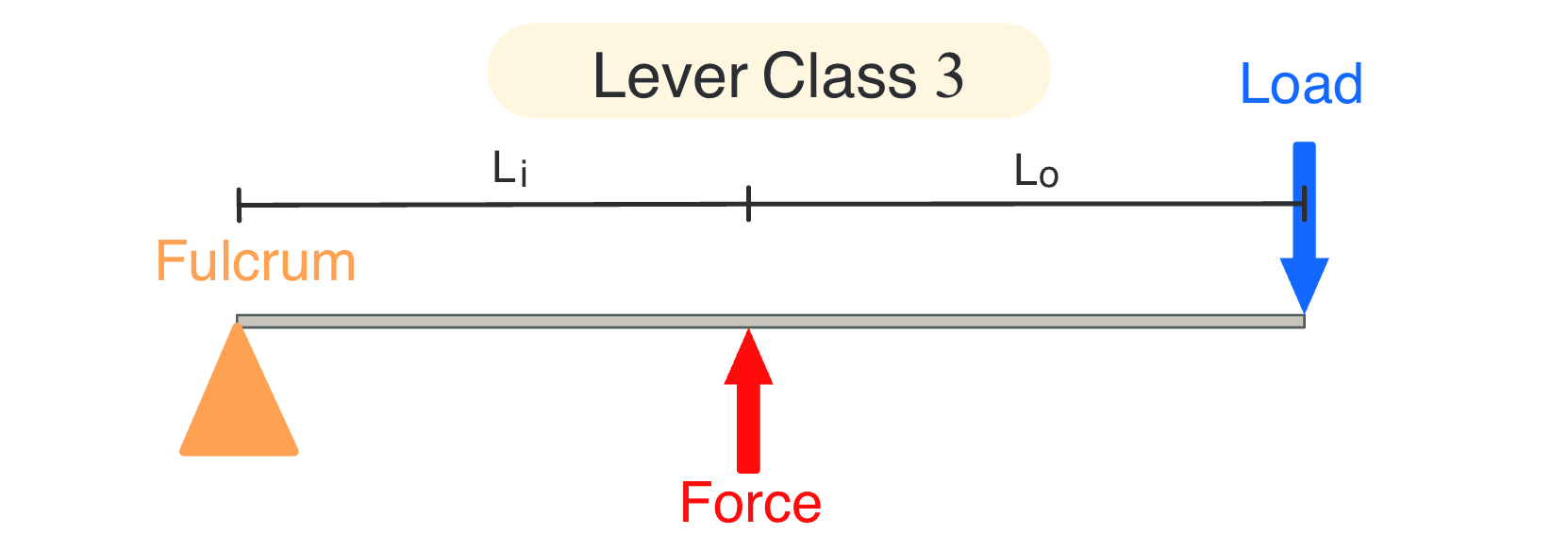
Fig. 12. Mechanical Advantage Equation and Diagram of a lever class 3, most common model to represent arthropod mandibles. Own work.
Ants tend to have a relatively low mechanical advantage (MA) compared to other insects because of the placement of the muscles, which apply force to make Li relatively small. However, this low MA allows them to maintain a certain balance between force and speed. When the mechanical advantage is low and Li is so small, the force applied by the ant's muscles travels a shorter distance. Still, the corresponding output movement of the mandible tip covers a larger distance in the same amount of time, allowing faster movement of the mandibles. Fast closing of the mandibles is an essential feature for worker ants; thus, the force vs speed biological trade-off is necessary.
High-Speed and Powerful Strike of Ant Jaws
Ant’s ability to close their jaws at incredibly high speeds is an adaptation that allows them to thrive in their environment. The maximum speed of mandible closure varies largely among different ant species and is closely related to the morphology of the largest muscle in the ant, the mandible closer muscle (Gronenberg et al., 1997).
The “snap-jaw” mechanism is found in some ants and consists of building up potential energy in the mandible closer muscle and then releasing it quickly through a latch, leading to rapid movements. This is similar to a deformable spring (Larabee et al., 2018). These spring-like structures are usually made from biological materials such as cuticles, and sometimes with proteins like elastin, resilin, and abductin. Both elastin and resilin provide elasticity, while abductin contributes to the flexibility and durability of the system. Ants that use this mechanism use their mandibles to build up potential energy, which is released when the mandibles snap together (Gronenberg, 1996).
The structure of an ant's mandibles is closely related to its diet and environment. For example, ants with strong mandibles are often herbivorous or detritivorous, since they use their jaws to cut and process plants or organic waste. In contrast, predatory ants with specialized mandibles, such as Trap Jaw ants, have elongated jaws that enhance their ability to capture and kill prey, as well as defend themselves (Larabee et al., 2018).

Fig. 13. Scanning electron micrographs of the trap-jaw ants Odontomachus bauri (a) and Daceton armigerum (b) with open mandibles. Trigger hairs are indicated by arrows. Bar 500 gm (Gronenberg).
Trap Jaw ants (Odontomachus) are particularly interesting for their jaw structure and the speed at which they snap shut their jaws (Fig. 13.). They are characterized by their elongated mandibles, which use a catapult mechanism to produce strikes at extremely high speeds, notably at a maximum of 64 m/s. This makes it one of the fastest-moving appendages in the animal kingdom. This exceptional skill is partly due to the Trap Jaw ant’s hollow mandible. This biological adaptation helps ants balance two essential characteristics of their jaws: being light enough for quick movement and stiff enough to withstand force when it clamps down (Wang et al., 2022). The critical hollowness ratio of the mandible is thus crucial to balance a powerful clamping and resistance to damage. This unique adaptation allows Trap Jaw ants to effectively hunt prey and defend themselves from threats.
Legs of Steel: The Multifunctional Tools of Worker Ants’ Legs
Ants lack ears, and some species are even eyeless. They cannot “hear” or “listen” in the conventional way. Instead, ants feel vibrations from the ground through their feet, making them an essential part of their anatomy.
Worker ant legs specifically are interesting to study due to ants’ degeneration of wings. Unlike other insect workers, such as worker bees, ants are strong enough to lift and carry food. Worker ants transport food by walking, meaning the efficiency of the walking impacts the foraging efficiency (Peeters et al., 2020). Moreover, running speed is crucial to escape from predators, adding to the necessity of evolutionary adaptation in the legs of worker ants. Ants can move at impressive speeds relative to their size, with some species like Cataglyphis (Saharan silver ants) reaching speeds of up to 855 millimeters per second (equivalent to 108 times their body length per second).
Ants have six legs attached to the thorax, and the unique structure of these legs allows ants to walk on vertical surfaces and even upside down. Additionally, the special walking pattern allows ants to walk in various environments.
Primary Functions of Worker Ant Legs
The primary use of worker ants’ legs is for movement, including walking and foraging. Ants are known for their efficiency in travelling long distances relative to their size. A mile is an enormous distance since the average size of an ant is from 5mm to 15mm (Ross, 2019). Comparing this to human travel, a mile for ants would be an extraordinary journey relative to their size, just as it would be for a human traveling hundreds of miles. Some species of ants, for example, leaf-cutter ants are known for walking for hundreds of yards and even climbing trees to collect leaves (Internal Compass Helps Ants Navigate Long Distances | Tellus, n.d.). Their legs, equipped with multiple joints, allow agile and swift movement across various terrains (Team, 2023).
Ants’ legs and locomotion are vital in their daily activities and survival. They have robust leg muscles, allowing them to carry loads several times their body weight. They use their legs for walking, climbing walls, trees, and other surfaces. (Team, 2023)
Structure of the Legs

Fig. 14. Illustration of the structure of an ant's leg (Cabrera,2020).
To understand how ants can perform all these tasks, it’s critical to know the structure of the ant legs. Each ant leg consists of six primary segments (shown in Fig. 14.): the coxa, which connects the leg to the thorax; the trochanter, a small segment that acts as a hinge for smooth movement; the femur, which is the upper segment crucial for power and leverage; The tibia, typically involved in pushing and pulling during walking; the tarsus, a foot-like segment divided into smaller sub-segments; and the pretarsus, which contains the claws and adhesive pads (arolia) allowing ants to climb various surfaces (Team, 2023).
Ant legs, like the rest of their exoskeleton, are composed of chitin, providing a perfect balance of flexibility and strength to allow ants to carry heavy loads and maneuver efficiently.
Worker ant legs are specialized for tasks within the colony. They tend to be more robust and equipped with stronger muscles compared to the legs of other ants, such as queens. This allows worker ants to perform precise manipulations, such as handling eggs and larvae within the colony (Team, 2023).
What sets ant legs apart from other insects is their enhanced strength relative to their size. Worker ants can lift up to 50 times their body weight, thanks to the powerful leg muscles. While this capability is common to many species of worker ants, it may vary across species depending on their ecological roles. While their legs provide the necessary strength for supporting their body during transport, their mandibles allow them to carry and suspend heavy objects, such as food and building materials, while navigating through complex environments. This impressive strength, both in their legs and jaws, enables worker ants to perform a wide range of tasks, including foraging and manipulating large items within their environment. In addition, ants have specialized features like claws, sticky pads, and tripod gait which will be discussed later. This combination of strength, agility, and specialized attachments like claws and arolia makes ant legs uniquely adapted to tasks involving heavy lifting and manipulation.
How do ants climb on walls or across the ceiling?
Claws
Ant legs allow them to walk at different angles and in different environments. To understand how ants do this, we need to know about some other smaller parts of their legs.

Fig. 15. A close-up view of one multisegmented ant foot. Each foot is lined with spiky tools that help grip almost any surface (Cassill, 2022).
One of the important structures is the claws. Ant claws are typically curved and sharp, allowing them to hook onto irregularities in surfaces. This curvature increases the surface area that meets textured surfaces, providing a more secure grip, which is highly effective in climbing uneven or rough surfaces (Fig. 15). For other types of clawed species, such as beetles and spiders, the curvature can vary from 30 degrees to 150 degrees, depending on their functions. In ants, the size and curvature of the claws may vary across species depending on their ecological role and habitat; typically, the curvature falls within a moderately high range (Zollikofer, 1994).
Ant muscles regulate claw movement, allowing them to contract for gripping surfaces or to release them when walking. The claws are made of hardened sclerotized chitin, a tough material that strengthens them and provides high durability (Team, 2023).
Sticky pads
To climb upside down, sticky pads (arolia) are present for additional adhesion. The arolia is located between the claws at the tips of an ant's feet (Fig. 16). Smooth adhesive organs are “pillow-like” structures, often located between the claws on the pretarsus of the insect leg (Fig. 19). They consist of a very soft and fluid-filled, cuticular sac, which deforms and molds to the surface profile, thereby increasing the contact area on rough surfaces (Dirks & Federle, 2011). The elastic properties of the pad can be calculated using Hertz’s theory.


Fig. 16. An electron microscope image of the sticky pad on an ant's foot (2011).
The shape of the pad is modeled as a section of a sphere. Where E is the elasticity modulus, ν is the Poisson’s ratio, a is the contract radius and the δ is the indentation caused by the applied force F. Contact radius a is related to indentation δ as:

R is the radius of pad curvature.
The pads behaved elastically in the approaching process. This implies the stress δ and the strain ε with the deformation followed the relation of:

For a pad, the elasticity is attributed to the fiber structure. Such a mechanical behaviour may be compared to biological cells such as cytoskeletons (Gorb et al., 2000).
The muscles in the legs control the positioning of the sticky pads, allowing them to retract or extend as needed. This helps ants alternate between gripping and releasing the surface as they walk. The combination of claws and sticky pads allows them to traverse surfaces that other insects might find too smooth to grip.
Tripod gait
In addition to these two structures, ants also have a very special walking pattern that supports their multi-environment walking. Ants exhibit a unique gait known as the alternating tripod gait. In this locomotion pattern, three legs remain on the ground while the other three legs move, allowing for continuous movement and balance much like an engineering design where three points provide optimal stability. This method is efficient for navigating various environments, including rugged terrains where stability is crucial (Reinhardt et al., 2009). By ensuring that at least three legs are always in contact with the ground, ants minimize their risk of falling, especially on uneven surfaces. For flexibility, it enables ants to traverse a variety of substrates, from flat ground to steep inclines, facilitating their ability to forage for food or move between nests.
This model has many advantages for ants. The gait enables faster locomotion compared to other types of insect gaits, allowing ants to cover distances quicker. This is especially beneficial for foraging or escaping predators. The tripod stance helps distribute weight effectively, reducing the risk of tipping over. The rhythmic nature of the gait minimizes energy expenditure, making it easier for ants to sustain movement over long periods (Moll et al., 2013).
The interplay of the unique gait, the stability it offers, and the ability to adapt to diverse terrains allows ants to effectively overcome gravitational challenges. By maintaining at least three points of contact with the ground, ants can balance their center of mass and prevent falling, even when carrying heavy loads. This cooperation among their physical adaptations ensures they can thrive in various environments, from forest floors to vertical surfaces.
If an ant loses one of these key structures—its claws, sticky pads, or the ability to use its tripod gait, its climbing ability could be significantly impaired. Without claws, ants may struggle to create enough friction to hold onto surfaces. Losing sticky pads would make it difficult to adhere to smooth or vertical areas, and losing a leg would disrupt their gait, affecting balance and stability (Cassill, 2022).
Ant Aggregations
When subject to harsh conditions and obstacles, several ant species use their bodies as building blocks, linking together to assemble structures such as rafts, bridges, and temporary shelters. While these structures serve the same functions as their human-built counterparts, the ant aggregates can drip, spread, conform to applied loads, and self-heal in response to environmental stimuli. Coordinated without central control, aggregate sizes can vary significantly, consisting of a few thousand to more than 100,000 ants (Foster et al., 2014; Tennenbaum, 2016).
Ant aggregations serve multiple functions, including defense, colony survival in cold or wet conditions, and ease of passage when crossing an obstacle. For example, in January 2024, red fire ants were observed forming large floating rafts to navigate floodwaters in Queensland, Australia. This behavior, driven by heavy rainfall and extreme weather, highlights their capacity to quickly adapt for survival, as seen in Fig. 18. It is not until the specific goal at hand has been reached that the ants making up the structures will detach and dismantle.
These aggregations can be modelled as dynamic networks with nodes (the ants), elastic cross-links (Ant limbs), and bonds (points of mutual ant attachment), shown in Fig. 19. Exhibiting both viscous and elastic behaviour, ant aggregations can adopt many shapes, behaving both like fluids and solids. Ant aggregates have piqued the interest of material scientists and roboticists and are now being researched to reproduce synthetic particle aggregations that mimic their properties (Foster et al., 2014, Tennenbaum, 2016, Vernerey, 2018).

Fig. 18. A fire ant raft spotted floating on flood water in the northern Gold Coast of Australia. Fire ant raft aggregations are one-fifth the density of water and are hydrophobic, eliciting a buoyant force, and keeping the ants protected in such instances (Khalil, 2024).

Fig. 19. Model of fire ant aggregation as a dynamic network of connected legs (Vernerey, 2018).
The Mechanical and Material Behaviour of Ant Aggregations
Ants attach to one another primarily using their claws and adhesive pads, as seen in Fig. 20 D. Less commonly, ants can clamp onto others using their mandibles, as seen in Fig. 20c. While accounting for only one out of every 60 connections, mandible connections are far more powerful than those accomplished using claws and adhesive pads (Foster et al., 2014).

Fig. 20. Electron microscopy images of different types of ant-ant connections. (A) Ant tarsus (the final segment of the leg), (B) Connection to a leg using an adhesive pad, (C) Ant mandible clamps onto another ant’s leg, (D) Connection using claws and adhesive pads (Foster et al., 2014).
Depending on environmental conditions and specific task demands, ants can accordingly increase or decrease their interconnectivity to modify the strength and rigidity of the entire structure. Such adaptability to external forces and circumstances can be attributed to the viscoelastic behaviour of ant aggregations (Tennenbaum, 2016).
Elastic behaviour allows ant aggregations to store energy, deform under applied forces, and then return to their initial configuration, similar to a spring or rubber band. The elasticity of their structures comes from ants’ ability to reposition themselves and redistribute the applied load while maintaining strong connections to each other (Fig. 21) (Tennenbaum, 2016). Elasticity is measured by elastic modulus (G') defined by:

Where σ’ represents stress (force applied per unit area), and ε is the strain (degree of deformation). A higher elastic modulus would indicate that the ants' structure is stiffer and more deformation-resistant, while a lower modulus would indicate more flexibility (Tennenbaum, 2016).

Fig. 21. (a) Ant aggregation elasticity demonstrated by compression. The time between each image is 0.2s. (b) 3D simulation demonstrating the leg stretch ratio (λ) during the compression cycle. A higher leg stretch ratio corresponds to increased density and higher elastic tension. Source: (Vernerey, 2018)
On the other hand, viscosity refers to a material's resistance to flow due to internal friction and its ability to dissipate energy when subjected to forces like compression or shear. Viscosity is quantified using the viscous modulus (G''), defined by:

In ant aggregations, external forces cause energy loss through internal friction as ants shift and adjust their positions relative to one another. This movement, often referred to as "slippage," dissipates energy either as heat or through the internal resistance generated by the friction of their movements.
For example, when a heavy object like a lead sphere is placed atop an ant aggregation, it sinks slowly, resembling how an object moves through a thick liquid, as shown in Fig. 22 (Tennenbaum, 2016; Vernerey, 2018).

Fig. 22. (a) Snapshots of lead sphere sinking through ant aggregation; the time lapse between images is 90 s. (b) Simulation snapshots show the maximum stretch, λ, of the legs. The streamlines show the corresponding stretch direction. Source: (Vernerey, 2018)
In this case, the viscosity (η) of the ant aggregation can be estimated using the equation:

Where ρsp is the density of the lead sphere, ρ is the aggregation density, g is gravitational acceleration, r is the sphere radius, and u is the speed at which the sphere sinks through the aggregation. A higher viscosity indicates greater resistance to flow. Using the lead sphere, the ant aggregation is estimated to have a viscosity of η=35,800 Pa s, which is incredibly high compared to most liquids. For comparison, honey has a viscosity of about 10,000 Pa s, which means the ant aggregation resists flow even more than honey, behaving like an extremely thick, slow-moving substance (Tennenbaum, 2016).
Additionally, a material's shear rate (γ˙) is linked to its viscosity, measuring how quickly different layers of the material move relative to one another. The slower the sphere moves through the ants, the lower the shear rate. In this case, the shear rate can be calculated by:

The estimated shear rate in this experiment was γ˙=1.9 × 10⁻³ s-1, indicating the deformation speed within the aggregation is quite slow. This reinforces that the ant aggregation behaves similarly to a thick, slowly deforming fluid (Tennenbaum, 2016).
Solid vs. Fluid Behavior of Ant Aggregations
Despite being made of the same “material”, ant aggregations' viscoelastic behaviour is not constant, varying with applied stress and strain, aggregation density, and relative regions within the aggregation.
Shear rate experiments -- where a controlled strain rate (γ˙) is applied to the ant aggregations and resulting stress is measured -- demonstrate that at lower ant densities, both G' and G'' are nearly equal, indicating a balance between energy storage and dissipation. However, as the ant density increases, the ants become less able to move or rearrange freely. This crowding restricts the flow of ants, causing the elastic modulus to rise and making the aggregation more solid-like as it resists deformation. At high densities, G’>G’’. In this condition, the ant aggregation is considered simply elastic (Tennenbaum, 2016).
In contrast, when ants are less densely packed, the aggregation exhibits shear-thinning behaviour, where the viscosity (η) decreases as the shear rate (γ˙)—the rate at which ants move relative to each other—increases, shown in Fig. 23 B. An increase in the shear rate means the ants are rearranging more rapidly, enabling the aggregation to flow more easily — much like how particles move in a liquid (Tennenbaum, 2016). Experiments with varying constant shear rates, shown in Fig. 23 A, revealed that the aggregation maintains an approximately constant stress of σ ≈ 70 Pa over share rates ranging from 10⁻³ to 10¹ s⁻¹. This suggests that ants actively rearrange in response to the applied shear to maintain a tolerable amount of stress.

Fig. 23. (A) Relationship between applied shear rate, γ˙, and stress, σ. The black dashed line indicates a range over which stress remains constant over increasing shear rates. (B) Graph of viscosity, η, as a function of shear rate indicates a linearly decreasing relationship (Tennenbaum, 2016).
Material Intelligence of Ant Aggregations
How do the material properties of ant aggregations arise? Is it a result of the ants' physical bodies or collective activity?
This is investigated in creep experiments, where constant stress is applied to an aggregation and strain, γ, is observed over time. Creep refers to the gradual deformation of a material under constant stress, and in the case of ant aggregations, slippage refers to the small movements and adjustments ants make as they shift relative to each other under stress. Unlike shear-rate experiments, where the aggregation is forced to flow, the ant aggregations respond actively to the applied stress in creep experiments. In live ant aggregations, the strain does not increase steadily like a liquid but shows regions of linear strain followed by periods where strain remains constant, as shown in Figures 24 A and 24 B. This suggests that ants dynamically rearrange in response to stress and can store elastic energy, temporarily resisting flow.
Researchers were able to isolate the role of ants’ active behavior in aggregations by killing ants in aggregations without disturbing the structure. When subjecting the aggregations to the same stress as the creep experiments with live ones, the strain exhibited a strictly monotonic increase over time, revealing a purely passive response (inset of Fig. 24 A). This confirms that the dynamic behaviour observed in live ants is directly caused by their active movements (Tennenbaum, 2016).

Fig. 24. Creep experiments of live ants at a density of ρ=0.34 g cm^−3 for constant stress levels of (A) σ =40 Pa and (B) σ =70 Pa. (A) The inset graph shows a creep experiment using a dead ant aggregation under the same conditions (Tennenbaum, 2016).
Army ant bivouacs further demonstrate the direct influence of ant activity on ant aggregation properties. Bivouacs serve as temporary nests for the colony during nomadic travels. Despite ant bivouacs’ remarkable size capabilities, the ants maintain an even stress distribution throughout the structure. By constantly reorganizing and redistributing the load, each ant, regardless of its position within the bivouac, carries no more than about eight times its own weight. This prevents overloading any single individual and ensures that no region in the aggregation surpasses ~250 Pa, at which point ants would begin to tear apart (Tennenbaum, 2016; Bochynek, 2021). This collective activity highlights how ant aggregations' material strength and resilience are directly tied to the ants' ability to actively adapt to their environment.
Conclusion
Despite being tiny insects, worker ants have evolved an impressive set of biomechanical adaptations that allow them to perform tasks essential for the survival of their colonies. These include heavy lifting, nest construction, foraging, and defense. As ants live in ecosystems ranging from humid rainforests to arid deserts, they have had to develop abilities over many years to thrive in the diverse and often harsh environmental conditions under which they live.
The ability of worker ants to carry loads many times their body weight can be attributed to their specialized exoskeletons, which provide strength, stability, and flexibility. This is an evolutionary response to the need for transporting resources like food and building materials back to the nest. Such strength is also needed for moving objects but also for excavating nests, protecting the colony from predators, and expanding their territory.
In addition, ant mandibles, which function as high-speed biomechanical levers with muscle structures that optimize speed and power, are essential for nest building, food processing, and defense. This adaptation was driven by the need for efficient food processing, as many ants species feed on a wide variety of plant and animal matter.
Similarly, thriving in and traversing various ecosystems requires stable and efficient movement. Ants accomplish this with their legs, which consist of flexible joints, claws, and sticky pads, which they use in their tripod gait. These movements efficiently reduce energy expenditure, which is crucial in environments where resources are limited.
Ants have also evolved the remarkable ability to self-assemble into dynamic structures. These aggregations can actively adapt their mechanical properties, demonstrating the power of collective behaviour. By self-healing and dynamically redistributing stress, ant aggregations can shift between solid and fluid states when necessary. This ability to self-assemble into versatile dynamic structures was crucial for ants to survive and thrive as a collective, completing tasks that would not be possible for an individual ant to accomplish alone.
The remarkable mechanics of worker ants hold great potential for enhancing modern technology. Understanding how ants optimize their posture and the orientation of objects to carry heavy loads could influence innovative mechanical solutions for the construction industry. In robotics, ant aggregations could inspire the development of modular robots composed of many smaller units to complete complex tasks which require dynamic adaptation and self-repair. Overall, worker ants are creatures with exceptional biomechanics, which can offer valuable insights into developing efficient, resilient, and adaptive systems in modern technology and engineering.
References
References
Arroyave-Tobon, S. (2023). Design features of the kinematic chain of the ant exoskeleton. Procedia CIRP, 119, 855-860. https://mcgill.on.worldcat.org:443/atoztitles/link/?sid=Elsevier:Scopus
Birkenfeld, V., Gorb, S. N., & Krings, W. (2024). Mandible elemental composition and mechanical properties from distinct castes of the leafcutter ant Atta laevigata (Attini; Formicidae). Interface Focus, 14(2), 20230048. https://doi.org/10.1098/rsfs.2023.0048
Bochynek, T., Schiffers, F., Aichert, A., Cossairt, O., Garnier, S., & Rubenstein, M. (2021). Anatomy of a superorganism—Structure and growth dynamics of army ant bivouacs. https://doi.org/10.48550/arXiv.2110.09017
Cassill, D. (2022). How do ants crawl on walls? A biologist explains their sticky, spiky, gravity-defying grip. Phys.org. https://phys.org/news/2022-09-ants-walls-biologist-sticky-spiky.html
Mantel, D. (2022). Leafcutter ants carrying leaf’s over a branch all working together. Getty Images. https://www.gettyimages.ca/detail/photo/leafcutter-ants-royalty-free-image/1418885269?searchscope=image%2Cfilm&adppopup=true
Eyre, I. (2015). Work more efficiently with a power law. Deparkes. https://deparkes.co.uk/2014/07/14/how-a-power-law-can-help-you-work-more-efficiently/
Dirks, J., & Federle, W. (2011). Fluid-based adhesion in insects – principles and challenges. Soft Matter, 7(23), 11047. https://doi.org/10.1039/c1sm06269g
Ferguson, S. T., Bakis, I., & Zwiebel, L. J. (2021). Advances in the Study of Olfaction in Eusocial Ants. Insects, 12(3), 252. https://doi.org/10.3390/insects12030252
Foster, P. C., Mlot, N. J., Lin, A., & Hu, D. L. (2014). Fire ants actively control spacing and orientation within self-assemblages. Journal of Experimental Biology, 217(12), 2089–2100. https://doi.org/10.1242/jeb.093021
Gorb, S., Jiao, Y., & Scherge, M. (2000). Ultrastructural architecture and mechanical properties of attachment pads in Tettigonia viridissima (Orthoptera Tettigoniidae). Journal of Comparative Physiology A, 186(9), 821–831. https://doi.org/10.1007/s003590000135
Gronenberg, W. (1997). Mandible Muscle Fibers in Ants: Fast or Powerful?. Cell and Tissue Research, vol. 289, no. 2, pp. 347–361, https://doi.org/10.1007/s004410050882
Harvard Forest. (2021). Body Structure. https://harvardforest.fas.harvard.edu/ants/body-structure
Hey, J. (2018). The Square-Cube Law. Sketchplanations. https://sketchplanations.com/the-square-cube-law
Internal Compass Helps Ants Navigate Long Distances | Tellus. (n.d.). https://tellus.ars.usda.gov/stories/articles/internal-compass-helps-ants-navigate-long-distances
Kang, V., Püffel, F., & Labonte, D. (2023). Three-dimensional kinematics of leaf-cutter ant mandibles: not all dicondylic joints are simple hinges. Philosophical transactions of the Royal Society of London. Series B, Biological sciences, 378(1891), 20220546. https://doi.org/10.1098/rstb.2022.0546
Khalil, H. (2024). Deadly fire ants are forming rafts to cross Australian flood waters. CNN. https://www.cnn.com/2024/01/17/australia/fire-ants-forming-rafts-to-cross-australia-flood-waters-intl-scli-scn-climate/index.html
Larabee, F. J. (2018). Snap-Jaw Morphology Is Specialized for High-Speed Power Amplification in the Dracula Ant, Mystrium Camillae.” Royal Society Open Science, vol. 5, no. 12, p. 181447, https://doi.org/10.1098/rsos.181447
Moll, K. (2010). Foraging grass-cutting ants (Atta vollenweideri) maintain stability by balancing their loads with controlled head movements. Journal of Comparative Physiology A, 196(7), 471-480. https://mcgill.on.worldcat.org:443/atoztitles/link/?sid=Elsevier:Scopus
Moll, K., Roces, F., & Federle, W. (2013). How Load-Carrying Ants Avoid Falling Over: Mechanical Stability during Foraging in Atta vollenweideri Grass-Cutting Ants. PLoS ONE, 8(1), e52816. https://doi.org/10.1371/journal.pone.0052816
Nguyen, V., Lilly, B., & Castro, C. (2014). The exoskeletal structure and tensile loading behavior of an ant neck joint. Journal of Biomechanics, 47(2). https://doi.org/info:doi/10.1016/j.jbiomech.2013.10.053
Peeters, C., Keller, R. A., Khalife, A., Fischer, G., Katzke, J., Blanke, A., & Economo, E. P. (2020). The loss of flight in ant workers enabled an evolutionary redesign of the thorax for ground labour. Frontiers in Zoology, 17(1). https://doi.org/10.1186/s12983-020-00375-9
Politi, Y. (2019) Mechanics of Arthropod Cuticle-Versatility by Structural and Compositional Variation. Architectured Materials in Nature and Engineering. pp. 287–327, https://doi.org/10.1007/978-3-030-11942-3_10
Püffel, F. (2021). Morphological Determinants of Bite Force Capacity in Insects: A Biomechanical Analysis of Polymorphic Leaf-Cutter Ants. Journal of the Royal Society Interface, vol. 18, no. 182, p. 20210424, https://doi.org/10.1098/rsif.2021.0424
Reinhardt, L., Weihmann, T., & Blickhan, R. (2009). Dynamics and kinematics of ant locomotion: do wood ants climb on level surfaces? Journal of Experimental Biology, 212(15), 2426–2435. https://doi.org/10.1242/jeb.026880
Ross, R. (2019). Ants: From the Cool to the Creepy. livescience.com. https://www.livescience.com/ant-facts.html
Rudolph, S. G. (1986). Load size selection by foraging leaf‐cutter ants (Atta cephalotes). Ecological Entomology, 11(4), 401-410. https://mcgill.on.worldcat.org:443/atoztitles/link/?sid=Elsevier:Scopus
Sunrise. (2024). Yield strength of aluminum alloys. Sunrise Metal - Aluminium Die Casting Expert. https://www.sunrise-metal.com/yield-strength-of-aluminum-alloys/#:~:text=Pure%20Al%20(at%20least%2099,for%20utilizing%20aluminum's%20elemental%20benefits.
Team, B. (2023). The Fascinating Lives of Worker Ants in the Colony - Bug & Garden. Bug & Garden. https://bugandgarden.com/worker-ants/
Team, B. (2023). The Intricate Anatomy of Ants - Bug & Garden. Bug & Garden. https://bugandgarden.com/ant-anatomy/
Tennenbaum, M., Liu, Z., Hu, D., & Fernandez-Nieves, A. (2016). Mechanics of fire ant aggregations. Nature Materials, 15(1), 54–59. https://doi.org/10.1038/nmat4450
Tonhasca Jr, A. (2000). Forager size of the leaf-cutting ant Atta sexdens (Hymenoptera: Formicidae) in a mature eucalyptus forest in Brazil. Revista de Biología Tropical, 48(4), 983-988. https://mcgill.on.worldcat.org:443/atoztitles/link/?sid=Elsevier:Scopus
Wang, Z. (2022). Hollow Mandibles: Structural Adaptation to High-Speed and Powerful Strike in the Trap-Jaw Ant Odontomachus Monticola. Journal of Insect Physiology, vol. 141, p. 104426, https://doi.org/10.1016/j.jinsphys.2022.104426
Vernerey, F. J., Shen, T., Sridhar, S. L., & Wagner, R. J. (2018). How do fire ants control the rheology of their aggregations? A statistical mechanics approach. Journal of The Royal Society Interface, 15(147), 20180642. https://doi.org/10.1098/rsif.2018.0642
Zollikofer, C. P. E. (1994). Stepping Patterns in Ants: I. Influence of Speed and Curvature. Journal of Experimental Biology, 192(1), 95–106. https://doi.org/10.1242/jeb.192.1.95 [Original source: https://studycrumb.com/alphabetizer]