
Table of Contents
Keywords: auxins, abscisic acid, cell wall, cytokinin, defense, mycorrhizal symbiosis, needles, nutrients, oleoresin, root exudates
Abstract
From a chemical perspective, the pine tree embodies resilience. Pines are rare trees that thrive in a range of different conditions and harsh climates. This paper presents a detailed analysis of the various biochemical properties of the Pinus that allow it to endure such variety in its habitats. At a cellular level, the pine’s ability to alter its structure through chemical remodeling prevents excess water loss allowing the tree to conquer drought. The hormonal growth regulation of branches depending on environmental stressors demonstrates the Pinus’ adaptability to survive periods of drought, pathogenic invasions and insect attacks. When facing attacks from external organisms, the pine also produces resin and other chemical compounds with varying concentrations to deter attackers and heal autonomously. Even the foliage of needles carries special inhibitory abilities to optimize the pine’s place in its ecosystem. These interactions with the surrounding ecosystem also adjust in accordance with the pine’s needs, adopting symbiotic relationships with mycorrhizal fungi to thrive in nutrient-poor conditions.
Introduction
Pine trees originate from the mid-Mesozoic Era, living through multiple harsh time periods throughout their history. Outliving a variety of organisms that first appeared alongside the pine such as dinosaurs, the pine tree’s resilience and longevity are inseparable from its unique chemical constituents, defense mechanisms, and adaptational cell structures (Keeley, 2012). Pines produce a great number of secondary metabolites, chemical compounds that do not contribute directly to its spreading or reproduction, rather contributing to functions such as defense and communication. These chemical compounds include terpenoids, derived from isoprene units (C5H8) as presented in Figure 1; phenolics, and the oleoresin system in secreted resin (Phillips & Croteau, 1999).
Familiar with harsh climates and difficult environmental factors, the Strobus lineage of pine trees lives in low-nutrient soils accustomed to harsh climate conditions, while the Pinus lineage radiates into fire-prone environments where the lack of water and presence of bright sunlight induces its own unique adaptive measures (Keeley, 2012). These variations in climate push the pine tree to adopt even more intricate ways to survive at the molecular level. Overall, the pine tree has evolved a multitude of chemical tools, detailed in Figure 2, that it practices strategically to ensure its survival across millennia.

Fig. 1. Structure of isoprene and the biological isoprene unit that synthesizes biological terpene compounds such as myrcene, geraniol, menthol, and vitamin A found in plants (Own work by Yu Ming Shi, inspired from Fan et al., 2023).

Fig. 2. A summary of the pine’s chemistry toolkit: A) Cell structure alteration during droughts B) Chemical compounds of needles spreading to surrounding soil and ecosystems during defoliation C) Growth hormones, such as the auxin hormone that is depicted, dictate the tree’s shape, height, and structure D) Resin secreted as a chemical defense against predation and as built-in treatment for wounds E) Fungi surrounding roots share a symbiotic relationship with the pine in nutrient-poor soils (Own work by Yu Ming Shi).
Chemical Mechanisms of Water Retention under Drought Stress
Pine trees face a significant challenge in times of drought, when the rate of water loss by transpiration surpasses the water available in the soil. In such conditions, tree cells must maintain turgor, structural integrity, and osmotic stability despite the water deficit (Gall et al., 2015). One adaptive tactic to resolve this difficulty is the chemical remodeling of pectins, a group of complex polysaccharides located in the primary cell wall as shown in Figure 3 (Kheowmung, 2024; Mohnen, 2008).

Fig. 3. Simplified representation of the plant primary cell wall layers and major polysaccharides: cellulose, hemicellulose and pectin (Own work by Sara Roy-Blanchette, inspired from Kheowmung, 2024).
Through reversible methylesterification and de-esterification reactions, pectins can balance cell wall stiffness and flexibility to maintain an equilibrium between mechanical support and water retention.
De-esterification of Galacturonic Acids in Pectin
The primary structural pectin polymer, homogalacturonan (HG), is constituted of a linear chain of 1,4 – linked 𝛼 – D – galacturonic acid (GalA) residues (Figure 4). When first synthesized into the cell wall, GalA residues are often acetylated or methyl-esterified (Eq. 1) before being secreted. The latter can be represented by this simplified reaction (Ridley et al., 2001):
Pectin-COOH + CH3OH H+→ Pectin-COOCH3 + H2O (1)

Fig. 4. The primary structure of a methyl-esterified and acetylated homogalacturonan (Ridley et al., 2001).
When water availability declines, the pine trees increase the activity of pectin methyl esterases (PMEs). These enzymes are responsible for removing methyl ester groups from the esterified HG through a de-esterification process (Eq. 2) similar to the following reaction:
Pectin-COOCH3 + H2O OH-→ Pectin-COO- + CH3OH (2)
PMEs can act in one of two patterns. The de-esterification can happen in a random pattern, meaning that the enzymes can remove methyl groups arbitrarily from the GalA chain. Conversely, PMEs can remove methyl ester groups in a blockwise pattern, creating long uninterrupted chains of carboxylate groups (–COO-) (Levesque-Tremblay et al., 2015).
Cell Wall Dynamics and Calcium-Pectin Interactions During Drought
In pine cell walls, calcium ions (Ca2+) form ionic bridges between two pectin chains by bonding their carboxylate groups. These bridges, also named “egg-box structures”, have an important effect on cell wall structure; by binding the pectin chains together, Ca2+help tighten the network of the cell wall, which promotes greater water retention. This can be particularly helpful when water is scarce. However, efficient Ca2+ cross-linking requires that carboxylate groups be closely aligned along the HG backbone. In random de-esterification, carboxylate groups are isolated among neutral methyl ester groups. The negative sites are too dispersed for Ca2+ to bind two at once, resulting in little to no cross-linking. This leads to a loosening of the cell wall. On the contrary, by producing continuous carboxylate clusters, blockwise de-esterification allows Ca2+ to form bonds between two negatively charged groups, which creates an ionic lattice as shown in Figure 5. This ordered network forms a stiff gel, which stabilizes the cell wall (Forand, 2021; Kobayashi et al., 1999).

Fig. 5. De-methylesterification of homogalacturonan by pectin methyl esterase (Adapted from Forand, 2021).
While Ca2+ bridges strengthen the pectin network and stimulate water retention, maintaining cell turgor is equally essential to the survival of pine cells during drought. Turgor pressure, the force driving the enlargement of cells, plays a key role in cell growth, which depends partially on the extensibility of the cell wall. Under low moisture conditions, lower turgor results in a growth decrease caused by reduced cell extensibility. Thus, to preserve cell turgor, the pine’s cell wall must remain mobile and extensible (Gall et al., 2015).
Within the cell matrix, rhamnogalacturonans I (RG-I) and rhamnogalacturonans II (RG-II) play a major role in balancing cell wall flexibility and rigidity. RG-I consist of alternating rhamnose and GalA residues, with arabinan and galactan side chains, creating a hydrophilic, hydrogen-bonded network that enhances elasticity (Fig. 6) (Ridley et al., 2001).

Fig. 6. Structure of rhamnogalacturonan I, formed of a backbone of rhamnose and galacturonic acid (GalA), with arabinan and galactan side chains (Ridley et al., 2001).
RG-II, in contrast, contain borate cross-links that provide localized stiffness (Fig. 7). These dynamic interactions between the two complex polymers modulate the flexibility of the cell wall under water stress: RG-I contributes to wall mobility, while RG-II provides structural support (Pattathil et al., 2016; Ridley et al., 2001).

Fig. 7. Structure of the borate cross-links between rhamnogalacturonans II (Ridley et al., 2001).
Chemical analyses of pine trees under low moisture show an increased extractability of pectic backbone epitopes[1], notably of RG-I and HG domains. This reflects the loosening of polymer associations between polysaccharides found in the cell wall such as pectins, hemicelluloses and lignin. Increased extractability therefore indicates that these polysaccharides are less tightly integrated within the matrix, producing a more soluble and mobile pectic phase (Pattathil et al., 2016).
The degree of methylesterification of HG is also a principal determinant of cell wall stiffness. Partial de-esterification results in a semi-flexible pectin gel. During drought, the loosening of polymer associations favors cell wall elasticity, which helps maintain turgor pressure and resist collapse (Gall et al., 2015; Pattathil et al., 2016).
Surviving the Drought
When water is sparse, pines rely on the equilibrium between wall stiffness for water retention and elasticity for turgor maintenance. For shorter periods of drought, maximizing water retention thanks to stiffer cell walls can be helpful to conserve hydration. However, for prolonged periods of drought, cell elasticity is necessary to support the growth of the tree. In fact, it can be useful for the pine’s roots to grow, since it allows them to find deeper sources of water in times of need (Forand, 2021; Gall et al., 2015).
Hormones and Growth Regulation
A pine tree’s hormones, also known as phytohormones, play a prominent role in biochemical mechanisms developed to maintain survival under external stressors (Kumari et al., 2023). These hormones allow adaptations to the changing environment by managing growth, development, and nutrient and energy allocation. Growth-regulating hormones like auxins, abscisic acid, and cytokinins control responses to conditions such as pathogens and extreme temperatures and increase plant stress tolerance (Kumari et al., 2023). The hormones regulate processes like cone induction, vertical growth rectification, gravitropism, phototropism, drought and temperature resistance, and defense mechanisms (Morales-Quintana & Ramos, 2021).
Abscisic Acid: Stress Tolerance, Dormancy, and Maturation
Abscisic Acid (ABA) allows pine trees to survive droughts, high salinity, oxidative stress, and low temperatures (Sharma & Sharma, 2023). Under such stresses, ABA levels change drastically, triggering physiological responses that help the plant adapt to its environment (Sharma & Sharma, 2023). ABA induces dormancy in pine seeds and buds, where it accumulates (Kermode, 2005). This prevents germination under unfavorable and extreme conditions. By promoting chemical dormancy, the tree is able to conserve more water and energy in extreme environments (Kermode, 2005). So, as temperatures begin to drop and days get shorter, increased ABA production in the plastids is triggered (Kermode, 2005). For example, studies have shown that ABA levels increase during periods of water shortage (Sharma & Sharma, 2023). When this occurs, the tree experiences stomatal closure, or the shutting of the pores in the needle’s epidermis as seen in Figure 8 and reduces water loss through transpiration (Sharma & Sharma, 2023). This accounts for the pine tree’s adaptation to low temperatures and drought resistance. In addition, ABA helps with the formation of cuticular wax found on the pine needles (Brookbank et al., 2021). This hydrophobic film limits water loss, further compensating for the effects of droughts (Brookbank et al., 2021). When conditions become favorable again, the tree experiences an increased breakdown of ABA which allows buds or seedlings to continue growing. Additionally, ABA promotes seed maturation, seeing as it suppresses premature germination until the embryo has fully formed with enough resources to support its germination (Kermode, 2005).

Fig. 8. The row of stomata along the length of the needles of the Pinus strobus photographed with an approx. 0.6 mm field of view (Piorkowski, 2018).
Auxins: Apical Dominance, Phototropism, and Gravitropism
Auxins are key to regulating growth, able to both stimulate and inhibit it. It is specifically influential in the elongation of cells and apical dominance, a growth pattern in which the central stem grows stronger than the lateral branches (Gumede, 2022). Produced in the apical bud at the tips of the shoots, auxin moves downward, suppressing the lateral buds, keeping them dormant as the terminal buds elongate. This process gives the tree a conical shape and a long main stem. However, if the top of the tree is pruned or broken off, auxin production stops and cytokinin levels increase to allow lateral bud growth. As apical dominance disappears, the tree's shape starts changing, appearing bushier and posing many problems for the tree (Gumede, 2022). The tree's conical shape helps it survive harsh conditions by shedding snow, reducing wind resistance, and optimizing light exposure (EarthSky Voices, 2024). Keeping heavy snow off its upper branches, apical dominance prevents branches from breaking, allowing it to endure snowy winters. By minimizing the surface area exposed to wind, it reduces strain on the shallow roots and allows the tree to remain upright during storms. Additionally, the openings between the layered branches can expose the lower parts of the tree to more sunlight, a critical advantage for short daylight periods or when the sun is at a low angle, as it typically is in the winter (EarthSky Voices, 2024).
Furthermore, auxins are responsible for phototropic and gravitropic responses (Gumede, 2022). Phototropism is the growth of a plant towards a light stimulus. Allowing the pine tree to optimize photosynthesis, phototropism poses an especially important advantage for seedlings and trees in dense, competitive forests. Actively orienting the stems towards the sun increases their ability to produce energy and, ultimately, thrive in less favorably lit environments, promoting the tree's growth and structure. Phototropism helps orient the stem upward as photoreceptors detect light and send auxin to the shaded side of the stem where it promotes cell elongation (Bailey, 2018). The accumulated auxin causes the stem to grow faster on that side and bend towards the light as demonstrated in Figure 9 (Liscum et al., 2014). In contrast, the roots of the tree show negative phototropism, bending away from the light and growing deeper into the soil, increasing the absorption of water and nutrients (Gumede, 2022). Some species, however, manifest unusual phototropic behavior, like the cook pine that leans toward the equator, leading researchers to believe that tropism is also influenced by genetic predisposition, not only environmental adaptation (Woo, 2017). Other factors, like gravity and wind, also influence a tree's shape, sometimes competing with the phototropic response (Lamprecht et al., 2020).

Fig. 9. Auxin movement away from light (Bailey, 2018).
Trees adjust their growth in response to gravity in a process called gravitropism, where stems and branches typically grow upward, exhibiting a negative gravitropic response, which helps them reach sunlight for photosynthesis. When a pine tree's stem is tilted, gravity causes the auxin to collect on the lower side. Just as it does in phototropic responses, this concentration stimulates cell elongation, causing the cells on the lower side of the stem to grow faster than the cells on the upper side. This differential growth bends the stem upwards away from the pull of gravity. On the other hand, the roots grow downward, showing a positive gravitropic reaction (Bailey, 2018). The accumulation of auxin on the lower side of the root has the opposite effect, inhibiting cell elongation. This forces the root to grow downwards in the direction of gravity (Bailey, 2018). Gravitropism is essential to plant stability as it supports the development of strong roots, preventing small pine trees from being uprooted by strong winds (South et al., 2001). Additionally, the downward growth ensures that roots can efficiently access water and minerals from the soil, which are vital for the tree's survival and growth.
Cytokinins: Structural Development and Defense against Disease
Influencing bud formation, branching, and stress tolerance; cytokinins are essential to the development of pine trees (Autio & Day, 2016). Cytokinin concentrations change throughout the year, with activity generally associated with regulating cell division, reproduction, and germination. After germination, the phytohormone enhances cell division in the formation of vascular elements and opens the stomata. It balances the inhibition of bud growth from auxins by promoting cell division in lateral buds (Autio & Day, 2016). Cytokinins regulate several auxin synthetic pathways (Prusinkiewicz et al., 2009). Likewise, gene mutations in auxin transcription-regulators, such as AXR1, can prevent auxins’ ability to down-regulate cytokinin synthesis (Prusinkiewicz et al., 2009). Many factors affect when the switch from auxin production to cytokinin occurs, such as the accumulation of PIN proteins, integral membrane proteins (Prusinkiewicz et al., 2009). Additionally, external stimuli such as light exposure and temperature also impact the regulatory loops of cytokinin and auxin production. These various influences result in a periodic, dynamic system of auxin and cytokinin production rather than an on and off switch (el-Showk et al., 2015). The reaction-diffusion system of the competing promoters and inhibitors depends on mutual feedback from the PIN efflux transporters and AHP6, an inhibitor of cytokinin signaling. When chemical equilibrium between auxins and cytokinins is reached, a stable branch pattern can be attained (Autio & Day, 2016). This avoids structural overload, which would damage and weaken the tree. Such impact is evident in trees lacking cytokinin, which show a drastic reduction in shoot apical size (Autio & Day, 2016).
Serving as the tree’s defense mechanism, this hormone can aid in survival against insect attacks and pathogens. The Pinus contorta, also known as the lodgepole pine, found in western North America, has been struggling to survive against the mountain pine beetles (Von Aderkas et al., 2006). A severe outbreak has left the species threatened. As a result, seeds are in great demand and cone induction can be the solution to the survival of the species. Although cone formation does not seem to be merely regulated by a single hormone pathway, cytokinins in pine buds are positively correlated with the number of female cones in the lodgepole pine. This is important to accelerate breeding and increase the efficiency of seed production (Von Aderkas et al., 2006).
Moreover, cytokinins directly inhibit the growth, development, and virulence of fungal phytopathogens (Gupta et al., 2021). Researchers examined B. cinerea fungi samples and discovered that cytokinins alter their cell cycle, cytoskeleton, and endocytosis, or vesicle formation. These effects result in lower endocytic rates which lead to reduced fungal growth rates (Gupta et al., 2021). Thus, cytokinin levels are critical to the survival of certain pines. For example, in southern forests, the spread of fusiform rust is a major threat to pine life (Ammon et al., 1990). In order to manage outbreaks, researchers at Mississippi State University studied rust-resistant slash pines. The results show that increased cytokinin activity in these pines is directly correlated with immunity against the rust fungus (Ammon et al., 1990). However, not all fungi are harmful.
Chemical Communication and Pine-Mycorrhizal Symbiosis
Pine trees are heavily reliant on their symbiotic relationship with mycorrhizal fungi due to their increase in absorption efficiency of nutrients and water from the soil (Marmeisse & Girlanda, 2016). This is a result of the fungi’s mycelium, able to explore a greater surface area of soil than the roots, and their metabolism’s greater versatility in comparison to plants (Marmeisse & Girlanda, 2016). To benefit from mycorrhizal fungi’s nutrient uptake capabilities, pines form ectomycorrhizae (Suz et al., 2017), a fungal sheath surrounding pine roots shown in Figure 10 (Johnson & Gehring, 2007). In exchange for the nutrients and water obtained by the ectomycorrhizae, the pines provide the fungi photosynthetic carbon (Suz et al., 2017). This symbiotic relationship between pines and mycorrhizae allows pines to live in nutrient-poor soils as the fungi can provide more efficient nutrient uptake.

Fig. 10. A visual representation of ectomycorrizhal fungi surrounding roots of a pine tree increasing the amount surface area contact within the soil (Own work by Aisha-Mae Garing-Patel, 2025).
Facilitated Nutrient Uptake by Ectomycorrhizal Fungi
The presence of ectomycorrhizae helps their hosts absorb nutrients such as phosphorus and nitrogen. However, less is known about how these fungi affect other nutrients (Marschner & Dell, 1994). Besides being able to explore more soil, ectomycorrhizal fungi facilitate phosphorus uptake in pines by producing and releasing extracellular acid phosphatases, enzymes catalyzing the release of phosphorus from organic complexes in soil (Marschner & Dell, 1994). Some of these fungi can utilize amino acids found in soil as their source of nitrogen and are then able to transfer these nutrients to their host, the pine (Abuzinadah & Read, 1989).
An experiment conducted by Wu and colleagues (Wu et al. 2005) analyzed the nitrogen absorption abilities of pine seedlings, specifically P. resinosa seedlings, and individual species of mycorrhizal fungi. Figure 11 demonstrates the amount of nitrogen uptake in the seedlings in the absence of mycorrhizal fungi and Figure 12 shows the amount of nitrogen absorbed by different mycorrhizae in various organic sources of nitrogen.

Fig. 11. Mean dry weight of P. resinosa seedlings after growth in various nitrogen-containing mediums (Wu et al., 2005).
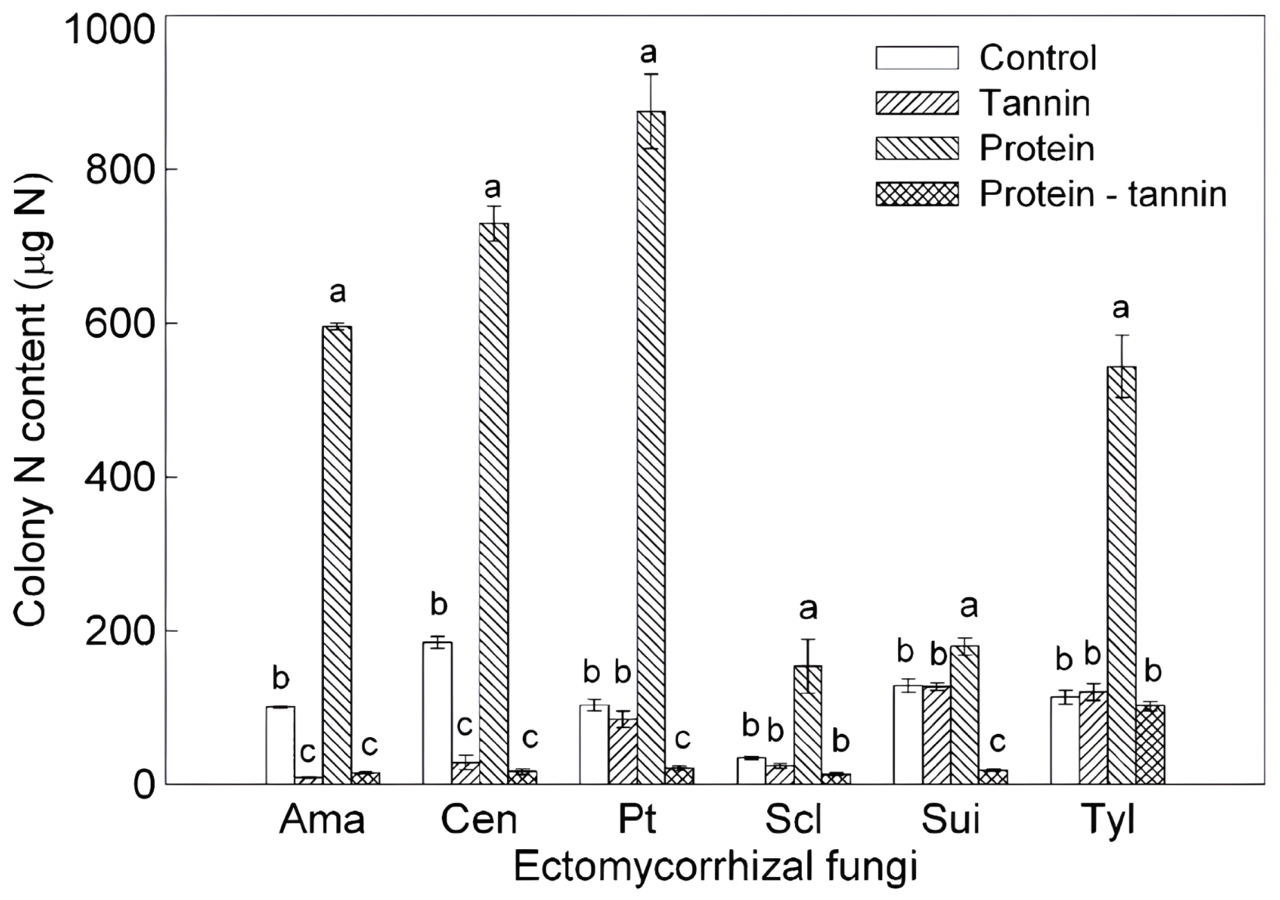
Fig. 12. Nitrogen content of six ectomycorrhizal fungi, Ama (A. rubescens), Cen (C. geophilum), Pt (P. tinctorius), Scl (S. citrinum), Sui (S. intermedius) and Tyl (T. felleus) after being mixed with different organic N-containing mixtures (Wu et al., 2005).
The data from Figure 11 shows that these seedlings were only able to extract nitrogen from inorganic ammonium since it was the only group that resulted in significant differences in dry weight compared to the control (Wu et al., 2005). Moreover, results from Figure 12 show a drastic difference in nitrogen content in fungi mixed with proteins. This suggests that while pines themselves cannot absorb nitrogen from organic sources of nitrogen, they can rely on ectomycorrhizae to obtain nitrogen for them (Wu et al., 2005).
Root Exudates and Mycorrhizal Growth
Root exudates are root secretions found in the rhizosphere, the region of soil surrounding roots of living plants, shown in Figure 13 (Koo et al., 2005). These substances serve a significant role in the symbiotic relationship between pines and fungi. Root exudates include organic molecules such as carbohydrates, amino acids, organic acids, and lipids (Rovira, 1969; Fries et al., 1985).

Fig. 13. Pine roots underground emphasizing the rhizosphere (Own work by Aisha-Mae Garing-Patel, 2025).
A study conducted by Fries and colleagues (Fries et al., 1985), evaluates the growth of three ectomycorrhizal fungi, two of which are known to have symbiotic relationships with pines. This analysis uses lipid contents from pine root exudates, specifically from the Scots pine (Pinus Silveris L.). At the end of the experiment, the two fungi in symbiosis with pines, Laccaria amethyst and Laccaria bicolor, increased in population while the other, Leccinum aurantiacum, was not affected by the substance’s presence (Table 1).
Table 1. Mean dry weight of three species of mycorrhizal fungi, Laccaria amethyst, Laccaria bicolor and Leccinum aurantiacum, after growth in mediums containing lipids extracted from Pinus Silveris L. (Fries et al., 1985).

The results in table 1 show a selectivity in pine root exudates influencing the growth of ectomycorrhizal fungi (Fries et al., 1985). This suggests that, via the lipid components of root exudates, pines select specific fungi to form ectomycorrhizae around their roots, showing a form of chemical signaling. With this specificity, pines can encourage the growth of fungi, advantageous to their development near its roots to increase the number of symbiotic interactions.
Chemical Defense and Wound Response
As a highly geographically widespread and long-surviving genus of trees, pine trees have evidently succeeded in evolutionary adaptation. Spreading into more than 100 species across the northern temperate regions, pine trees must defend against a variety of attackers and environmental factors. The Optimal Defense Theory (ODT) in ecology predicts that plants do not create defenses randomly or across vast areas but rather invests more in tissues that are most valuable for survival and tissues that are prone to attacks (Moreira et al., 2012).
Built-In First Aid: Wound Response to Predation
A complex system provided by resin, proteins, and chemical compounds such as polyphenols, make the pine tree’s defenses harder to predict than shorter-lived herbs (Moreira et al., 2012). For conifers, the most well-known secretion of resin is oleoresin, responsible for deterring insect predation and sealing wound sites, whose composition is presented in Figure 14 (Philips & Croteau, 1999). The diversified products are a result of enzyme-specific substrate folding and active-site residue positioning when the precursor, oleoresin terpene, forms in the tree. Monoterpenes are produced immediately after insect attacks for rapid deterrence, with oxidation transforming them into toxins, and dispersal pheromones for insects. Diterpenes are produced around three days post-attack, acting as a physical barrier while sealing wounds of the tree. From days five to ten after initial predation, sesquiterpenes, possessing the most complex synthesis process, are produced as an antifungal and an insect hormone mimic to deter future attacks (Philips & Croteau, 1999).

Fig. 14. Common constituents of conifer oleoresin showing members of the turpentine (monoterpene and sesquiterpene) and rosin (diterpenoid resin acid) fractions. Each class is derived from the respective acyclic precursor, geranyl diphosphate (monoterpenes), farnesyl diphosphate (sesquiterpenes) and geranylgeranyl diphosphate (diterpenes) (adapted from Philips & Croteau., 1999).
Since chemical defenses are practiced with a cost in energy and nutrient allocation, a strategic distribution of resources is critical for long-term survival. An observation of the Monterey pine (Pinus radiata) was conducted by Moreira and colleagues dividing experimental areas into the parts of the plant, chemical types, persistent and temporary defenses, and tissue types (Moreira et al., 2012). The experiment mainly measured the variation in non-volatile resin and polyphenolics[2], the two major secondary chemicals of pines. Moreira et al.’s study mostly agrees with predictions of the ODT, where structural tissues are less defended and newer stemmed branches are highly defended. The slight deviation from predictions occurs in the needles, which are surrounded by a high resin concentration, and at the base, which presents highly inducible resin. These results are explained by older needles having more developed structures, acting as major providers of photosynthetic energy, thus becoming very valuable for maximizing nutrient intake. The base of the plant, however, receives extra protection from being more prone to various attacks from insects, as explained previously with beetles (Moreira et al., 2012).
The Relationship Between Needles and Vegetation
The Ponderosa pine (Pinus ponderosa) and its surroundings were studied by Lodhi & Killingbeck. The surrounding forest floor of the observation site of North Dakota was mostly bare, with less than 2% of the area covered by only two kinds of nonwoody species (Andropogon gerardii and A. scoparius) (Lodhi & Killingbeck, 1980). Since the lack of biodiversity couldn’t be explained by soil pH or light availability, the allelopathy, or chemical inhibition, of the pine tree was explored by the collection of decaying needles, bark, and soil. The allelopathic chemicals were found to be spreading by low rainfall and pine litter, such as needles, allowing tannins and other phytotoxins to accumulate and increase their effects. Tannins, the most prominent allelopathic chemical, played a significant role in inhibiting nitrifying bacteria, responsible for increasing soil fertility, as well as plant hormones GA4 and GA14. By binding to the hormones’ receptors, tannins led to disturbances of plants’ growth and development, noticeably the seed germination, flowering, and stem elongation (Lodhi & Killingbeck, 1980). This conclusion is further supported by the red pine’s behavior in a study conducted by Kato et al., where both dicotyledonous[3] and monocotyledonous[4] plant species were found in proximity to red pines, but outside of their immediate ecosystem (Kato et al., 2017). Similar inhibition patterns were found, with compounds methyl 15-hydroxy-7-oxodehydroabietate and 7-oxodehydroabietic acid permeating the soil from defoliation. These compounds behave in a process similar to those of the ponderosa pine, as detailed in Figure 15, suppressing the invasion of other plant species and promoting a sparse understory.

Fig. 15. Possible degradation process of abietic acid to methyl 15-hydroxy-7-oxodehydroabietate and 7-oxodehydroabietic acid (adapted from Kato et al., 2017).
A later study by Iason et al. noticed, however, that a higher diversity in production of monoterpenes[5] in the Scots pine is linked to greater species richness in nearby ground vegetation. These unique monoterpenes act differently than previously studied chemicals of the genre, affecting soil and vegetation around by root senescence (death of roots), root exudation (release of compounds), or mycorrhizal interactions. The high chemical diversity and balanced chemical presences moderate toxicity and promote richer ground plant biodiversity in non-woody areas instead of deterring other organisms (Iason et al., 2005). The main difference between Lodhi & Killingbeck’s study and later Iason et al.’s study rests in the difference in chemicals affecting the surrounding ecosystem. The 1980 study explores allelochemicals where tannin dominates. The 2005 study of the Scots pine observes a subgroup of allelochemicals, monoterpene, where chemical compounds are mostly balanced in their spread, with none dominating significantly (Iason et al., 2005).
Numerous other studies conclude in inhibitory activity of allelopathic chemicals of pines, including the white cypress pine and the Aleppo pine, amongst others (Harries et al., 2003; Fernandez et al., 2013). The main difference to note is that pines inhibiting plant growth produce few potent chemicals, while the ponderosa pine produces more diverse chemicals that lack potency, damping all subsequent individual effects on the soil. Almost all inhibiting pines belong to drier or sandier and rockier soils, with common lack of nutrient and drastic season changes (Thompson & Eldridge, 2005; Ayari & Khouja, 2014). The ponderosa pine studied in North Dakota, on the other hand, rarely experiences a lack of nutrients, and only faces harsher winters as an environmental hardship (Graham & Jain, 2005). The different pines thus adjust chemical releases in accordance with their climate and nutrient availabilities, releasing potent inhibitors rather than diversified chemicals when nutrients are a scarce resource.
Considering the pine tree’s varied defenses against insects and environmental factors, its mechanisms can be explained through circumstantial defenses. While some chemical compounds are persistently released throughout most species of pines, others that are inducible, such as oleoresin, resin, and polyphenols, are strategically used in tune with presence of predators, the passing of seasons, and the surrounding ecosystem. Comparable to an intricately operating machine, the pine receives exterior signals and times, controls, and adjusts its defense mechanism to organize resources and optimize survival.
Conclusion
From cell wall alterations to the secretion of resin, the pine tree exemplifies how biological systems embody fundamental chemical principles to ensure survival and adaptation. First and foremost, when water is scarce, pine trees will modify the rigidity of the cell wall through a de-esterification process to promote water retention while still allowing cell growth. The perfect balance between stiffness and fluidity of the cell wall is how the pine manages to survive drought. Furthermore, hormones increase pine stress tolerance, ensuring survival in cold and dry conditions. Auxins are responsible for the tropic behaviors that optimize photosynthesis and increase water and nutrient intake, while ABA induces stomatal closure and cuticular wax formation to reduce water loss through transpiration. Similarly, ABA-induced dormancy further conserves water in extreme environments. Auxins enforce the conical shape that sheds snow, reduces wind resistance, and optimizes light exposure to allow for survival in the winter. Additionally, cytokinins defend against major threats to pine life, such as fungal phytopathogens and beetle attacks. Yet, the survival of some fungi maintains a symbiotic relationship that enhances nutrient uptake and absorption efficiency. The presence of ectomycorrhizae on pine roots provides the pine with essential nutrients needed to survive by obtaining phosphorus with the help of catalytic enzymes and absorbing nitrogen from organic compounds that the pine cannot extract from alone. Pine root exudates’ role of attracting these essential fungi is one of the reasons why these trees can thrive in nutrient-poor soil. While the presence of mycorrhizal symbionts is advantageous for the survival of the Pinus, organisms that threaten the viability of these trees are unwanted. When faced with predators that utilize chemical compounds necessary for pine reproduction, the pine outsmarts them with intricately formed chemical defenses such as resin. Healing itself while deterring and intoxicating predators, the pine uses its resin as a natural first-aid kit and army all at once. Situated in drier soils, most Pinus trees adopt flexible defense mechanisms that economizes nutrients and act only when necessary. The needles of the tree passively deter possible competition even in their death, fallen to the ground. With a complex yet elegant system of defense, the pine ensures its standing as a widespread and impressively long-lasting tree with a rich history.
References
References
Abuzinadah, R. A., & Read, D. J. (1989). The role of proteins in the nitrogen nutrition of ectomycorrhizal plants. New Phytologist, 112(1), 55–60. https://doi.org/10.1111/j.1469-8137.1989.tb00308.x
Ammon, V., Seifers, D., & Walkinshaw, C. (1990). Cytokinin activity in southern pines inoculated with Cronartium quercuum f.sp. fusiforme. Canadian Journal of Plant Pathology, 12(2), 170–174. https://doi.org/10.1080/07060669009501021
Autio, A., & Day, M. (2016). Cytokinin Phytohormonal Effects on Crown Structure. Arboriculture & Urban Forestry, 42(1). https://doi.org/10.48044/jauf.2016.001
Ayari, A., & Khouja, M. L. (2014). Ecophysiological variables influencing Aleppo pine seed and cone production: a review. Tree Physiology, 34(4), 426-437. https://doi.org/10.1093/treephys/tpu022
Bailey, R. (2018). How Plants Respond to Light, Touch, and Other Stimuli. ThoughtCo. https://www.thoughtco.com/plant-tropisms-4159843
Brookbank, B. P., Patel, J., Gazzarrini, S., & Nambara, E. (2021). Role of Basal ABA in Plant Growth and Development. Genes, 12(12), 1936. https://doi.org/10.3390/genes12121936
EarthSky Voices. (2024). EarthSky | Why do most evergreen trees have a pyramid shape? Earthsky.org. https://earthsky.org/earth/evergreen-tree-shape/
el-Showk, S., Help-Rinta-Rahko, H., Blomster, T., Siligato, R., Marée, A. F. M., Mähönen, A. P., & Grieneisen, V. A. (2015). Parsimonious Model of Vascular Patterning Links Transverse Hormone Fluxes to Lateral Root Initiation: Auxin Leads the Way, while Cytokinin Levels Out. PLOS Computational Biology, 11(10), e1004450. https://doi.org/10.1371/journal.pcbi.1004450
Fan, Mei & Yuan, Siqi & Li, Lingshan & Zheng, Jia & Zhao, Dong & Wang, Chengjun & Wang, Hong & Liu, Xun & Liu, Jun. (2023). Application of Terpenoid Compounds in Food and Pharmaceutical Products. Fermentation. 9. 119. 10.3390/fermentation9020119.
Fazli, A., & Rodrigue, D. (2020). Waste Rubber Recycling: A Review on the Evolution and Properties of Thermoplastic Elastomers. Materials Letters, 13. https://doi.org/10.3390/ma13030782
Fernandez, C., Santonja, M., Gros, R., Monnier, Y., Chomel, M., Baldy, V., & Bousquet-Mélou, A. (2013). Allelochemicals of Pinus halepensis as Drivers of Biodiversity in Mediterranean Open Mosaic Habitats During the Colonization Stage of Secondary Succession. Journal of Chemical Ecology, 39(2), 298-311. https://doi.org/10.1007/s10886-013-0239-6
Forand, A. D. (2021). The Cell Wall as a Barrier Against Water Loss and Plant Pathogens University of Saskatchewan]. Saskatoon. https://harvest.usask.ca/server/api/core/bitstreams/63a5cbf9-d9ae-47da-b4ff-f20c6e5b26fd/content
Fries, N., Bardet, M., & Serck-Hanssen, K. (1985). Growth of ectomycorrhizal fungi stimulated by lipids from a pine root exudate. Plant and Soil, 86(2), 287–290. https://doi.org/10.1007/bf02182906
Gall, H. L., Philippe, F., Domon, J.-M., Gillet, F., Pelloux, J., & Rayon, C. (2015). Cell Wall Metabolism in Response to Abiotic Stress. Plants, 4, 112-166. https://doi.org/10.3390/plants4010112
Gumede, T. (2022). PLANT RESPONSES TO THE ENVIRONMENT CAES Grade 11 and 12 Exam Support Line Dr Thobeka Gumede. https://ww1.caes.ukzn.ac.za/wp-content/uploads/2022/09/MEH-on-Plant-Response-to-Environ-Life-Sc-with-QA-Aug-2022-ZUL.pdf
Gupta, R., Anand, G., Pizarro, L., Laor Bar-Yosef, D., Kovetz, N., Sela, N., Yehuda, T., Gazit, E., & Bar, M. (2021). Cytokinin Inhibits Fungal Development and Virulence by Targeting the Cytoskeleton and Cellular Trafficking. MBio, 12(5). https://doi.org/10.1128/mbio.03068-20
Harris, M. R., Lamb, D., & Erskine, P. D. (2003). An investigation into the possible inhibitory effects of white cypress pine (Callitris glaucophylla) litter on the germination and growth of associated ground cover species. Australian Journal of Botany, 51(1), 93. https://doi.org/10.1071/bt02045
Iason, G. R., Lennon, J. J., Pakeman, R. J., Thoss, V., Beaton, J. K., Sim, D. A., & Elston, D. A. (2005). Does chemical composition of individual Scots pine trees determine the biodiversity of their associated ground vegetation? Ecology Letters, 8(4), 364-369. https://doi.org/10.1111/j.1461-0248.2005.00732.x
Johnson, N. C., & Gehring, C. A. (2007). Mycorrhizas: Symbiotic Mediators of Rhizosphere and Ecosystem Processes. The Rhizosphere, 73–100. https://doi.org/10.1016/b978-012088775-0/50006-9
Jones, B., & Ljung, K. (2011). Auxin and cytokinin regulate each other’s levels via a metabolic feedback loop. Plant Signaling & Behavior, 6(6), 901–904. https://doi.org/10.4161/psb.6.6.15323
Kato-Noguchi, H., Kimura, F., Ohno, O., & Suenaga, K. (2017). Involvement of allelopathy in inhibition of understory growth in red pine forests. Journal of Plant Physiology, 218, 66-73. https://doi.org/10.1016/j.jplph.2017.07.006
Keeley, J. E. (2012). Ecology and evolution of pine life histories. Annals of Forest Science, 69(4), 445-453. https://doi.org/10.1007/s13595-012-0201-8
Kermode, A. R. (2005). Role of Abscisic Acid in Seed Dormancy. Journal of Plant Growth Regulation, 24(4), 319–344. https://doi.org/10.1007/s00344-005-0110-2
Kheowmung, W. (2024). Pectin from Durian (Durio zibethinus Murray) Peel: Microwave-Assisted Extraction Followed by Solvent Extraction. Trends in Sciences, 21(7). https://doi.org/10.48048/tis.2024.7627
Kobayashi, M., Nakagawa, H., Asaka, T., & Matoh, T. (1999). Borate-Rhamnogalacturonan II Bonding Reinforced by Ca2+ Retains Pectic Polysaccharides in Higher-Plant Cell Walls. Plant Physiology, 119(1), 199-204. https://doi.org/10.1104/pp.119.1.199
Koo, B-. J., Adriano, D. C., Bolan, N. S., & Barton, C. D. (2005). ROOT EXUDATES AND MICROORGANISMS. Encyclopedia of Soils in the Environment, 421–428. https://doi.org/10.1016/b0-12-348530-4/00461-6
Kumari, A., Ahlawat, P., Kiran, N., Rani, B., Goyal, A., Pooja, Pazhany, A. S., Kumar, A., Devi, S., Kumari, N., Madaan, S., & Jattan, M. (2023). An Overview of Phytohormones Mediated Drought and Salinity Tolerance in Plants. Springer Nature, 387–417. https://doi.org/10.1007/978-981-99-4669-3_20
Lamprecht, S., Stoffels, J., & Udelhoven, T. (2020). ALS as Tool to Study Preferred Stem Inclination Directions. Remote Sensing, 12(22), 3744. https://doi.org/10.3390/rs12223744
Levesque-Tremblay, G., Pelloux, J., Braybrook, S. A., & Müller, K. (2015). Tuning of Pectin Methylesterification: Consequences for Cell Wall Biomechanics and Development. Planta, 242, 791-811.
Liscum, E., Askinosie, S. K., Leuchtman, D. L., Morrow, J., Willenburg, K. T., & Coats, D. R. (2014). Phototropism: Growing towards an Understanding of Plant Movement. The Plant Cell, 26(1), 38–55. https://doi.org/10.1105/tpc.113.119727
Lodhi, M. A. K., & Killingbeck, K. T. (1982). Effects of pine-produced chemicals on selected understory species in aPinus ponderosa community. Journal of Chemical Ecology, 8(1), 275-283. https://doi.org/10.1007/bf00984023
Marmeisse, R., & Girlanda, M. (2016). 10 Mycorrhizal Fungi and the Soil Carbon and Nutrient Cycling. 189–203. https://doi.org/10.1007/978-3-319-29532-9_10
Marschner, H., & Dell, B. (1994). Nutrient uptake in mycorrhizal symbiosis. Plant and Soil, 159(1), 89–102. https://doi.org/10.1007/bf00000098
Mohnen, D. (2008). Pectin structure and biosynthesis. Current Opinion in Plant Biology, 11(3), 266-277. https://doi.org/https://doi.org/10.1016/j.pbi.2008.03.006
Morales-Quintana, L., & Ramos, P. (2021). A Talk between Flavonoids and Hormones to Reorient the Growth of Gymnosperms. International Journal of Molecular Sciences, 22(23), 12630. https://doi.org/10.3390/ijms222312630
Moreira, X., Zas, R., & Sampedro, L. (2012). Differential Allocation of Constitutive and Induced Chemical Defenses in Pine Tree Juveniles: A Test of the Optimal Defense Theory. PLoS ONE, 7(3), e34006. https://doi.org/10.1371/journal.pone.0034006
Mumm, R., & Hilker, M. (2006). Direct and indirect chemical defence of pine against folivorous insects. Trends in Plant Science, 11(7), 351-358. https://doi.org/10.1016/j.tplants.2006.05.007.
Pattathil, S., Ingwers, M. W., Victoriano, O. L., Kandemkavil, S., McGuire, M. A., Teskey, R. O., & Aubrey, D. P. (2016). Cell Wall Ultrastructure of Stem Wood, Roots, and Needles of a Conifer Varies in Response to Moisture Availability. Frontiers in Plant Science, 7. https://doi.org/10.3389/fpls.2016.00882
Phillips, M. A., & Croteau, R. B. (1999). Resin-based defenses in conifers. Trends in Plant Science, 4(5), 184-190. https://doi.org/10.1016/s1360-1385(99)01401-6
Piorkowski, W. (2018). Stomata - Pinus strobus [Photograph]. In Webpage. http://www.photomacrography.net/forum/viewtopic.php?t=36984
Prusinkiewicz, P., Crawford, S., Smith, R. S., Ljung, K., Bennett, T., Ongaro, V., & Leyser, O. (2009). Control of bud activation by an auxin transport switch. Proceedings of the National Academy of Sciences, 106(41), 17431–17436. https://doi.org/10.1073/pnas.0906696106
Ridley, B. L., O’Neill, M. A., & Mohnen, D. (2001). Pectins: structure, biosynthesis, and oligogalacturonide-related signaling. Phytochemistry, 57, 929–967.
Rovira, A. D. (1969). Plant root exudates. The Botanical Review, 35(1), 35–57. https://doi.org/10.1007/bf02859887
Russell T. Graham, T. B. J. (2005). Ponderosa pine ecosystems. Forest Service U.S. Department of Agriculture. (Ritchie, Martin W.; Maguire, Douglas A.; Youngblood, Andrew, tech. coordinators. Proceedings of the Symposium on Ponderosa Pine: Issues, Trends, and Management, 2004 October 18-21, Klamath Falls, OR. Gen. Tech. Rep PSW-GTR-198. Albany, CA: Pacific Southwest Research Station, Forest Service, U.S. Department of Agriculture: 1-32.)
Sharma, R., & Sharma, P. (2023). Role of Abscisic Acid in Plant Stress. IntechOpen EBooks. https://doi.org/10.5772/intechopen.1002392
South, D. B., Shelton, J., & Enebak, S. A. (2001). Geotropic Lateral Roots of Container-grown Longleaf Pine Seedlings. Native Plants Journal, 2(2), 126–130. https://doi.org/10.3368/npj.2.2.126
Suz, L. M., Kallow, S., Reed, K., Bidartondo, M. I., & Barsoum, N. (2017). Pine mycorrhizal communities in pure and mixed pine-oak forests: Abiotic environment trumps neighboring oak host effects. Forest Ecology and Management, 406, 370–380. https://doi.org/10.1016/j.foreco.2017.09.030
Thompson, W. A., & Eldridge, D. J. (2005). White cypress pine (Callitris glaucophylla): a review of its roles in landscape and ecological processes in eastern Australia. Australian Journal of Botany, 53(6), 555. https://doi.org/10.1071/bt04115
Von Aderkas, P., Kong, L., Abrams, S., Zaharia, I., & Owens, S. (2006). Cone induction and hormone metabolomics of lodgepole pine and Douglas-fir. https://forestgeneticsbc.ca/wp-content/uploads/2020/07/Cone-induction-and-hormone-metabolomics-of-lodgepole-pine-and-Douglas-fir.pdf
Woo, B. (2017, June 5). Scientists Just Solved The Strange Case of Pine Trees That Always Lean Towards The Equator. Tree Fresno. https://treefresno.org/scientists-just-solved-the-strange-case-of-pine-trees-that-always-lean-towards-the-equator/)
Wu, T., Kabir, Z., & Koide, R. T. (2005). A possible role for saprotrophic microfungi in the N nutrition of ectomycorrhizal Pinus resinosa. Soil Biology and Biochemistry, 37(5), 965–975. https://doi.org/10.1016/j.soilbio.2004.10.015
- Pectic backbone epitopes refer to the specific antibody-binding regions located on the principal chain of pectins such as HG or RG-I. The increase in extractability causes a release of those regions, which indicates that the pectins were less tightly cross-linked to other wall components (Pattathil et al., 2016).
- A naturally occurring compound acting as antioxidants with anti-inflammatory properties in plants.
- One of two subgroups of all flowering plants, named after the seeds with two embryonic leaves.
- One of two subgroups of all flowering plants, named after the seeds with one embryonic leaf.
- Volatile organic compounds: a type of allelopathic chemical, detailed in Figure 15.