Young adults at risk of psychosis show reduced brain connectivity, a deficit that cannabis use appears to worsen, a new study has found. The breakthrough paves the way for psychosis treatments targeting symptoms that current medications miss.

In the first-of-its-kind study, McGill University researchers detected a marked decrease in synaptic density—the connections between neurons that enable brain communication—in individuals at risk of psychosis, compared to a healthy control group.
Classified as: Romina Mizrahi, Integrated Program in Neuroscience, Montreal Neurological Institute and Hospital -The Neuro, Psychosis, cannabis
Category:
Published on: 20 Nov 2024

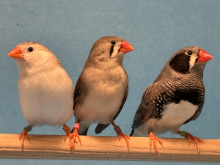
A new study on songbirds sheds light on the power of social interaction to facilitate learning, insights that potentially apply to human development.

McGill University researchers discovered that zebra finches deprived of early social experiences could still form strong bonds with a partner later in life. Once placed into cohabitation with a male, females that had never heard a mating song before could quickly develop a preference for his melody.

Classified as: Sarah Woolley, Department of Biology, Integrated Program in Neuroscience, Erin Wall
Category:
Published on: 21 Aug 2024

Scientists at McGill University have developed a new method to study how seizures arise in the healthy brain. Using laser light guided through ultra-thin optic fibers in the brain of rodents, the researchers “turned on” light-sensitive proteins in selective brain cells and were able to eventually cause seizures through repeated laser stimulation. These findings were published March 27, 2019 in the journal Scientific Reports.

Classified as: Elvis Cela, Jesper Sjöström, RI-MUHC, Integrated Program in Neuroscience, IPN, seizures, epilepsy
Category:
Published on: 27 Mar 2019
Back to top